Your Guide to Making Meal Planning Easy for Busy Moms
Tired of dinner chaos? This guide makes meal planning easy with simple systems, smart hacks, and real-world tips for busy moms who want to save time and sanity.
Love This Article?
Get personalized meal plans with recipes like this, automatically matched to your nutrition targets.
Imagine a week where the dreaded "What's for dinner?" is a question you never have to ask. Seriously. This isn’t some far-off fantasy—it’s the magic of a simple, repeatable meal planning easy system. The goal here is to kick decision fatigue to the curb and finally reclaim your weeknights.
The Secret to Stress-Free Weeknight Dinners
We’ve all been there. It’s 5 PM, the kids are morphing into hangry little monsters, and you’re staring into the abyss of your refrigerator, hoping for a miracle. That daily panic is absolutely draining, and it almost always ends with a pricey DoorDash order or, let's be honest, buttered noodles... again.
But what if you could turn that dreaded chore into your secret weapon for a calmer, more organized week? I’m not talking about those insane, color-coded spreadsheets or rigid schedules that completely implode by Tuesday. This is about building a real, practical system that actually gives you back your time and mental energy. It’s designed for busy moms who need things to just work, without sacrificing the healthy, yummy meals our families deserve.
The trick is finding a rhythm that fits your life, giving you just enough structure to feel on top of things without boxing you in.

Why a Simple System Works Best
Let's face it: overly ambitious plans are basically designed to fail. A truly easy meal planning system is all about consistency, not complexity. Forget trying to whip up five-star meals every single night. The real win is reliability.
- It Kills Decision Fatigue: Making fewer tiny choices all day long frees up your brain for the stuff that actually matters. Like where you hid the good snacks.
- It Saves You Time and Money: A solid plan means no more impulse buys at Target and way fewer last-minute "I give up" delivery fees.
- It Nudges You Toward Healthier Habits: When you have a plan, you're way less likely to grab whatever processed thing is closest.
The best part? We've got amazing tools now that do most of the heavy lifting. The AI-driven meal planning app market, already valued at $0.67 billion in 2024, is expected to skyrocket to $2.00 billion by 2029. That's a whole lot of families jumping on this train!
For moms, tools like Meal Flow AI are a game-changer. They can automatically create weekly plans that cater to your family’s specific allergies or a particularly picky toddler, slashing your organizing time to almost zero.
To really get this system humming, an app is your best friend. If you’re not sure where to start, this guide on how to find the best meal planning app is a great resource to pinpoint what your family really needs.
Let's break down the core ideas behind making this system work for you.
The Four Pillars of Easy Meal Planning
A quick look at the core components for a simple and sustainable weekly meal plan.
| Pillar | Why It Matters for Moms | Your First Action Step |
| Templates & Themes | Eliminates the "what to make" paralysis by giving you a starting point. Think Taco Tuesday, Pasta Night, etc. | Brainstorm 5-7 dinner "themes" your family already loves. Don't overthink it! |
| A Balanced Menu | Ensures you're not just eating carbs all week. A simple protein-veggie-carb formula keeps meals satisfying. | For each theme, pick one protein, one veggie, and one carb. That's your meal formula. |
| Smart Scheduling | Puts easy meals on busy nights and more involved ones on days you have more time. Prevents burnout. | Look at your calendar for the week. Which nights are crazy? Schedule your 15-minute meals for those days. |
| Automated Shopping | Turns your meal plan into a ready-to-buy grocery list in seconds, saving you an hour of manual list-making. | Find a tool (like Meal Flow AI!) that automatically generates a shopping list from your chosen recipes. |
These four pillars are the foundation of a system that won't just last a week—it'll change the way you run your household.
By leaning on a simple, repeatable structure, you're not just planning dinners; you're designing a more peaceful week for you and your family. It’s about creating a sustainable habit that pays dividends in time, money, and sanity.
This guide is going to walk you through setting up this exact system. We'll cover everything from building that first menu to getting your grocery list on autopilot, making your mealtimes made easy a reality. Let’s dive in.
Building Your First Realistic Weekly Menu
Okay, let's get real. Diving headfirst into meal planning can feel like you're trying to solve a Rubik's cube while toddlers are screaming your name. The secret? Stop trying to be a gourmet chef every night. The key to making this whole thing stick is to lean on what you already know works.
The absolute best place to start is what I call the "Family Favorites" list. Seriously, grab a notebook or open a new note on your phone and start listing every single meal your crew will actually eat without a fight. No judgment! If frozen pizza and mac and cheese are on that list, they absolutely belong there. Your goal is to get at least 10-15 meals down. These are your sanity-savers.
Once you have this golden list, you’ve already won half the battle. You’ve created a bank of guaranteed wins to pull from, which instantly quiets that "oh my gosh, what's for dinner?!" panic.
Give Your Week a Rhythm with Theme Nights
Now, let's give your week a little structure so you're not just staring into the void of the fridge every afternoon. This isn't about being rigid; it's about putting dinner on autopilot. Think of it as creating simple, no-brainer categories for your week.
Your themes should be fun, broad, and based on what your family loves. Need some inspiration?
- Taco Tuesday: A classic for a reason! It’s fun, everyone can build their own, and it's fast.
- Pasta Night: So many possibilities here—from a simple spaghetti marinara to a creamy chicken alfredo.
- Soup & Sandwich Night: My go-to for cozy evenings and a brilliant way to use up leftover bread or veggies.
- Breakfast for Dinner: The kids go wild for this, and it’s usually on the table in minutes.
- Crockpot Friday: Let the slow cooker do the heavy lifting so you can actually relax and slide into the weekend.
Pick three to five themes and plug them into your week. All of a sudden, you're not wondering what to make from scratch—you just have to decide which pasta dish to whip up. See? So much easier.
Mix It Up: Quick Meals and Batch Cooking
A doable weekly menu is all about balance. Let's be honest, not every night is a "let's leisurely cook for 45 minutes" kind of night. Look at your calendar and get real about your schedule.
On nights you’re juggling soccer practice and homework meltdowns, you need a dinner that takes 20 minutes or less. On the days you have a little more breathing room, you can make a bigger recipe that gives you leftovers for another crazy night.
For example, that big pot of chili you made on a lazy Sunday afternoon? It magically becomes quick-and-easy chili dogs on a frantic Tuesday. For a complete walkthrough on how to build out a plan like this, check out our guide on creating a weekly meal plan with a grocery list.
This is where modern tools are a total game-changer. There's a reason the global meal planning app market was valued at $1.2 billion in 2023 and is expected to rocket to $3.6 billion by 2032—they make this stuff ridiculously easy. Platforms like Meal Flow AI can look at your family's favorites and your chaotic schedule to pop out a balanced plan for you, complete with a shopping list that goes right to Instacart. You can dive deeper into these trends by exploring the full report.
Your Weekend 'Power Hour' Is Your Secret Weapon
This is how you get your weeknights back. I’m not talking about chaining yourself to the stove all Sunday long—that’s a recipe for burnout. The real goal is smart, strategic prep that gives you a running start on the week. This isn't about cooking five full meals in advance; it’s about creating "meal starters" or "building blocks" that let you assemble dinner in minutes.
The magic really clicks into place when you understand the two types of prep. You've got ingredient prep (the small stuff that saves huge time later, like chopping onions or washing lettuce) and batch cooking (making a full component, like a big pot of chili or a batch of shredded chicken).
A truly effective "Power Hour" uses a bit of both. You’re not trying to do it all—you're just getting a head start.
The 60-Minute Power Hour: A Game Plan
Ready to see what this actually looks like? Here’s a sample schedule that accomplishes a shocking amount of work in just about an hour. It’s all about working smarter, not harder, by having a few things going at once.
- Minutes 0-10: Get Your Grains On. The first thing I always do is get the rice, quinoa, or whatever grain we're having that week going on the stove or in the rice cooker. It’s a completely hands-off task that can just bubble away in the background. Easy win.
- Minutes 10-30: Tackle the Protein. While those grains are cooking, shift your focus to the protein. This could be browning a couple of pounds of ground beef for tacos and spaghetti night or popping some chicken breasts in the oven to shred later for salads or wraps.
- Minutes 30-50: The Big Chop. Now it's time to become a veggie-chopping machine. Wash and chop lettuce for salads, slice up peppers and onions for fajitas, or dice carrots and celery for a soup base. Get them into airtight containers, and future-you will be so grateful.
- Minutes 50-60: Cool Down & Clean Up. As things finish cooking, pull them off the heat and let them cool down before you pack them away. I use these last few minutes to load the dishwasher and wipe down the counters. Starting the week with a clean kitchen is a non-negotiable for my sanity!
This visual really breaks down how simple the overall strategy is. You start with what your family already loves, give it a little structure with themes, and suddenly the whole process feels manageable.
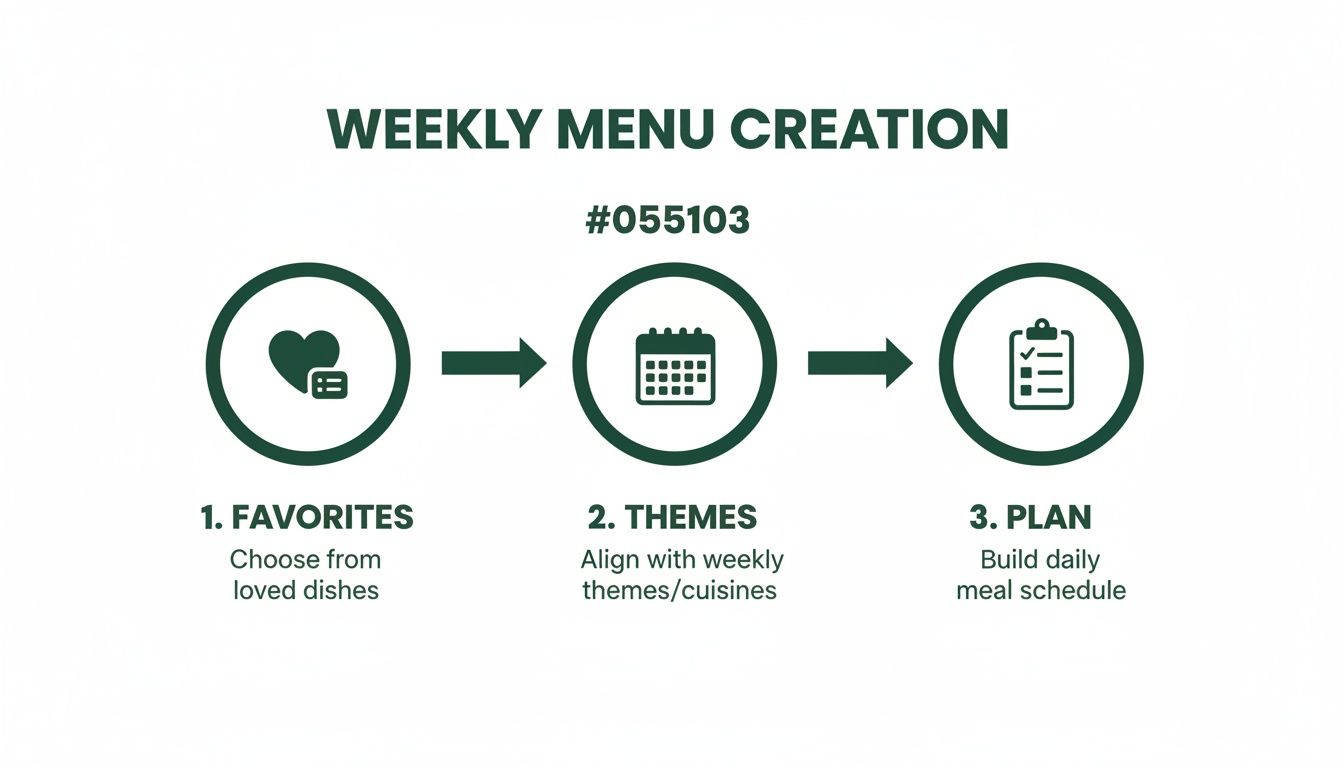
This three-stage approach—favorites, themes, plan—is truly the foundation of a stress-free system.
Keep Your Hard Work Fresh
Listen, all that amazing prep work is useless if your beautiful veggies turn to slimy science experiments by Tuesday. A huge part of the strategy is planning your meals around how long ingredients will actually last.
Schedule meals with the most delicate items, like fresh fish or leafy green salads, for Monday and Tuesday.
Save the meals with heartier, longer-lasting ingredients—like that chili you batched, sweet potatoes, or frozen veggies—for Thursday and Friday. This one little trick seriously cuts down on food waste and makes sure everything still tastes amazing.
Soups, stews, cooked ground meat, and shredded chicken are your freezer's best friends. I use freezer-safe bags laid flat to save space and always, always label them with the date. For refrigerated items like chopped veggies, try this hack: stick a folded paper towel in the container. It absorbs extra moisture and can buy you a few extra days of freshness.
You’re not just prepping food; you’re creating dinner kits that make weeknights feel less like a monumental project and more like a quick assembly job.
Let's Automate That Pesky Grocery List
Okay, let's get to my absolute favorite part of this whole system—the part that feels like pure magic and saves my sanity every single week. Imagine this: no more frantic dashes to the store, no more wrestling a toddler out of the shopping cart, and no more realizing you forgot the one crucial ingredient mid-recipe.
This is where we connect your beautiful meal plan directly to your grocery delivery. Seriously, it's a game-changer.
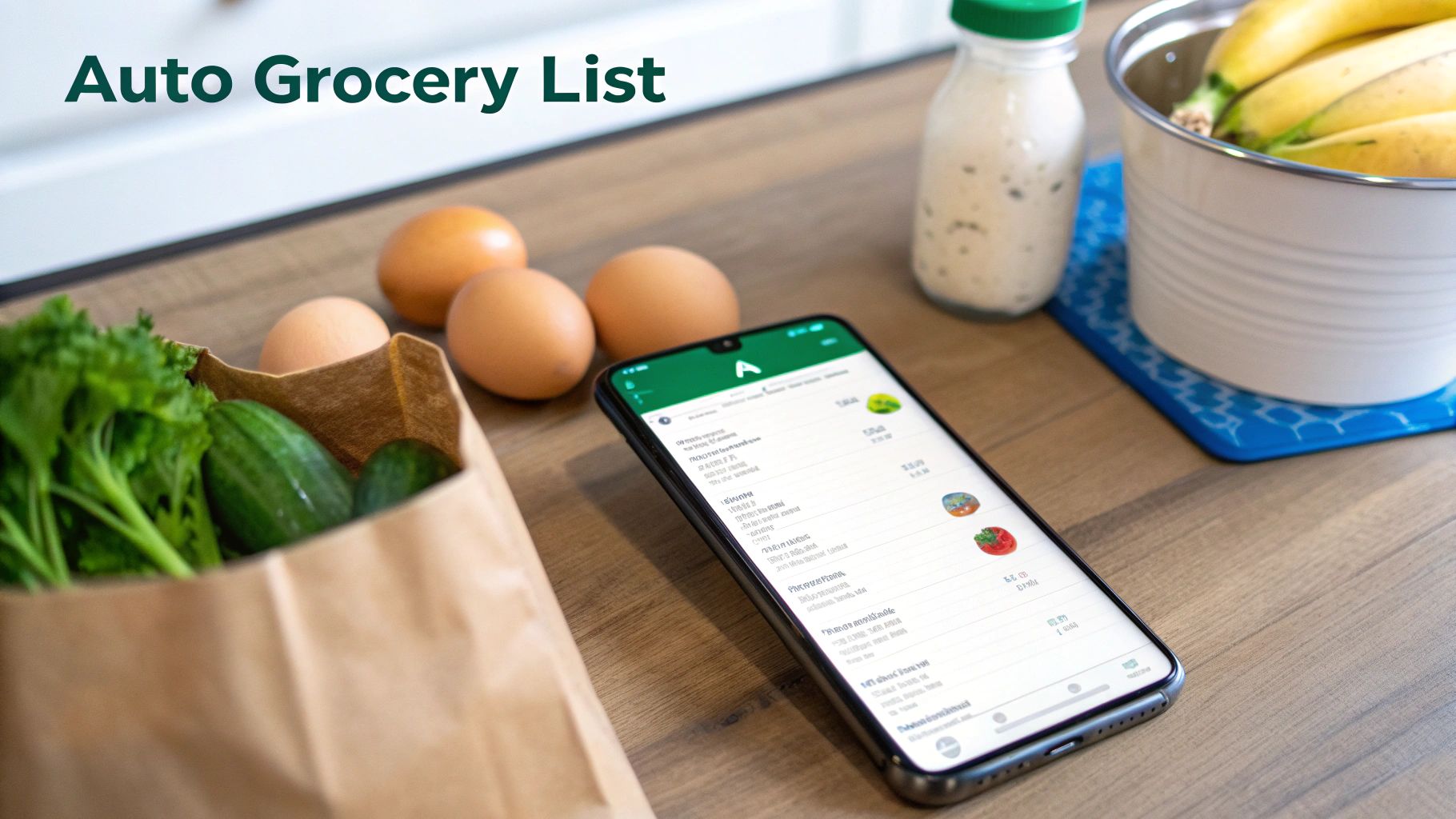
Tools like Meal Flow AI were basically built for this moment. After you’ve slotted your recipes into your weekly plan, the app does the heavy lifting. It scans every recipe, pulls out all the ingredients, and whips up a perfectly organized, categorized shopping list.
No more "Wait, did I write down garlic?" moments. It's all there. This isn’t just a list; it’s your command center for an incredibly efficient week.
From Plan to Pantry in a Few Clicks
Now for the really cool part. With one click, that auto-generated list gets zapped right over to your Instacart app. Boom. Every single item you need—from the chicken breasts for Tuesday to the cilantro for Friday's tacos—is sitting in your digital cart, ready to go.
This little trick completely closes the gap between planning dinner and actually having the food to make it.
Once everything is in your Instacart cart, you still have total control. This is your chance to:
- Review and Swap: Did the app pick a brand of yogurt your kids will turn their noses up at? Swap it out for your go-to favorite.
- Add the Essentials: Oh yeah, you're almost out of paper towels and coffee. Toss 'em in the cart now so you don't forget.
- Hunt for Deals: A quick scroll can show you what’s on sale. Maybe swap those pricey berries for whatever is on special this week to save a few bucks.
This whole process does more than just save you a couple of hours. It’s a secret weapon against impulse buys (I'm looking at you, checkout-aisle candy!) and ensures you actually have everything you need for the week.
"Shop" Your Pantry First
Here’s a pro tip that’ll make a real dent in your grocery bill: before you ever hit “Place Order,” do a quick inventory of your own kitchen. I call this "shopping my pantry."
Take your phone with the Instacart list and walk over to your pantry and fridge. See that half-bag of onions? Check. Got a box of pasta hiding in the back? Check. Delete those items from your cart. This simple step stops you from buying duplicates and is one of the easiest ways to trim your spending without even trying.
This automated shopping system is the final piece of the puzzle. It takes your meal ideas and turns them into a box of groceries arriving on your doorstep, perfectly timed for your weekend prep session.
For a more detailed walkthrough on getting this set up, check out this guide on creating your Instacart grocery list from a meal plan. It’s the key to making this whole system feel truly effortless.
Rolling With the Punches: Picky Eaters and Last-Minute Chaos
Let’s get one thing straight: the perfect meal plan is a myth. The moment you think you’ve got it all figured out, your toddler will declare a lifelong vendetta against chicken nuggets, or a last-minute T-ball practice will obliterate your dinner timeline. Life happens.
The trick isn’t to create an unbreakable schedule. It’s to build a system that can take a punch and keep you sane, making your meal planning easy even when life gets messy.
First, let's talk about the picky eater standoff. My number one rule? I am not a short-order cook. Instead, I’ve learned to love the "deconstructed meal."
Think about it. For Taco Tuesday, instead of handing over a fully assembled taco destined for rejection, I set up a mini taco bar. Bowls of seasoned beef, shredded cheese, lettuce, tomatoes—the works. Everyone gets to build their own. It gives the kids a sense of control (which they crave) and makes it infinitely more likely they'll actually eat what's on their plate.
This works for almost anything! Pasta night becomes separate bowls of noodles, sauce, and meatballs. We do DIY pizza nights with personal-sized crusts. It’s less work for me and, honestly, way more fun for them.
Your Secret Weapon: The 'Plan B' Pantry
Some days, the entire plan is just a bust. And that's totally okay. This is where your secret weapon comes into play: a well-stocked "Plan B" pantry. It's your emergency stash for those nights when you have zero time, zero energy, and zero patience.
What goes in this magical pantry? Anything you can throw together in under 15 minutes.
- Breakfast for Dinner: Pancake mix, eggs, and a bag of frozen sausage links have saved me more times than I can count.
- Speedy Pasta: A jar of your favorite marinara and a box of spaghetti. Done.
- Gourmet-ish Quesadillas: Tortillas and shredded cheese are your canvas. Add leftover chicken, canned black beans, or whatever else you find.
Having these staples ready to go turns a dinner disaster into a minor course correction. It’s the difference between a quick pivot and a sigh of defeat followed by an expensive DoorDash order.
When you're constantly juggling unexpected changes, you're flexing your effective problem-solving skills without even realizing it. This adaptability is more important than ever. Back in 2022, 52% of U.S. adults were following a specific diet, a huge leap from just 39% in 2021. This shift is why smarter apps are getting better at tracking nutrition, helping moms manage everyone's needs without tearing their hair out.
The real key to staying flexible is to plan for it. Seriously. Schedule a "Leftover Night" or a "Clean-Out-The-Fridge Night" once a week. This isn't giving up; it's a genius move. You slash food waste and, best of all, you give yourself a guaranteed night off from cooking.
This whole system isn't about achieving perfection. It’s about finding a rhythm that fits your real, chaotic, and wonderful life.
Got Questions? Let's Talk Meal Planning.
Alright, let's get into the nitty-gritty. Whenever you start something new, a million questions pop into your head. I get it! So, let's clear the air and tackle the big ones I hear all the time from other moms.
Think of this as our little coffee chat before you dive in. No fluff, just real answers to make sure you feel totally ready to rock this.
Seriously, How Much Time Will This Take Every Week?
Let's be real. When you're brand new to this, block out a good 30-45 minutes for your first couple of planning sessions. That gives you enough breathing room to actually think about what you want to eat, peek into the pantry to see what you already have, and build a solid shopping list without feeling rushed.
But here’s the magic part: that time shrinks. Fast. Once you get your rhythm down and have a handful of go-to family favorites in your back pocket, you'll be flying. I’m talking a full week's plan and a ready-to-go shopping list in under 15 minutes. It’s true! This is where a tool like Meal Flow AI becomes a game-changer, because it learns what you like and can spit out a plan in a few seconds.
What’s the Best Way to Handle Leftovers So They Actually Get Eaten?
First, we need to rebrand. Nobody—and I mean nobody—gets excited about “leftover night.” Call it “Encore Night” or “Freestyle Friday” and schedule it right into your plan. Suddenly, it feels like a cool, intentional choice, not a sad attempt to clean out the fridge.
The real secret, though, is to think of leftovers as ingredients for a new meal.
- That shredded chicken from Tuesday’s roast? It’s destined for creamy chicken salad sandwiches for lunch.
- A big batch of chili is amazing, but it’s even better the second time around served over baked potatoes or as killer nachos.
- Got extra roasted veggies? Chop them up and throw them into a frittata for a ridiculously easy and fancy-feeling breakfast.
And here’s a super simple hack: use clear glass containers and put them at eye-level in the fridge. If you can see the food, you’re a million times more likely to remember it exists before it turns into a fuzzy science project.
Planning for leftovers isn't just about reducing waste. It’s about strategically building a night off from cooking into your week. This is probably the smartest, most sane-making move in the entire meal-planning playbook.
How Do I Actually Meal Plan on a Super Tight Budget?
This is all about being a little sneaky and strategic—not about eating ramen for a week. Your first move should happen before you even think about recipes: pull up your grocery store's weekly flyer online. See what’s on sale. If chicken thighs and broccoli are the stars of the week, then that’s where your plan begins.
Next, fully embrace the "cook once, eat twice" philosophy. Make a giant batch of something versatile. Think seasoned ground beef or a big pot of pulled pork. Night one, it’s tacos. A few nights later, that same meat can be stirred into a pasta sauce or become the filling for a shepherd's pie. You're stretching one key ingredient across multiple meals.
And don't forget the power of humble, budget-friendly staples. Building a few meals around things like eggs, beans, lentils, and in-season produce will drop your grocery bill like a rock. But honestly, the biggest money-saver of all is just having a plan. It’s your best defense against those budget-busting impulse buys and the "I'm too tired to cook, let's get takeout" trap.
---
Ready to stop the dinner-time chaos for good? Meal Flow AI creates personalized meal plans your family will love and sends the grocery list straight to Instacart. Get your first plan in minutes and see how easy weeknights can be. Start your free trial today at Meal Flow AI!