Your Ultimate Protein Meal Planner
Tired of guessing your protein? Master your nutrition with our ultimate protein meal planner guide, packed with recipes, tips, and planning tools.
Love This Article?
Get personalized meal plans with recipes like this, automatically matched to your nutrition targets.
A protein meal planner is basically your secret weapon for making sure you eat enough protein every single day, without having to think about it. It’s a structured plan that takes the chaos out of your eating routine, helping you hit your goals—whether that's building muscle, shedding fat, or just feeling healthier. No more guessing games or staring into the fridge wondering what to make.
Let's Build Your Protein Meal Plan From Scratch
Alright, let's get down to it. If you've ever felt completely lost trying to figure out how much protein you actually need, you're not alone. We're going to ditch the generic advice and say goodbye to the endless cycle of bland chicken and broccoli. Think of this as your personal roadmap to crafting a protein-focused meal plan that you'll not only stick to but actually enjoy.
This isn't about jumping on some fleeting health trend. It's a fundamental shift in how we think about food and fuel. Seriously, the global protein market is expected to explode from USD 56.25 billion in 2025 to a whopping USD 108.76 billion by 2034. That's a huge tell that people are finally waking up to the power of protein.
Your Simple Path to Protein Success
So, how do we make this happen? The whole process really just comes down to a few key moves. First, we’ll cut through the noise and figure out your specific protein needs. Whether you're trying to pack on muscle, slim down, or just maintain your health, the numbers change, and we'll make them crystal clear.
This is the basic game plan we'll be following. It's a simple, three-part flow that keeps everything from getting overwhelming.
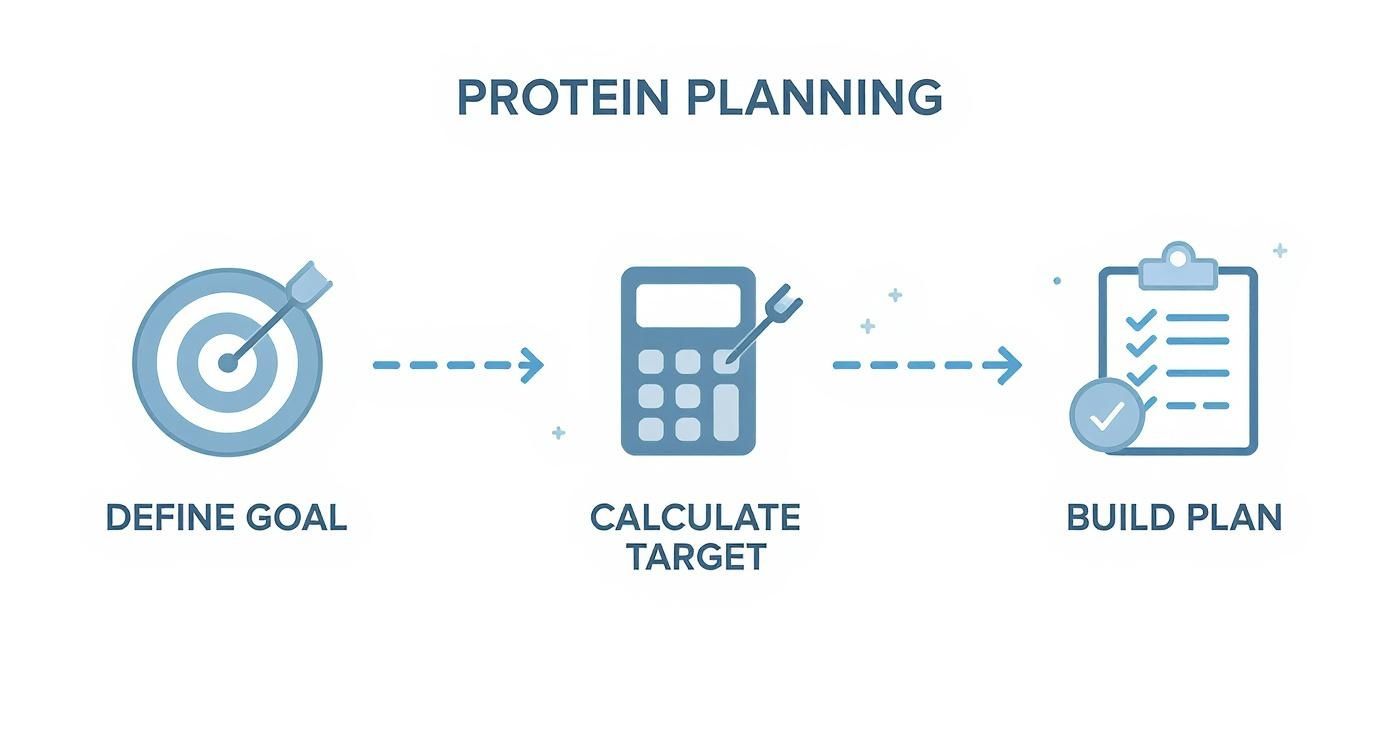
This little "Define, Calculate, Build" mantra is the foundation of any meal strategy that actually works. It keeps you focused on what matters and prevents you from getting lost in the details.
Now, building a plan from zero can sound like a ton of work, and honestly, doing it all with a pen and paper is a grind. That’s where technology can be a lifesaver. If you're curious about what's out there, you might want to check out our deep dive on the best meal planner software available. The right tool can handle all the tedious stuff, freeing you up to just enjoy the food.
So, How Much Protein Do You Actually Need?
Alright, let's get down to brass tacks. Your protein needs are uniquely yours. The number that works for your gym buddy or that influencer you follow on Instagram probably isn't the right one for you. Trying to follow a generic plan is like trying to fit a square peg in a round hole—it just doesn't work and usually leads to frustration.
The first thing we need to do is toss out that old, dusty idea of a single "recommended daily allowance" for protein. That's ancient history. Your ideal protein intake is a moving target, influenced by your weight, how much you move, and what you're trying to achieve with your body.
A solid protein meal plan is built on a clear, achievable daily number. Let's figure out yours.
The Big Three: What Determines Your Protein Target?
Think of your protein goal as a custom-tailored suit. To get the perfect fit, we need to take a few key measurements.
- Your Body Weight: This is the foundation. It makes sense, right? A larger body simply has more tissue to maintain and build, so it needs more protein. We'll use this as our starting point.
- How Active You Are: Are you chained to a desk all day, or are you crushing intense workouts five days a week? The more you train and break down those muscle fibers, the more protein your body screams for to repair and grow back stronger.
- What You're Chasing: Your primary goal is a huge piece of the puzzle. Someone on a mission to pack on serious muscle is going to need a lot more protein than someone just focused on maintaining their health or slowly losing a bit of fat. Trying to lose fat while holding onto precious muscle? That's when a high protein intake becomes your best friend.
The rule of thumb I've seen work for countless people is aiming for 0.7 to 1.0 grams of protein per pound of body weight (that’s 1.6 to 2.2 grams per kilogram for my metric friends). If you’re serious about building muscle or you’re a very active individual, you’ll want to live on the higher end of that spectrum.
Let's Make It Real: Two Examples
Theory is great, but let's see how this plays out for actual people.
Scenario 1: The Muscle Builder
Meet Alex. He's 150 pounds and hits the weights four times a week, dead set on building muscle. He needs to be at the top of our recommended range to fuel that growth.
- The Math: 150 lbs x 1.0 g/lb = 150 grams of protein per day.
Scenario 2: The Fat Loss Pro
Now here's Jess. She's 180 pounds and her goal is to shed fat while doing moderate exercise three times a week. Her big challenge is keeping her muscle while she's eating in a calorie deficit. A solid middle-ground number is perfect for her.
- The Math: 180 lbs x 0.8 g/lb = 144 grams of protein per day.
Figuring out how much protein you need daily is the first, most crucial step. Once you've got that magic number, it becomes the north star for your entire eating strategy. It turns a vague wish into a clear daily mission.
Of course, protein is just one part of the nutritional trifecta. For the full picture, check out our deep dive on how to calculate macros to get your carbs and fats dialed in, too.
Design Your High-Protein Meal Blueprint
Alright, you've got your magic protein number. Now for the fun part: actually planning what you're going to eat. Let's be clear—this isn't about creating some rigid, miserable diet you'll abandon in a week. We're building a flexible blueprint, a game plan that actually fits into your real, messy, wonderful life.
Think of it like being an architect for your plate. You have your core building materials: the protein "bricks" (chicken, tofu, lentils, fish), the carb "framework" (quinoa, sweet potatoes, brown rice), and the healthy fat "mortar" (avocado, nuts, olive oil). The real skill is in how you put them all together, day after day, to build a body that feels strong and energized.
Find Your Protein Rhythm
How you space out your protein intake can make a huge difference in your energy levels and hunger signals. There's no single "correct" way to do it; the best method is the one that syncs up with your body and your schedule.
- The "Even Steven": This is the classic, reliable approach. You simply divide your total protein fairly evenly across three main meals and maybe a snack or two. So if your goal is 150g a day, you might shoot for 40g at breakfast, lunch, and dinner, with a 30g snack thrown in. Simple and effective.
- The "Front-Loader": Some people swear by this. You pack a massive protein punch at breakfast to absolutely crush cravings and power you through the morning. This could look like a 50g protein breakfast, followed by more moderate 35-40g meals later on.
- The "Grazer": Feel sluggish after a big meal? Maybe grazing is your style. You can split your protein goal across five or six smaller meals throughout the day. It’s a fantastic strategy for anyone who’s constantly on the move and needs sustained energy.
Here’s a little mental trick I’ve used for years: every time I make a plate, I ask myself, "Where's the protein?" This simple question forces protein to be the star of the show, not just a sad little side piece.
Building Your Weekly Framework
Let's start sketching this out. A solid plan begins with a basic structure. You don't need to map out every single spice for the next seven days, but having a template makes daily decisions a thousand times easier. And hey, if you're ever stuck for ideas, we’ve got a whole library of high-protein meal prep recipes that can plug right into any plan.
A simple, repeatable structure is your best friend here.
- Breakfast: Make this a non-negotiable. Always aim for 25-40g of protein to start your day strong. Think Greek yogurt bowls loaded with nuts, scrambled eggs with a side of turkey sausage, or a quick protein smoothie.
- Lunch: This is your midday refuel, so keep it balanced with 30-40g of protein. A big salad topped with grilled chicken, a quinoa bowl with black beans and avocado, or—the easiest option of all—leftovers from last night's dinner.
- Dinner: Time for your final major protein hit, another solid 30-40g. This could be anything from lemon-herb baked salmon with roasted asparagus to spicy black bean burgers or a hearty beef and bean chili.
- Snacks: Don't forget the gaps! One or two snacks with 10-20g of protein each are perfect for bridging meals. Things like cottage cheese, a handful of almonds, edamame, or a quality protein bar can help you nail your daily total without feeling stuffed.
Sample High-Protein Meal & Snack Ideas
To get your creative juices flowing, here’s a quick-reference table. Mix and match these ideas to keep your week interesting and prevent the dreaded food boredom.
| Meal Type | Omnivore Option (Approx. Protein) | Vegetarian/Vegan Option (Approx. Protein) |
| Breakfast | 3-Egg Omelet with Cheese & Turkey Sausage (35g) | Tofu Scramble with Nutritional Yeast & Veggies (25g) |
| Lunch | Grilled Chicken Salad with Greek Yogurt Dressing (40g) | Lentil and Quinoa Bowl with Avocado (25g) |
| Dinner | Baked Salmon with Asparagus (35g) | Black Bean Burgers on Whole Wheat Buns (30g) |
| Snack 1 | Greek Yogurt with Berries and Nuts (20g) | Handful of Almonds & an Apple (10g) |
| Snack 2 | Beef Jerky (15g) | Roasted Edamame (15g) |
Use this table as a launchpad. The goal is to build a roster of go-to meals you genuinely enjoy, making it easy to hit your protein target without even thinking about it.
Master Protein Meal Prep Like a Pro
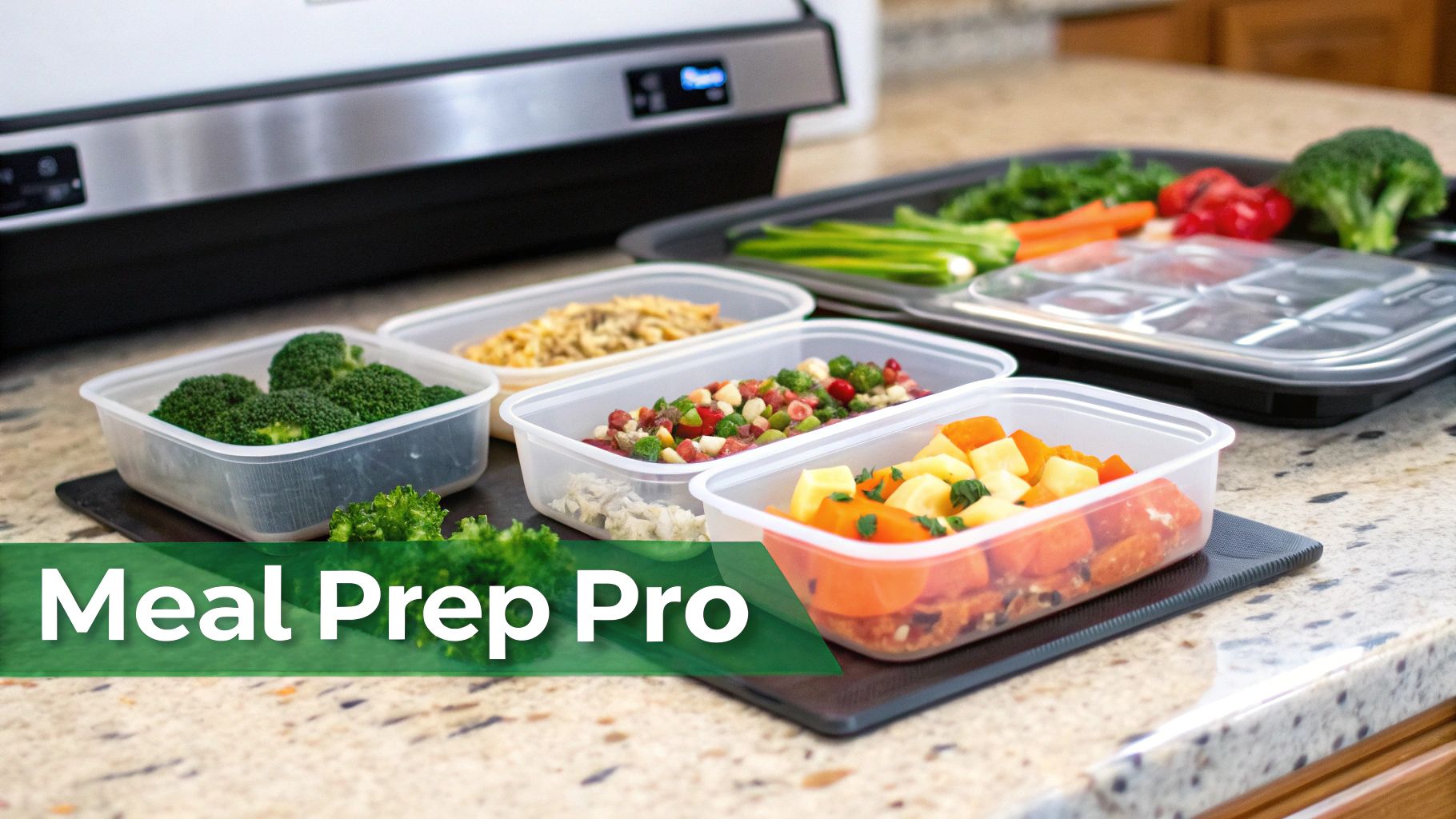
A flawless protein meal plan on paper is great, but a fridge stocked with delicious, ready-to-eat meals? That’s the real win. This is where meal prep becomes your secret weapon. But forget what you've seen about spending your entire Sunday chained to the stove—we're talking about smart, efficient moves that make your week run on autopilot.
The goal here isn't to give yourself a weekend-consuming side hustle. It's about a small upfront investment of your time that pays you back with hours of freedom when life gets crazy. A little prep work is what turns that abstract protein plan into actual, grab-and-go fuel.
Embrace Batch Cooking and Component Prep
My entire approach to meal prep splits into two camps: full-on cooking and partial prep. The magic happens when you combine them for maximum variety and efficiency.
Batch cooking is your workhorse. It’s all about cooking your core ingredients in big ol' batches. Instead of grilling one chicken breast for dinner, you grill five. Instead of a single cup of quinoa, you make a giant pot to last for days. This is the perfect strategy for your foundational proteins and carbs.
Then there's component prep, which is the subtle art of getting ingredients ready for future meals. This means chopping up a mountain of onions, bell peppers, and broccoli ahead of time, or whipping up a big jar of vinaigrette. When it's finally time to cook on a Tuesday night, half the work is already done. It’s a gift from your past self.
Here's the real game-changer: stop thinking you have to prep five identical, complete meals. Just prep the components. A big container of shredded chicken, some chopped veggies, and cooked rice can become a stir-fry on Monday, a salad on Tuesday, and a burrito bowl on Wednesday. You fight off meal boredom with almost zero extra effort.
Smart Storage for Lasting Freshness
All that hard work is for nothing if your food is a soggy mess by Tuesday. Nailing your storage game is absolutely critical for keeping your prepped meals delicious and appealing all week long.
Here are a few tips I swear by:
- Invest in good containers: Airtight glass containers are my go-to. They don't stain or hold onto that weird leftover smell, and you can pop them right in the microwave.
- Keep wet and dry separate: This is non-negotiable for salads. Always store the dressing separately until you’re ready to eat. Same goes for things like tacos or grain bowls—keep sauces and any crunchy toppings on the side.
- Know what freezes well: Hearty stuff like chili, soups, cooked ground meat, and pre-portioned smoothie packs freeze like a dream. This lets you prep even further in advance.
The craving for easy, high-protein food is massive. Just look at the protein bar market—it was valued at USD 15.26 billion in 2025 and is on track to hit USD 23.88 billion by 2034. While meal prep gives you total control, this trend proves people are desperate for convenient protein solutions.
A Sample Prep Day Workflow
So, what does this actually look like? Here’s a peek into a simple, two-hour prep session that sets you up for success:
- Get the Grains Going: First thing's first, get a big pot of quinoa or brown rice cooking on the stove. This is a classic "set it and forget it" task.
- Roast the Veggies: While the grains are simmering, chop up a massive sheet pan of broccoli, bell peppers, and sweet potatoes. Toss them with some olive oil and get them roasting in the oven.
- Cook Your Proteins: Now, fire up the stovetop or grill. Cook your chicken breasts, brown some ground turkey, or hard-boil a dozen eggs.
- Chop and Prep: As everything else cooks, you can wash and chop fresh veggies for salads, mix up a marinade for later, or portion out nuts and seeds for snacks.
By tackling these tasks in parallel, you get a shocking amount done in a short time. To really level up your skills and create incredible weekday meals, check out these effective healthy meal prep strategies.
Turning Your Plan Into a Shopping Cart
Alright, you’ve got a killer protein-packed meal plan ready to go. You're feeling motivated. But then comes the final hurdle before you can actually start cooking: the grocery store. Let's be honest, wandering the aisles without a solid game plan is just asking for trouble. Impulse buys magically appear in your cart, you forget that one crucial ingredient, and what should have been a quick trip somehow eats up an entire hour.
A great plan deserves an equally great shopping list. The mission is simple: get in, get what you need, and get out. This saves you time, money, and a whole lot of frustration.
Let Tech Do the Heavy Lifting
Manually turning a week of meals into a neat, organized shopping list is a drag. You’re sitting there trying to add up how many chicken breasts you need, counting cans of beans, and trying to remember if you're out of olive oil. This is exactly where modern tools can step in and be your new best friend.
AI-powered helpers are completely changing how we approach meal prep. In fact, this push for smarter planning is a big reason the global meal planner market was valued at around USD 13.37 billion in 2025 and is expected to grow at a rate of 11.4% through 2035. If you're curious, you can dig into more insights about this trend and see how it's shaping our kitchens.
The real genius of a smart meal planner isn’t just finding recipes—it's the seamless process from start to finish. Picture this: you click one button, and a perfectly sorted shopping list, organized by grocery store aisle, pops up on your phone. That’s how you get your weekend back.
From Meal Plan to Checkout in a Flash
Forget scribbling a list on a napkin. A digital tool like Meal Flow AI takes all your chosen recipes and instantly spits out a complete shopping list. It even combines ingredients, so you know you need exactly 2 lbs of ground turkey for the week, not 1 lb for Tuesday's tacos and another for Friday's chili. This cuts down on food waste and stops you from buying a third jar of paprika you swear you didn't have.
Here’s a look at how a tool like Meal Flow AI can transform your meal plan into a shopping list you can actually use.
This kind of clean, categorized interface just removes all the guesswork.
When you use a protein meal planner that has this built-in shopping list feature, you're finally connecting all the dots. It creates a smooth workflow from planning to shopping to prepping, helping you hit your goals without drowning you in admin tasks. Suddenly, eating healthy feels less like a chore and more like a simple, sustainable routine.
Got Questions? We've Got Answers
Even with the perfect road map, you’re bound to hit a few detours. That's just life. When you first start using a protein-focused meal plan, a few questions are totally normal. Let's tackle some of the most common ones I hear all the time.
Think of this as your personal FAQ for navigating the real-world bumps and fine-tuning your plan for the long haul.
Does Protein Timing Really Matter That Much Around Workouts?
Ah, the legendary "anabolic window." For decades, we've seen people sprinting from the squat rack to the shaker bottle, terrified of missing that magical 30-minute window for muscle growth.
Here’s the good news: you can chill out. A lot.
While it's smart to get some protein in the hours surrounding your workout to kickstart muscle repair, the frantic rush isn't necessary. Modern research makes it pretty clear that your total daily protein intake is the real hero of this story.
The best strategy? Just spread your protein out across the day. Aim for a solid dose at breakfast, lunch, and dinner. This approach provides your muscles with a steady stream of amino acids for consistent growth and recovery. Forget the stopwatch and focus on hitting your daily number.
What Are the Best Plant-Based Protein Sources?
Long gone are the days when "high protein" just meant chicken breast and a carton of eggs. Building a killer plant-based meal plan that’s packed with protein has never been easier or tastier. You just need to know which ingredients give you the most bang for your buck.
Variety is your best friend here. Mixing and matching different sources is the key to getting all the essential amino acids your body needs.
- Legumes: Lentils, chickpeas, and black beans are the MVPs. They're cheap, incredibly versatile, and loaded with protein and fiber.
- Soy-Based Foods: Tofu, tempeh, and edamame are absolute powerhouses. And don't forget about seitan—it’s made from wheat gluten and boasts a protein content that rivals many meats.
- Nuts & Seeds: Almonds, walnuts, and especially seeds like hemp, pumpkin, and chia are perfect for boosting the protein in your oatmeal, salads, and smoothies.
Weaving these into your weekly rotation is the secret to a satisfying and effective plant-based plan.
What Happens If I Fall Off My Meal Plan?
First off, take a breath. It happens. One unplanned meal or even a whole "off" day won't undo all your hard work. It's a single moment, not a total failure.
The worst thing you can possibly do is spiral into a "what the hell" mindset or try to overcompensate by starving yourself the next day. That's a recipe for disaster.
A healthy lifestyle is built on consistency, not perfection. The goal is to nail it most of the time, not all of the time.
Life is full of birthday cake, impromptu pizza nights, and days when you're just too tired to cook. A truly effective plan has to be flexible enough to handle reality. Learn from it, let it go, and simply get back on track with your very next meal. No guilt, no drama. Just move on.
---
Ready to stop guessing and start building a plan that works for you? Let Meal Flow AI handle the heavy lifting. Our tool creates personalized, high-protein meal plans and even generates your shopping list automatically. It makes eating well almost too easy.