What Is Portion Control Your Ultimate Guide to Healthier Eating
Tired of confusing diets? Our guide answers 'what is portion control' with simple visual tricks and practical tips for lasting health benefits.
Love This Article?
Get personalized meal plans with recipes like this, automatically matched to your nutrition targets.

Ever feel like your eyes are bigger than your stomach? That’s where portion control comes in, and it’s way simpler than it sounds. Forget about rigid diets and forbidden foods. Think of it as just being conscious of how much you're piling onto your plate. It’s a skill, really—one that helps you match what you eat with what your body actually needs to thrive.
What is Portion Control, Really?
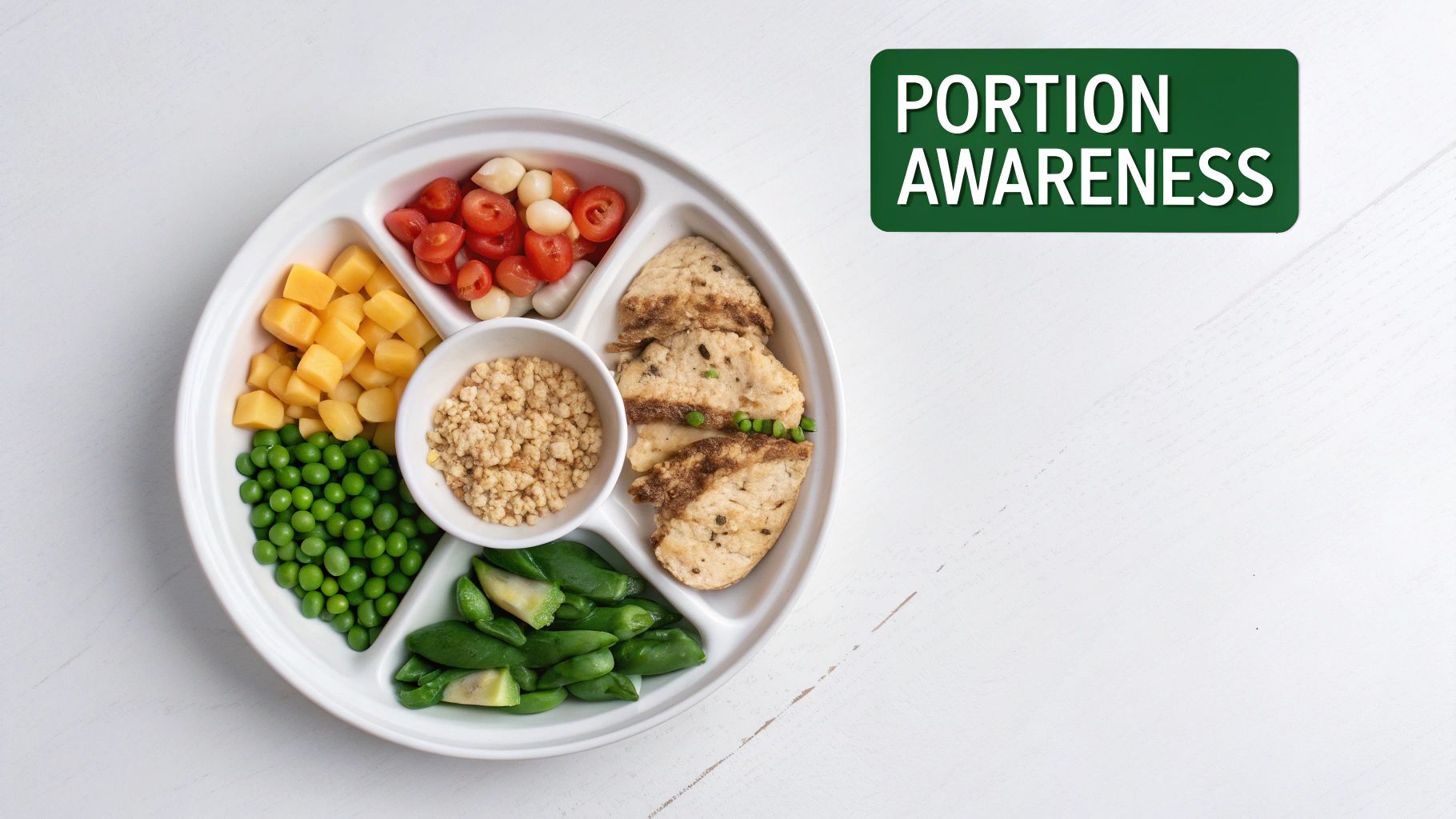
Let's cut through the noise. Portion control isn’t about starving yourself; it’s about awareness. Think of it like managing a personal budget. Instead of dollars and cents, you're working with calories and nutrients to fuel your body efficiently without going into "debt." It’s a sustainable way to build a healthier relationship with food.
This simple shift in mindset turns healthy eating from a chore into a skill. You start listening to your body's hunger and fullness cues instead of just eating until the plate is clean. It’s not about banning pizza, but about enjoying a couple of slices that satisfy you instead of the whole pie.
Portion Size vs. Serving Size
Before we go any further, we need to clear up one of the most common points of confusion: the difference between a serving size and a portion size. They sound similar, but they're worlds apart.
Understanding this difference is the secret handshake to taking back control of your eating habits. It's the first real step toward turning mindless munching into mindful nourishment.
Portion Size vs Serving Size Unpacking the Difference
This little table breaks it down perfectly.
| Concept | Definition | Example |
| Serving Size | The standardized amount of food listed on a nutrition label. It's a reference point. | The nutrition label on a bag of chips might list 12 chips as one serving. |
| Portion Size | The amount you actually choose to eat in one sitting. It's your personal decision. | You might grab a big handful of chips from the bag, which could be 3 or 4 servings. |
See the difference? The goal isn't to get obsessive but to start making your portion size look a lot more like a sensible serving size.
And this stuff actually works. A massive review highlighted by the U.S. Department of Agriculture showed that simply reducing portion sizes consistently slashes calorie intake—we’re talking reductions from 8% to over 20% for both kids and adults. That’s a huge impact from one small change.
Matching your portions to your body’s actual energy needs is a cornerstone of good health. You can learn more about how to calculate your daily calorie needs to make even smarter choices. For those on a weight management journey, this approach works beautifully alongside other tools and medical options, like online weight loss medication.
The Unexpected Perks of Smarter Portions
Most people hear "portion control" and immediately think "weight loss." And sure, it's a huge part of that. But honestly, that's just scratching the surface. Thinking of portion control as just a diet trick is like thinking of a smartphone as just a calculator. The real magic lies in the ripple effect it has on your entire life—your energy, your digestion, and even your wallet.
The first thing you’ll probably notice is how much better you feel after a meal. You know that heavy, bloated, “I need to unbutton my pants” feeling? That’s your digestive system waving a white flag after being overloaded. When you eat the right amount, you give it a manageable task. The result? No more post-meal misery, just a comfortable sense of satisfaction.
Banish the Afternoon Slump
We’ve all been there. It’s 2 p.m., your eyelids feel like they weigh a hundred pounds, and your brain has turned to mush. That dreaded afternoon slump is often the direct result of a blood sugar crash, usually caused by a giant, carb-loaded lunch. Your body gets hit with a tidal wave of sugar, sends out a flood of insulin to deal with it, and then boom—the crash leaves you drained and foggy.
"Mastering portion control isn't about restriction; it's about giving your body precisely what it needs to thrive. The result is stable energy, mental clarity, and a profound sense of well-being that food was always meant to provide."
By simply eating smaller, more balanced meals, you keep your blood sugar on an even keel. No more wild spikes, no more dramatic crashes. Just a steady, reliable stream of energy that keeps you sharp and productive all afternoon long.
Financial and Mindful Wellness
The benefits don't stop there—they even show up in your bank account. When you start paying attention to how much you’re serving, you’ll be amazed at how much less food you waste. That little bit of leftover pasta you used to scrape into the trash? That’s now lunch for tomorrow. Over time, buying and cooking only what you need can save you a surprising amount of money. We're talking hundreds of dollars a year for some families.
But maybe the best perk of all is the one that’s hardest to measure. Practicing portion control helps you get back in touch with your body's own signals. You start to learn the difference between head hunger and actual, physical hunger. You recognize the subtle feeling of being perfectly full and satisfied. Eating stops being an automatic, mindless habit and becomes a moment of genuine self-care. That shift in awareness is a gift that keeps on giving.
Your No-Scale Guide to Perfect Portions
Forget about lugging measuring cups around or awkwardly trying to use a food scale at a friend's dinner party. Seriously, who does that? The best tools for eyeballing your portions are the ones you have with you 24/7: your own two hands.
Learning a few simple visual tricks can turn you into a portion-estimating pro in no time flat. This isn't about militant precision; it's about being practical and building a mental map. Soon, you'll be able to eyeball the right amount of food whether you're at a buffet, a family holiday, or just staring into your own fridge. It makes healthy eating feel like second nature, not a chore.
The Everyday Portion Control Cheat Sheet
Ready for the easiest cheat sheet you'll ever learn? This little guide will help you connect your hand and common objects to typical portion sizes, making it a breeze to size up your plate wherever you are.
| Food Group | Hand Guide Visual | Common Object Comparison |
| Protein (Meat, Poultry, Fish) | The palm of your hand (no fingers!) | A deck of cards |
| Carbohydrates (Rice, Pasta, Grains) | Your clenched fist | A tennis ball |
| Vegetables (Non-starchy) | Two hands, cupped together | A baseball |
| Fruits (Whole or Chopped) | One cupped hand | A lightbulb |
| Fats (Oils, Butter, Dressings) | The tip of your thumb | A poker chip or a postage stamp |
There you have it—a simple, effective way to gauge your portions without a single piece of equipment. It’s all about making smarter choices feel effortless.
Let Your Hands Do the Talking
Let's break down how this works in the real world. Your hand is surprisingly good at mimicking standard serving sizes.
- Protein (Meat, Fish, Poultry): That slab of chicken or fish should be about the size and thickness of your palm (minus your fingers). This visual trick helps you aim for a solid 3- to 4-ounce serving.
- Carbohydrates (Grains, Starches): Ball up your hand into a fist. That’s roughly the equivalent of one cup, a great guide for a serving of rice, pasta, or potatoes.
- Vegetables and Fruits: A single cupped hand is a great way to measure out about a half-cup of chopped fruit, berries, or corn. When it comes to leafy greens like spinach or kale, think bigger—two full hands cupped together.
- Fats (Oils, Butter, Dressings): Look at the tip of your thumb, from the top knuckle up. That's your visual for about one tablespoon, which is perfect for measuring out salad dressing, peanut butter, or cooking oil.
These small adjustments on your plate can lead to some pretty significant perks, from better digestion and more stable energy to saving money and wasting less food.

It’s amazing how a little mindfulness at mealtime can ripple out to affect your well-being and even your wallet.
Bringing it All Into Focus
What's fascinating is that our idea of a "normal" portion isn't a global standard. A massive review of dietary guidelines from 96 countries revealed some big differences. For example, European guidelines often call for larger portions of meat and fish, while many African guidelines suggest more generous servings of grains.
It just goes to show that context is everything. These visual guides are a starting point to help you become more aware of how much you're really eating, rather than just what's served to you.
Ultimately, these techniques are all about building your confidence. Once you get the hang of it, you’ll be able to create a balanced plate without a second thought. And if you're ready to get a bit more granular, our guide on how to calculate serving sizes can help you fine-tune those visual estimates even more.
Common Portion Control Mistakes to Avoid
So, you're starting to get the hang of this whole portion thing. You're eyeballing protein with your palm and feeling pretty good about it. Awesome. But even with the best intentions, a few common tripwires can send you tumbling. Let's talk about the sneaky mistakes that even seasoned pros make and how to sidestep them.
First up, the biggest offender: the "clean plate club." Most of us were practically indoctrinated into it as kids. But forcing yourself to finish every last bite teaches you to completely ignore your body when it’s screaming, "I'm full!" It's time to officially hand in your membership card.
The Hidden Saboteurs on Your Plate
Beyond just cleaning your plate, a few other sneaky habits can add up without you even realizing it. This isn't about being perfect; it's just about knowing what to watch for.
- Forgetting Liquid Calories: That morning latte, the glass of orange juice, or your evening wind-down wine? They all have calories, but they don't fill you up. It’s so easy to forget they count, but those liquid portions can be surprisingly hefty.
- The "Health Halo" Effect: Oh, this one is a classic. You think, "It's avocado, it's good for me!" and proceed to eat the whole thing. Nuts, olive oil, and other healthy fats are fantastic, but they are also incredibly calorie-dense. A little goes a long way.
- Sauce and Dressing Overload: That beautiful, crisp salad can become a calorie bomb in disguise when you drown it in creamy dressing. A tablespoon is a serving; half the bottle is… well, not. Same goes for mayo, BBQ sauce, and other tasty add-ons.
Mindless eating is the enemy of portion control. It's not the single big meal that gets you; it's the thousand little, unconscious bites, handfuls, and pours that add up over time.
Just becoming aware of these little extras is half the battle. Swapping a creamy ranch for a light vinaigrette or actually measuring your olive oil instead of just glugging it from the bottle can make a huge impact, and you won't even miss it.
Simple Fixes for Common Problems
The good news? For every one of these common mistakes, there's a ridiculously simple fix. We're not talking about a life overhaul here—just small, smart tweaks that deliver big results and help you truly master what is portion control.
First, break out the smaller plates and bowls. This is a brilliant mind trick backed by science—the Delboeuf illusion makes a standard serving of food look more generous on a smaller plate, helping your brain feel satisfied with less. It’s an effortless win.
Next, pre-portion your snacks. Don't eat straight from that giant bag of chips or canister of almonds. Take five minutes when you get home from the store and divide them into single-serving baggies or containers. This one move single-handedly stops the mindless munch-fest that happens in front of the TV, which is where portion control goes to die. No more guesswork, no more "oops."
Making Portion Control Work for Your Busy Life
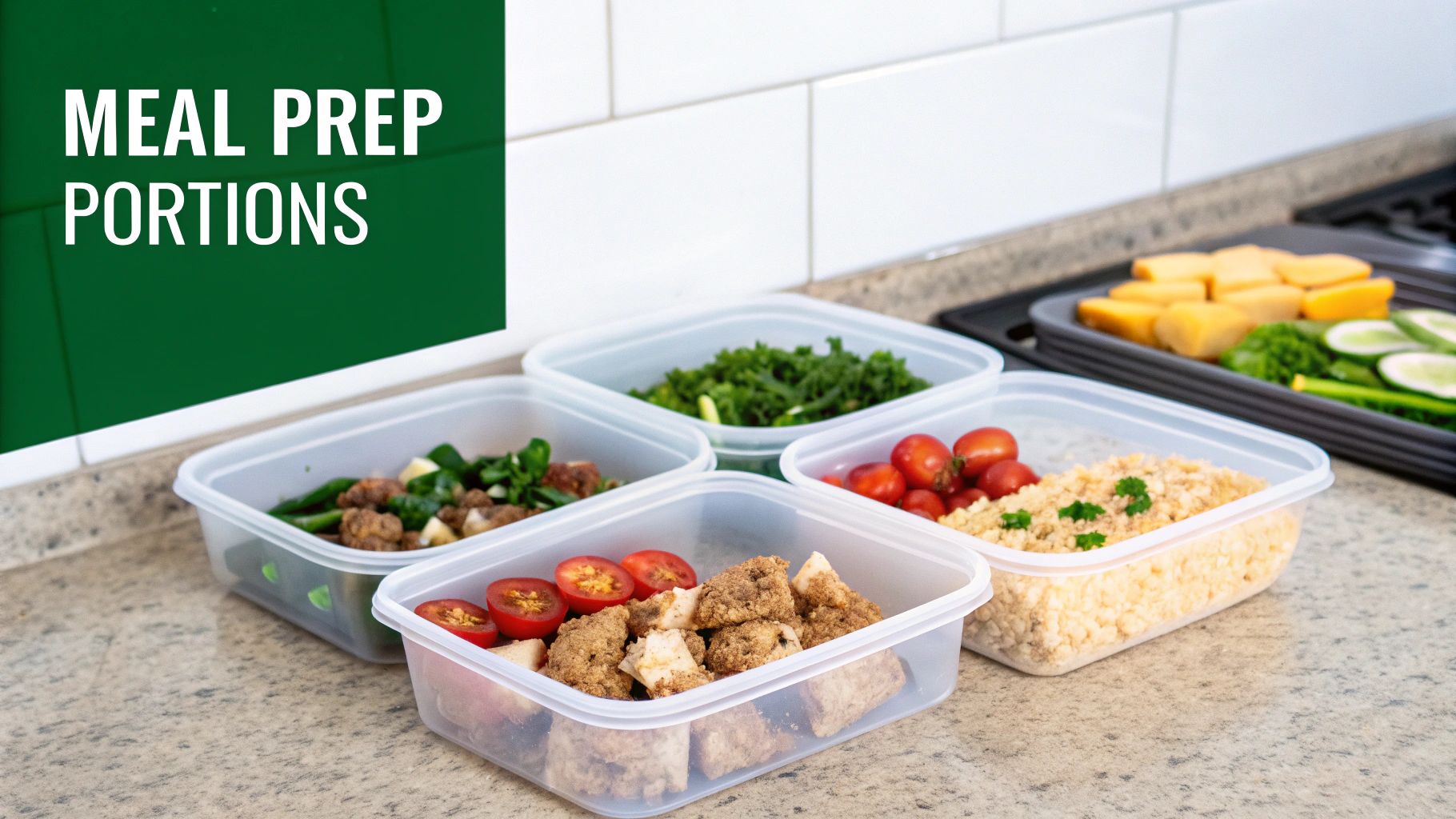
Knowing what a portion size should be is one thing. Actually sticking to it during a chaotic week? That’s a whole different ball game. But here’s the secret: you don’t need more time. You just need a better system.
And that system, my friends, is meal prep.
By carving out just an hour or two on a Sunday afternoon, you can eliminate the daily guesswork and decision fatigue that so often leads to grabbing whatever’s easiest (and usually biggest). You're literally setting your future self up for a week of perfectly portioned success.
Master Your Meal Prep
Think of meal prep as your nutritional secret weapon. It all starts with batch-cooking some versatile staples. I'm talking about things like quinoa, brown rice, grilled chicken, or a big pan of roasted veggies. These are your building blocks for the week.
Once everything is cooked, don't just throw it all in one giant container. The crucial next step is to divide and conquer. Immediately separate your staples into single-serving portions. This one move is an absolute game-changer. If you're looking for the right tools, our guide on choosing the best portion control meal prep containers will point you in the right direction.
It's not just us—people are catching on to this big time. The market for pre-portioned packaging is already valued at around $35 billion and is expected to rocket to nearly $55 billion by 2032. Why? Because research shows that a whopping 69% of consumers are actively looking for portion-controlled snacks.
A Family-Friendly Approach
Portion control doesn't have to be a solo mission—it works great for the whole family, too. The trick is to deconstruct your meals. Instead of serving up fully plated dinners, think "build-your-own" taco bar style for almost any meal.
Serve a main protein (like shredded chicken), a carb (like rice), and a few veggie options in separate bowls on the table. This lets everyone build a plate that fits their own needs—a bigger serving for a growing teenager, a smaller one for a little kid, and a perfectly balanced plate for you.
This approach isn't just about controlling portions; it also empowers your kids to make their own healthy choices and learn what a balanced plate looks like.
At the end of the day, making this work long-term is all about building lasting habits for health. It's the small, repeatable actions that truly lead to success, not drastic, one-off efforts.
Got Questions? We’ve Got Answers.
Alright, even when you're fired up and ready to go, a few questions always pop up. Let's clear the air on some of the most common hangups about portion control so you can keep moving forward.
So, Am I Stuck Measuring My Food Forever?
Heck no! Think of your measuring cups and food scale like training wheels on a bike. They’re just there to help you get your balance and learn what a real portion of chicken or a cup of quinoa actually looks like.
After a couple of weeks, you’ll start to get a feel for it. That initial effort is all about building a mental library of portion sizes, so you can confidently "eyeball" your food whether you're at home or out and about.
How Do I Deal With Those Giant Restaurant Portions?
We’ve all been there—a plate of pasta the size of your head arrives at the table. Restaurant servings are notoriously massive, often packing two or three standard portions into one meal. The trick is to walk in with a strategy.
Here are a few game-changers:
- Ask for a to-go box right away. As soon as your food comes, slice it in half and pack it up. What you don't see, you won't eat.
- Go halfsies with a friend. Splitting an entrée is one of the easiest ways to enjoy a great meal without the food coma.
- Build your own meal. Who says you have to order an entrée? A hearty appetizer paired with a side salad often makes for a perfectly balanced and portioned dinner.
Portion control isn’t about depriving yourself. It's about finding the right balance. When you get the portions right, no food is off-limits.
Can I Still Eat My Favorite Junk Food?
Yes! A thousand times, yes! The whole point of learning what is portion control is to kick that "good food" vs. "bad food" mindset to the curb. Any food can be part of a healthy plan.
Craving ice cream? Go for it. Just have a sensible scoop (think: the size of a tennis ball) and actually enjoy it. Savor every last spoonful. When you manage the amount, you get to have the treats you love without feeling like you've wrecked your progress. It's the best of both worlds.
---
Ready to make portion control a total non-issue? Meal Flow AI creates personalized meal plans with every portion figured out for you and zaps the shopping list straight to Instacart. Start planning smarter meals today at https://mealflow.ai