Your Complete Whole 30 Vegan Meal Plan For A Total Reset
Tackle the Plant-Based Whole30 with this complete Whole 30 vegan meal plan. Get delicious recipes, shopping lists, and expert tips for a successful reset.
Love This Article?
Get personalized meal plans with recipes like this, automatically matched to your nutrition targets.
Ready to tackle a Whole30 but want to keep it 100% plant-based? You're in the right place. Crafting a whole 30 vegan meal plan is your secret weapon for a powerful 30-day reset, perfectly marrying the strict, system-shocking principles of Whole30 with a vibrant, plant-forward lifestyle. Thanks to the official Plant-Based Whole30 program, this isn't just a workaround—it’s a dedicated, fully-supported path.
So, You Want To Do Whole30 The Vegan Way
Welcome to the ultimate food challenge, completely reimagined. For the longest time, the Whole30 felt like a private party for paleo fans and meat-eaters. If you were vegan, you were pretty much stuck at the door. But that era is officially over.
The Plant-Based Whole30 program finally bridges the gap. It takes the original's core philosophy and creates a parallel, officially-sanctioned track designed specifically for those who choose plants. This isn’t just a few tweaks; it's a ground-up rebuild.
The original program, which kicked off back in 2009, was a smash hit. But its strict "no legumes, no soy" rule left vegans out in the cold. Seeing a massive gap, the creators finally launched the Plant-Based Whole30 to make the program's incredible benefits accessible to the nearly 79 million vegans worldwide. This adaptation thoughtfully swaps animal proteins for compliant plant-based powerhouses like lentils, chickpeas, and tofu.
Success on any Whole30 track comes down to preparation. For some great universal tips, check out this guide on how to meal prep for Whole30.
Wait, Why Did They Even Make This?
The goal of any Whole30 is simple: reset your health, your habits, and your entire relationship with food. The plant-based version carries that exact same torch, just with a different fuel source. It was created for a growing community of people who were hungry to identify food sensitivities and boost their well-being without having to compromise their ethics.
It’s tailor-made for:
- Long-time vegans and vegetarians who’ve been looking for a structured, whole-foods reset.
- The plant-curious crowd wanting a guided, nutrient-dense way to dip their toes into vegan eating.
- Anyone who genuinely wants to figure out how things like legumes and minimally-processed soy really affect their body.
The mission is exactly the same: discover how the food you eat is truly impacting your life. This isn't about restriction for the sake of it. It’s about gaining powerful self-knowledge that leads to real, lasting food freedom.
Original Whole30 Vs Plant-Based Whole30 Key Differences
At a glance, the two programs look similar, but the protein and fat sources are where they diverge dramatically. Here's a quick breakdown of what's allowed in each.
| Food Group | Original Whole30 Rule | Plant-Based Whole30 Rule |
| Protein | Meat, seafood, eggs | Legumes (beans, lentils, peas), soy (tofu, tempeh), edamame |
| Fats | Animal fats, ghee, coconut oil, olive oil | Nuts, seeds, avocados, plant-based oils |
| Carbs | Vegetables, fruits, potatoes | Vegetables, fruits, potatoes, and carbs from legumes |
| Dairy | Strictly Prohibited | Strictly Prohibited (including plant-based dairy substitutes with non-compliant ingredients) |
| Sweeteners | Strictly Prohibited (real or artificial) | Strictly Prohibited (real or artificial) |
| Grains | Strictly Prohibited | Strictly Prohibited |
This table shows that while the "no's" (dairy, grains, sugar) stay the same, the "yes's" for protein are completely different, making the vegan version possible and nutritionally complete.
The Real-World Results People Actually Get
Forget the rules and food lists for a second—the real magic is in how you'll feel. The program is engineered to deliver noticeable, sometimes life-changing, results. A survey of past participants found that a whopping 95% reported significant benefits, proving the program’s power no matter which version you choose.
Some of the most common wins include:
- Rock-solid, steady energy that gets you through the day without that dreaded 3 p.m. crash.
- Deeper, more restorative sleep—we're talking waking up feeling genuinely refreshed.
- Quieting the "food noise." Cravings shrink, and you feel back in the driver's seat.
- Clearer skin and smoother digestion as your system gets a break from processed junk.
Think of it as your own personal 30-day science experiment. It’s a chance to hit reset, gather some real data on what makes your unique body thrive, and kickstart a powerful transformation—one delicious, plant-based meal at a time.
Let’s Talk Rules: Nailing the Plant-Based Whole30
Alright, let's get into the nitty-gritty of what you can and can't eat. A successful Whole30 really boils down to knowing the rules inside and out. Think of this as your playbook for the next month—mastering these guidelines is your first major win.
And hey, don't think of this as a diet of deprivation. Flip that script. This is all about abundance and discovering just how amazing you can feel when you load up on incredible, nutrient-dense foods. Your shopping cart is about to get way more colorful.
What Your Plate Should Look Like
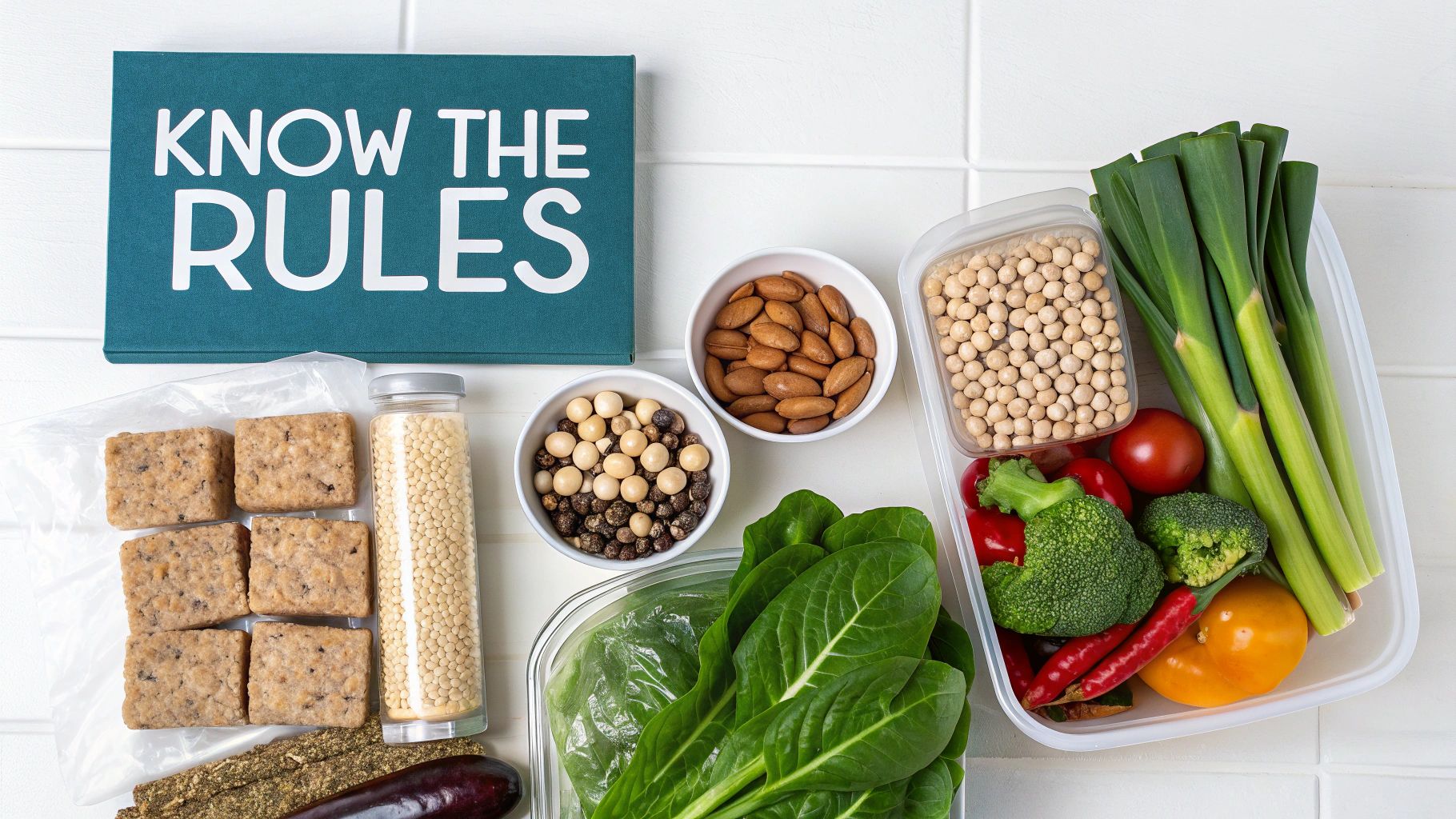
Your meals are going to be built around a beautiful foundation of veggies, fruits, and healthy fats. The big difference with the Plant-Based Whole30 is the protein sources—they’ve been specifically added to make sure you're getting everything your body needs to not just survive, but truly thrive.
Here’s your official "Go for It!" list:
- Vegetables: Go wild! All of them are on the table. Pile on the leafy greens, cruciferous powerhouses like broccoli and cauliflower, and starchy friends like potatoes and sweet potatoes. Seriously, eat the rainbow.
- Fruits: Keep fruit in the mix, but in moderation. Think of berries, apples, and bananas as a great way to get some natural sweetness and a nutrient boost.
- Healthy Fats: Avocados, nuts (just no peanuts!), seeds, coconut, and olives are your new best friends. They bring the flavor and keep you feeling full and satisfied.
- Legumes: This is the game-changer! Beans, lentils, peas, and chickpeas are a go. These will be your primary source of protein and fiber.
- Minimally-Processed Soy: Tofu, tempeh, and edamame are your approved protein heavy-hitters.
The "See You in 30 Days" List
Now for the foods you'll be taking a break from for the next 30 days. This isn't about labeling these foods as "bad." It's an experiment. You're simply removing them to see how your body feels and functions without them.
The idea is to press the reset button and cut out common sources of inflammation. That means a temporary goodbye to all added sugar (real or fake), alcohol, grains (yep, even rice and corn), and dairy. Get ready to become an expert label-reader—sugar and grains are sneaky and hide in everything!
The vegan plan is designed to provide 25-30g of protein per meal from sources like tempeh and lentils, helping active adults hit their targets. This approach supports a key benefit of the program, as a meta-analysis showed high-plant diets are tied to 22% lower inflammation markers. Find out more about how the program rules are structured to support your health.
Understanding why a rule exists makes it so much easier to stick to. It's also super important to get your info from trusted sources and avoid common nutrition misinformation that could throw you off course.
The Infamous "Pancake Rule"
Ah, the Pancake Rule. This one is all about mindset, and honestly, it's just as important as the food rules. The gist is this: don't try to recreate baked goods, junk food, or your favorite treats using "approved" ingredients.
That means no black bean brownies, no almond flour cookies, and definitely no "nice" cream from frozen bananas. Why? Because the whole point is to change your habits and your emotional connection to food, not just find a clever loophole to feed your sugar cravings.
A huge part of the experience is breaking that cycle of reaching for treat-like foods for comfort or as a reward. A great way to build satisfying meals that don't need a "treat" at the end is by understanding how to combine ingredients. To learn more, check out our guide on https://mealflow.ai/blog/what-are-complete-protein-sources.
When you stick to this rule, you give your brain a real chance to forge new, healthier pathways. You'll start to appreciate the deep, natural sweetness of a roasted sweet potato or a perfectly ripe piece of fruit. That, my friend, is a massive step toward long-term food freedom.
Your 7-Day Whole30 Vegan Meal Plan
Alright, let's get down to business and turn all that theory into some seriously delicious food. It's time to ditch the decision fatigue and the nightly "what on earth am I going to eat?" scramble. Think of this as your complete, flavor-first guide to crushing your first week on a vegan Whole30.
I promise, we're going way beyond sad salads and steamed broccoli here. This plan is all about variety, rich flavors, and satisfying textures. It's designed to keep you feeling full, fired up, and actually excited about what's on your plate.
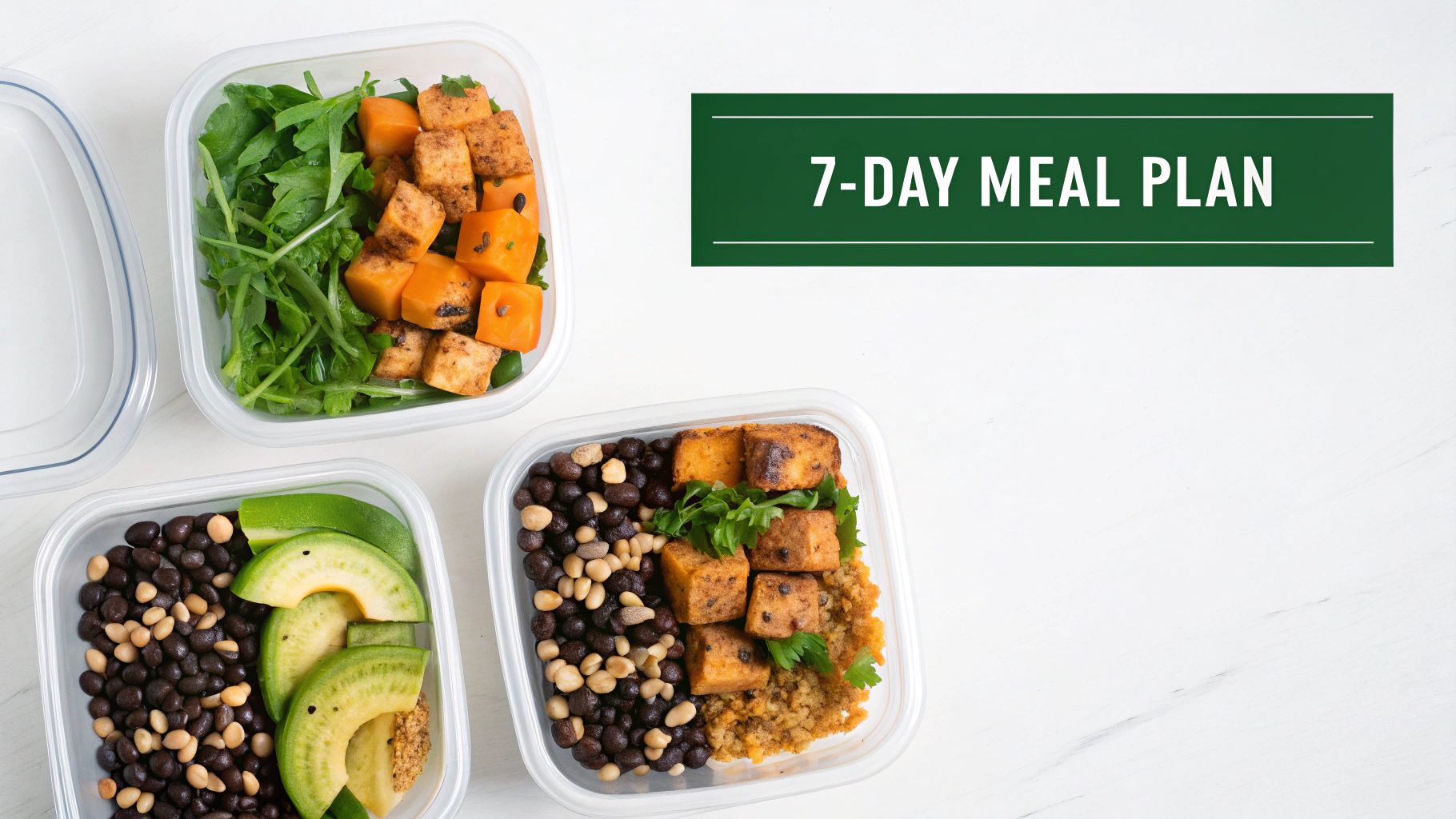
This whole 30 vegan meal plan isn't just a list of meals; it's a battle plan. It's your strategy for getting balanced, plant-powered nutrition all week long without breaking a sweat.
What Your First Week Looks Like
Here's a day-by-day menu to show you just how tasty and doable this is. A quick heads-up on portions: these are just a guide. Your real goal is to listen to your body and eat until you're satisfied, not stuffed.
Day 1
- Breakfast: Sweet Potato Hash with black beans, diced bell peppers, and onions, topped with a ridiculous amount of fresh cilantro.
- Lunch: A massive Lentil Salad with mixed greens, cucumber, tomatoes, avocado, and a zesty lemon-tahini dressing.
- Dinner: Rich Coconut Curry loaded with baked tofu, broccoli florets, and carrots.
Day 2
- Breakfast: A vibrant Tofu Scramble with spinach, mushrooms, and a dash of turmeric to give it that golden glow.
- Lunch: Leftover Coconut Curry. Hello, easy lunch! Meal prep is your best friend.
- Dinner: Hearty Black Bean Burgers (hold the bun, of course) served on a crisp lettuce bed with tomato slices and a side of roasted asparagus.
Day 3
- Breakfast: Creamy Chia Seed Pudding made with compliant coconut milk, then topped with fresh berries and slivered almonds.
- Lunch: Those leftover Black Bean Burger patties, crumbled over a big salad.
- Dinner: Stuffed Bell Peppers filled with a savory mix of "riced" cauliflower (our quinoa stand-in), lentils, and warming spices.
This plan is engineered to be as delicious as it is efficient. We're strategically using leftovers for lunches to slash your kitchen time during the week. That’s not being lazy; it's a cornerstone of smart meal prepping.
Sample Day At A Glance (Day 1)
Let's zoom in on Day 1 to see how these meals work together to give you the energy and nutrients you need to feel fantastic.
Here's a quick look at the nutritional game plan for a single day.
| Meal | Main Components | Key Nutrients |
| Breakfast | Sweet potatoes, black beans, bell peppers, cilantro | Complex carbs for sustained energy, plant-based protein, fiber, Vitamin A |
| Lunch | Lentils, mixed greens, avocado, tahini dressing | High protein, fiber, healthy fats, iron, folate |
| Dinner | Tofu, coconut milk, broccoli, carrots | Complete protein, healthy fats, fiber, Vitamin C |
See? We're not just throwing compliant foods together. Each plate is thoughtfully built to support your body and keep you going strong.
Your Complete Grocery Shopping List
Never go into a grocery store without a list—it's like walking into a battle unarmed. This list is organized by store section to get you in and out in record time.
Produce Section
- Sweet potatoes (2 large)
- Black beans (2 cans, make sure they're no-sugar-added)
- Bell peppers (3, grab a few different colors)
- Onions (2 yellow, 1 red)
- Garlic (1 head)
- Cilantro & Parsley (1 bunch each)
- Avocados (3)
- Limes & Lemons (2 each)
- Mixed greens (2 large containers)
- Cucumbers, Tomatoes, Carrots
- Broccoli, Spinach, Mushrooms, Asparagus
Protein & Dairy-Free Aisles
- Firm or extra-firm tofu (2 blocks)
- Cooked brown or green lentils (1 package or 2 cans)
- Full-fat coconut milk (2 cans, unsweetened!)
- Unsweetened almond milk (1 carton)
Pantry Staples & Spices
- Chia seeds
- Tahini
- Almonds (slivered) & Cashews (raw)
- Olive oil & Coconut oil
- Balsamic vinegar
- Spices: Cumin, chili powder, turmeric, curry powder, salt, black pepper
- Nutritional yeast (your secret weapon for a "cheesy" flavor)
Approved Sips
- Herbal teas are a lifesaver for staying hydrated and adding some flavor without breaking any rules. For your whole 30 vegan meal plan, consider options like refreshing plant-based peppermint tea bags that are free from any sneaky added sugars.
Making It Happen: The Daily Prep Schedule
A little bit of prep work makes a world of difference. Here’s how to make your week run like a well-oiled machine.
The Big Sunday Prep (Set aside 1-2 hours)
- Chop-a-thon: Wash and chop all your veggies for the week. Seriously, all of them. Store them in airtight containers and feel like a kitchen genius all week.
- Make "Rice": Grate or pulse your cauliflower into "rice" so it's ready to go.
- Get Saucy: Whip up your lemon-tahini dressing.
- Press the Tofu: Squeeze the water out of your tofu blocks now. They'll be perfectly prepped for cooking later.
This Sunday ritual is a total game-changer. When Tuesday evening rolls around and you're tired, half the dinner prep is already done. For more ideas on how to make your prep even smarter, check out these 10 vegan meal prep recipes to fuel your week.
Quick Daily Prep (Just 5-10 minutes)
- Morning: While your coffee or tea is brewing, grab your lunch. Pack up last night's leftovers or toss together your pre-chopped salad ingredients. Done.
- Evening: Take a quick peek at the plan for tomorrow. Pull out anything that needs to thaw from the freezer. This tiny step prevents future-you from having a panic attack.
This one--two punch of a big Sunday prep and tiny daily habits is what makes sticking to your whole 30 vegan meal plan feel easy and empowering, not like a chore. You've totally got this.
Let's Be Real: Getting Through the First Week Without Losing Your Mind
Alright, let's have a frank conversation. That first week of any big diet change can feel like a ride on the world's wonkiest rollercoaster. Your body is in full-on detox mode, kicking sugar to the curb and trying to figure out what the heck is going on. Consider this your personal survival guide for those inevitable bumps in the road.
This isn't just about gritting your teeth and powering through. It's about being smart and prepared. Knowing what's coming makes the difference between throwing in the towel and feeling like a total boss. So, let’s get into the nitty-gritty of what you can expect on your Whole30 vegan journey.
Taming the Sugar Dragon & The Dreaded "Carb Flu"
One of the first monsters you'll likely face is the infamous "carb flu." As your body flips the switch from burning quick sugars to using more stable fuel, you might feel tired, foggy, and maybe a little… cranky. It's totally normal, I promise.
At the same time, your sugar cravings might feel like they've been dialed up to an 11. Your brain got used to easy, sugary energy hits, and now it's throwing a full-blown tantrum.
Here’s how you fight back and win:
- Water is Your Best Friend: Seriously, drink more than you think you need. A lot of the time, what feels like a desperate craving is just your body screaming for water.
- Don't Fear Fat and Protein: This is not the time to skimp on your meals. Make sure every single plate is loaded with healthy fats (hello, avocado!) and solid protein (like tofu and lentils) to keep your blood sugar stable and your stomach happy.
- Move Your Body: When a craving hits, get up! A brisk walk around the block or a few minutes of stretching can work miracles. It’s a great distraction and a natural mood booster.
Dealing with Bloat and… Other Digestive Surprises
Pivoting to a diet packed with fiber-rich plants is an amazing long-term move for your gut. The short-term transition, however, can get a little… bubbly. If you're feeling bloated, you're in good company. Your gut is literally rearranging the furniture to accommodate all the new, awesome fiber you're sending its way.
In fact, studies show that initial bloating is super common, with 40-50% of people experiencing it while their gut flora gets with the new program. The good news? It almost always clears up within 7-10 days. Considering that Whole30 adherence is typically around 60-70% and 80% of people report better sleep and mood, it’s a small price to pay. You can always explore more about what to expect on your Whole30 journey.
Look, don't freak out if your digestion feels a bit wonky at first. Your body is doing some seriously important work. Think of it like a system upgrade—there’s just a brief, sometimes gassy, installation period.
Surviving Parties, Dinners, and Other People
Trying to stick to a plan during social events can feel like navigating a minefield. Your friends and family mean well, but they might not get why you’re passing on the Friday night pizza or happy hour cocktails. The secret is having a solid game plan.
Your Social Survival Checklist:
- Never Show Up Starving: This is rule number one. Have a compliant meal or a satisfying snack before you leave. Walking into a party hungry is a recipe for disaster.
- BYOD (Bring Your Own Dish): This is the ultimate power move. Whip up a delicious, compliant dish that you can share. You guarantee you'll have something to eat, and you might just blow everyone away with how good it is.
- Have Your "Why" Ready: You don't owe anyone a dissertation on nutritional science. Keep it simple and confident. A quick, "I'm doing a 30-day reset to figure out some food sensitivities," usually does the trick.
- It's About the People, Not the Pretzels: Remember why you're there—to connect with people. Grab a sparkling water with a lime wedge, look fancy, and dive into the conversation.
These first-week challenges are just that—challenges. They’re temporary tests, not life sentences. If you see them coming and have a strategy, you'll cruise right through them and set yourself up for an incredible 30 days. You've got this.
So, What Happens After Whole30? Finding Your Food Freedom
You made it. You survived 30 days of scrutinizing labels, prepping mountains of veggies, and politely declining foods you once ate on autopilot. Seriously, take a bow. That's a huge deal!
But here's the secret: the real prize isn't just finishing the 30 days. It's what comes next. This is the part where all that hard work pays off, and you finally get the answers you were looking for. Welcome to the Reintroduction phase.
The Real Reason You Did This: Your Food Freedom Roadmap
Think of the last month as hitting the reset button on your body. Everything is running smoothly, the system is quiet, and it's finally ready to give you some honest feedback. Now, you get to be a detective in your own life.
The whole point is to reintroduce specific food groups—one at a time, nice and slow—and just listen. This isn't a mad dash back to your old eating habits. It's a careful, strategic experiment designed to give you undeniable proof of how certain foods make you feel. You're about to connect the dots between what's on your plate and your energy levels, your mood, your sleep, and so much more.
The official Reintroduction schedule is your best guide here. It’s smartly designed to test less commonly problematic foods first, which gives you the clearest possible signals from your body.
A typical reintroduction cycle goes something like this:
- Day 1: Introduce the food group you're testing.
- Days 2 & 3: Go right back to your strict Plant-Based Whole30 meals.
- Day 4: Test the next food group on your list.
- And on it goes...
Don't skip the two days in between! That "one day on, two days off" pattern is the key. It gives your body time to react and then reset, preventing you from confusing the effects of one food with another.
A Step-by-Step Guide to Your Reintroduction
Ready to start gathering some intel? Let's walk through it. Since you just crushed a vegan Whole30, your reintroduction will look a little different than the standard version. You’ve already been eating legumes and soy, so we can check those off the list! Your main focus will be on grains and any other food groups you're personally curious about.
First Up: Non-Gluten Grains
On Day 1 of your reintroduction, you might bring back something like rice, corn, or quinoa. Try to have a serving with each of your three meals for the day. Then, for the next two days, it’s back to your Whole30 baseline.
Pay close attention to everything. Feeling bloated or foggy? Did your energy suddenly tank in the afternoon? Any weird skin issues cropping up? Jot it down in a simple journal. You’re collecting data!
Remember the hurdles from that first week? You’ve already conquered the toughest part.
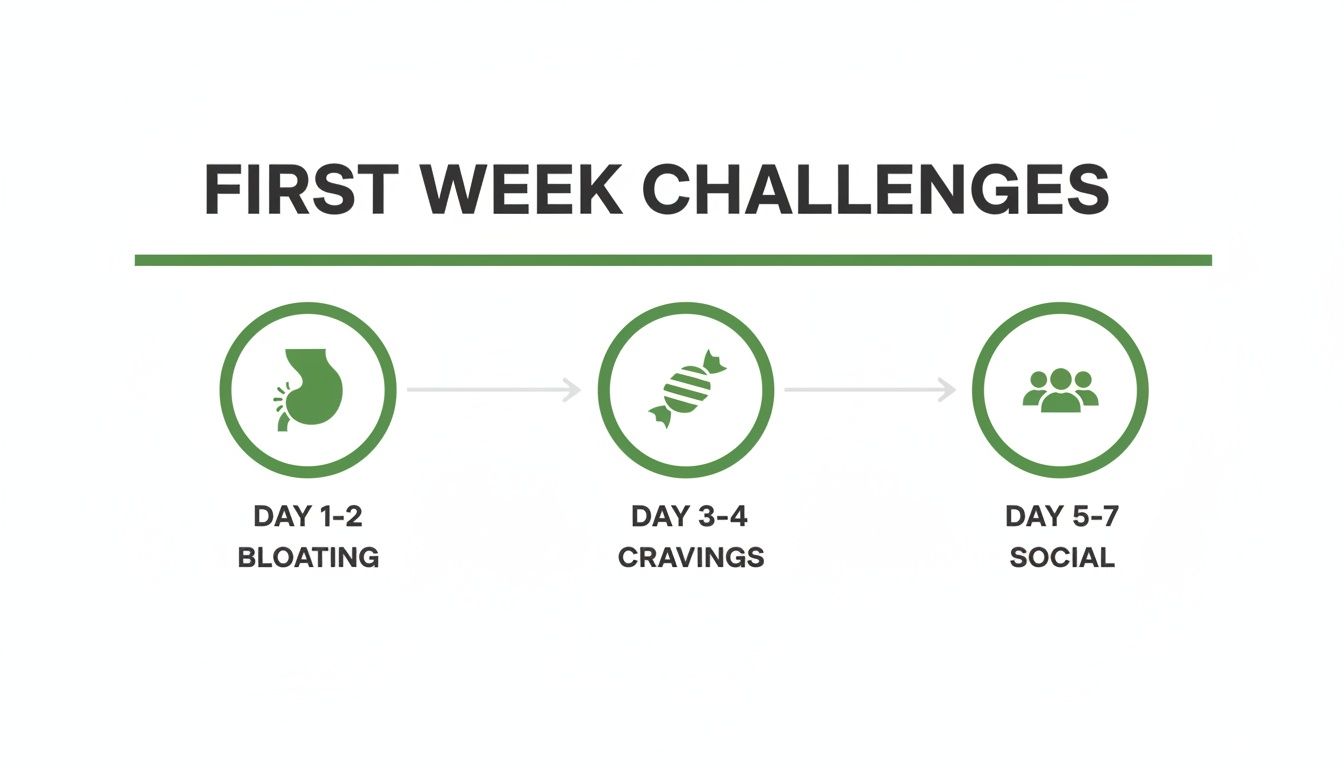
This infographic is a great reminder that the initial bloating and intense cravings are behind you. You've got this.
Next in the Lineup: Gluten-Containing Grains
After your two-day reset, it’s gluten’s turn. On Day 4, you could try some whole-wheat toast for breakfast, a side of pasta at lunch, and maybe a couscous salad with dinner. Then, you guessed it—back to the Whole30 plan for two days to watch and wait.
This process is how you find your personal "Food Freedom." It’s not about being a perfect eater forever. It’s about knowing, with total confidence, which foods are worth it and which ones just aren't—and then making conscious choices that serve you.
If a food makes you feel awful, you now have the power of that knowledge. You can choose to steer clear of it most of the time. If another food causes zero issues, fantastic! You can welcome it back into your life without fear.
For most people, the goal isn't to eat 100% strict Whole30 for the rest of their lives. It's to build a personalized blueprint based on what you learned. Maybe you discover gluten is a hard pass, but a little rice now and then is totally fine. That's a massive win.
This is the end game: to finally step off the diet rollercoaster and build an empowered, peaceful relationship with food. To make this transition even smoother, you can use tools like Meal Flow AI to automatically generate meal plans based on your new, personalized food rules and create shopping lists for you. It lets you enjoy your hard-won food freedom without all the planning stress.
Got Questions About Plant-Based Whole30? Let's Talk.
Let’s be real. Even with the best meal plan laid out, you’re going to have questions. You're basically rewiring years of eating habits, so it’s totally normal to second-guess if you’re “doing it right.” Consider this your personal pit stop to clear up all that confusion.
Here are some of the biggest head-scratchers people run into on a vegan Whole30 journey. I'll give you the straight-up, no-fluff answers so you can get back to it with confidence.
"I'm Starving! Can I Have a Snack?"
Ah, the great snack debate. This is probably the most common question in the Whole30 universe, and the answer isn't a simple yes or no. The whole point is to build meals so hearty and satisfying that you don't even think about grazing. Three solid, nutrient-packed meals a day is the goal.
But hey, life isn't perfect. If you're genuinely, stomach-rumbling hungry—and not just bored-in-the-afternoon hungry—then by all means, have a compliant snack. You just have to be brutally honest with yourself about why you're reaching for food.
A few smart choices to have on hand:
- A small handful of cashews with an apple.
- Celery sticks or bell pepper strips with a big scoop of almond butter.
- A little bowl of olives and some cherry tomatoes.
Think of snacks as a lifeline for real hunger, not a crutch for your emotions. You might be surprised to find that after a week or so, as you dial in your meals, you won't even need them anymore.
"But... Where Does the Protein Come From?"
If I had a dollar for every time a vegan got asked this! Don't worry, the Plant-Based Whole30 was meticulously designed to solve this exact problem. Melissa Urban worked with a Registered Dietitian and a team of medical experts to make sure it's nutritionally solid. They strategically included specific plant proteins to keep your blood sugar stable and your energy up. You can read more about how the plant-based Whole30 program was developed if you want to geek out on the details.
These are your new protein best friends:
- Legumes: Lentils, chickpeas, all kinds of beans, and peas are your foundation.
- Minimally-Processed Soy: Tofu, tempeh, and edamame are officially in.
- Nuts and Seeds: They're not just for healthy fats; they pack a serious protein punch, too.
- Approved Protein Powders: Some specific pea, hemp, or pumpkin protein powders get the green light. Just become a label detective to make sure there are no sneaky sweeteners or grains.
When you build every meal around these powerhouses, hitting your protein goals is a piece of cake (a compliant, metaphorical cake, of course).
"Are There Any Store-Bought Sauces I Can Use?"
Get ready to become a master label-reader—it's your new superpower. Honestly, most sauces and dressings on the shelf are a no-go. They're usually loaded with hidden sugars, weird oils, soy lecithin, and other junk that will derail your efforts. It can feel like an impossible treasure hunt at first.
The good news? The market is catching on. You can sometimes find Whole30 Approved® options from brands like Primal Kitchen or Tessemae's. But even with those, always double-check the ingredients. Companies change their recipes all the time.
My honest advice? Just make your own. It sounds like a pain, but it's not. A simple vinaigrette with good olive oil, apple cider vinegar, and some herbs takes less than two minutes. A creamy, dreamy dressing made from soaked cashews, lemon juice, and nutritional yeast will change your life. It’s always cheaper, fresher, and 100% compliant.
"Please Don't Take My Coffee Away."
Okay, deep breath. You can keep your coffee! And your tea. You're welcome.
The catch is, you have to drink it black. No sugar, no dairy-free creamer, no sweeteners of any kind. Nada. The same rule applies to tea—most herbal, green, and black teas are perfectly fine, just watch out for sneaky additives like barley or soy lecithin in some tea bags. This is a fantastic excuse to explore all the fun, flavorful herbal teas out there.
Just one more thing to think about: If you're pounding caffeine just to get through an afternoon slump, it might be a sign to look at your sleep, hydration, or meals. The goal here is to find real, sustainable energy, not just a temporary jolt from a cup.
---
Tired of all the planning and list-making? Meal Flow AI can create a personalized meal plan for your specific needs—like Plant-Based Whole30—and spit out a perfect shopping list every time. Let AI handle the hard part and simplify your journey today.