A Guide to the Best Groceries to Buy in Bulk
Discover the best groceries to buy in bulk and slash your food bill. Our guide covers pantry staples, storage secrets, and smart shopping strategies.
Love This Article?
Get personalized meal plans with recipes like this, automatically matched to your nutrition targets.
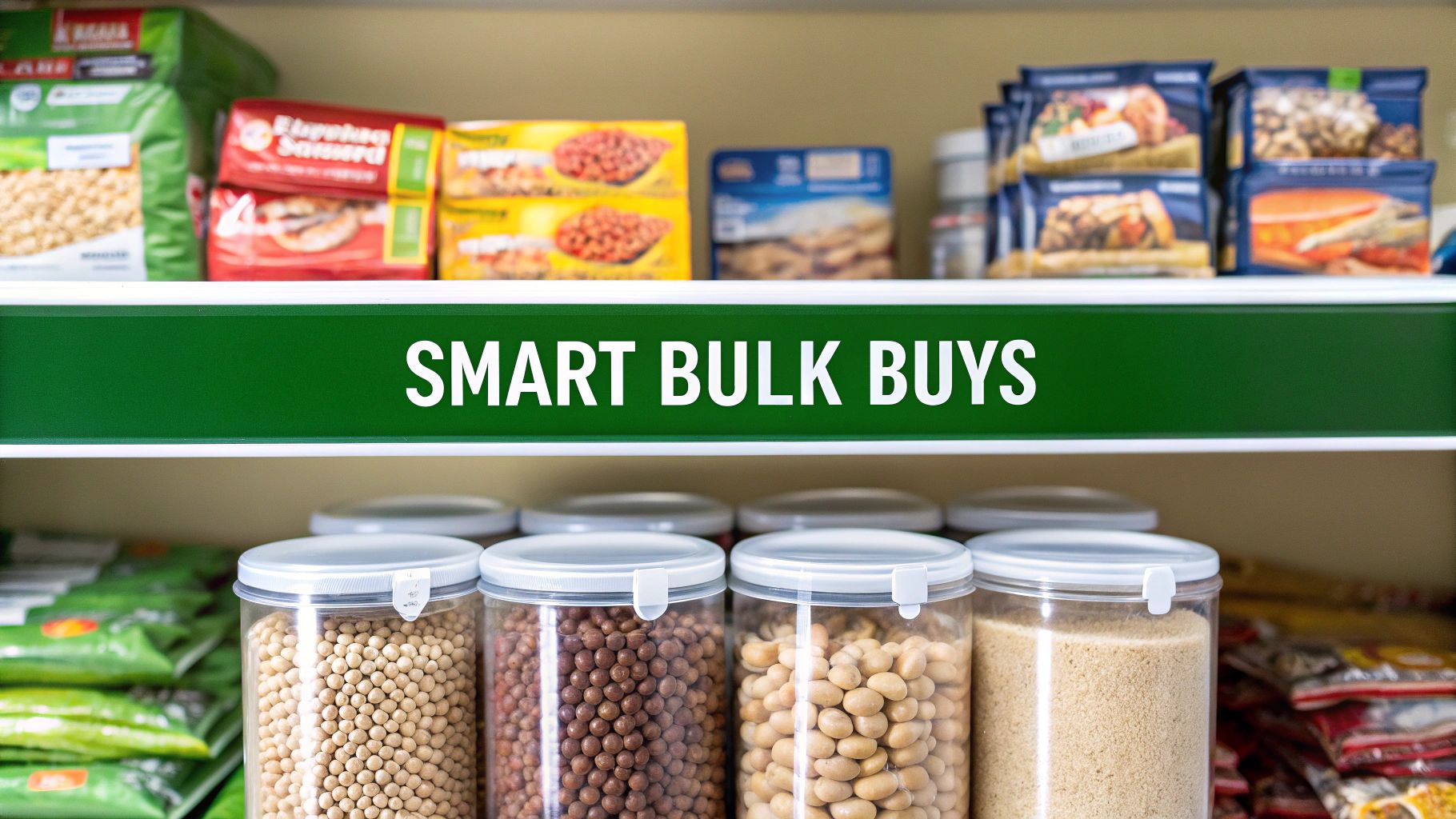
The best groceries to buy in bulk aren't fancy or complicated. They're the workhorses of your kitchen—the shelf-stable staples you reach for again and again, like rice, pasta, oats, canned goods, and beans. If you start with just these five, you'll see instant savings and make your life a whole lot easier. You're building a foundation for a smarter, more cost-effective kitchen.
Conquer Your Grocery Bill with Bulk Buying
Imagine slashing your grocery bill without clipping a single coupon or sacrificing your favorite meals. That's not some late-night infomercial promise; it's the reality of smart bulk buying. This one simple shift can transform your shopping from a weekly chore into a savvy financial move. And you can toss out the myth that you need a huge family or a walk-in pantry to reap the rewards.
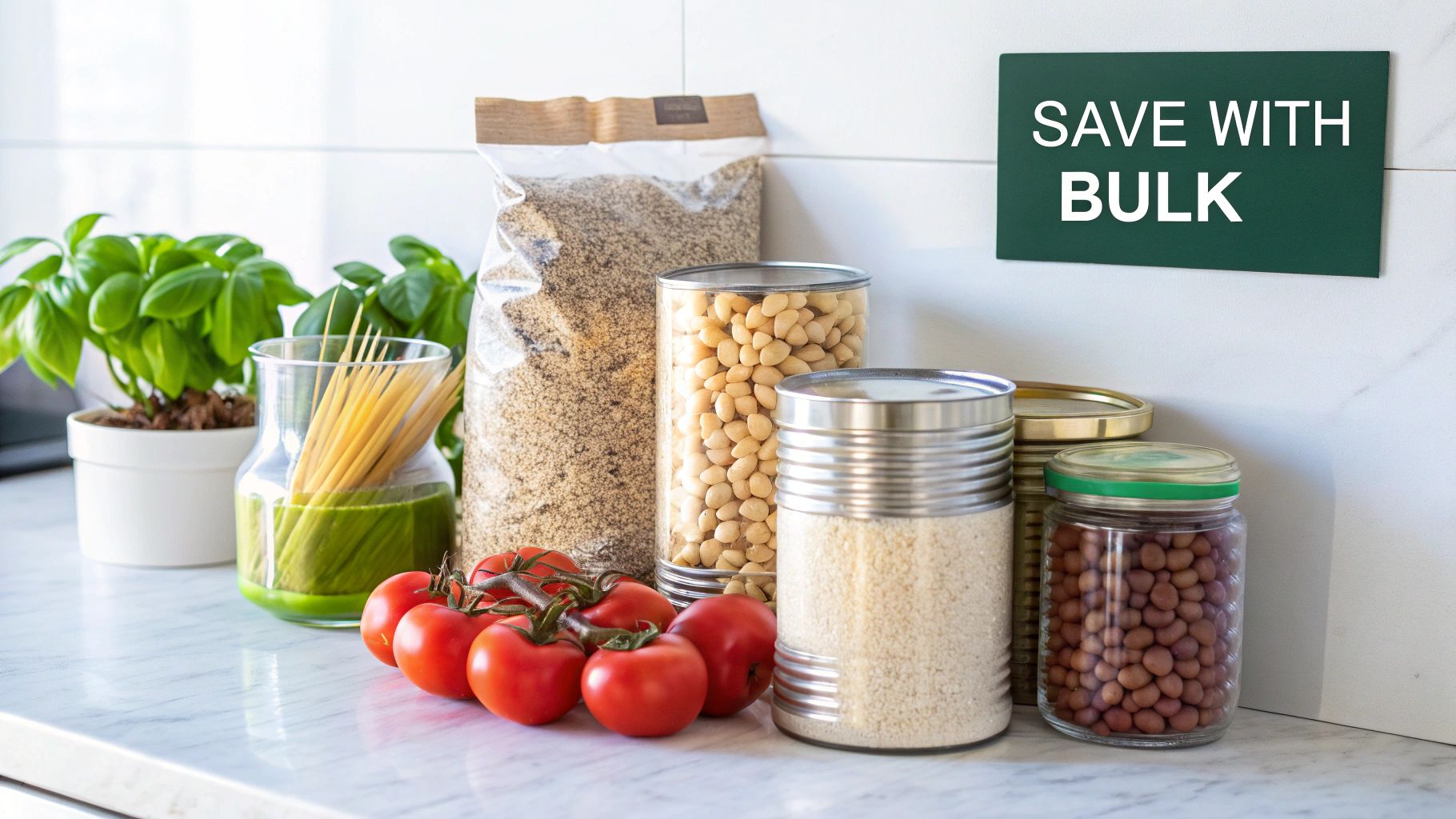
The whole idea is to stop thinking, "What do I need for dinner tonight?" and start asking, "What will I always need?" When you focus on the long-lasting essentials that are the backbone of your meal prep, you lock in lower per-unit costs and kill those annoying, last-minute trips to the store for a single can of tomatoes.
The Financial Power of Buying Bigger
We're not just talking about saving a few pennies here. The savings from buying bigger really stack up. Studies show that a consistent bulk-buying habit can lead to average savings of around 27% on groceries. In an era of climbing food prices, that’s a discount that makes a real difference.
But this is about more than just the money. It's about creating a resilient kitchen—one that’s always stocked and ready for you to whip up a delicious meal whenever you feel like it. While this strategy is a game-changer, you can amplify your savings by exploring other avenues for saving money on groceries.
The real secret to doing bulk buying right is being intentional. This isn’t about hoarding. It's about curating your own personal mini-market, tailored perfectly to what your household actually eats and loves.
Your Quick-Start Bulk Buying Cheat Sheet
Getting started is easy. Just focus on a handful of versatile items that won't go bad anytime soon. This way, you minimize any risk and get the biggest bang for your buck right away. For a deeper dive into smart shopping, our guide on https://mealflow.ai/blog/how-to-save-money-on-groceries has even more tips.
To help you hit the ground running, here's a simple cheat sheet with five of the easiest and most impactful items to start with.
| Grocery Item | Why Buy in Bulk | Average Shelf Life | Meal Prep Ideas |
| Rice | A foundational grain for countless global cuisines, incredibly cheap per pound. | 2+ years (white), 6 months (brown) | Burrito bowls, stir-fries, side dishes |
| Pasta | Versatile, long-lasting, and a family-friendly staple for quick dinners. | 1-2 years | Spaghetti, pasta salads, baked ziti |
| Rolled Oats | Perfect for breakfasts and baking, offering excellent nutritional value. | 1-2 years | Oatmeal, granola, overnight oats |
| Canned Tomatoes | The base for sauces, soups, and stews; shelf-stable and always useful. | 18+ months | Chili, marinara sauce, tomato soup |
| Dried Beans | An inexpensive source of protein and fiber with an incredibly long shelf life. | 2-3 years | Tacos, bean salads, vegetarian chili |
See how simple that is? Stocking up on these five items alone will put you miles ahead in your meal-prep game and leave a little extra cash in your pocket at the end of the month.
Alright, let's transform that section from something a bit robotic into a guide that sounds like it’s coming straight from a seasoned, budget-savvy home cook.
***
Building Your Ultimate Pantry of Bulk Powerhouses
So, you’ve waded into the bulk-buying waters. Fantastic. Now it's time to build the foundation of your food empire: your pantry. This isn't just about cramming shelves with giant bags of stuff. We're talking about a strategic overhaul, turning that cluttered shelf of random boxes into an arsenal for whipping up easy, wallet-friendly meals.
Think of your pantry as the heart of your kitchen—the command center pumping out delicious possibilities day after day. We’re moving beyond the obvious stuff and diving deep into the shelf-stable champions that give you the biggest bang for your buck and last for ages.
The Grain and Legume Goldmine
Let's be honest, grains and legumes are the undisputed kings of the bulk aisle. They're packed with nutrition, are ridiculously versatile, and will basically outlive us all if stored correctly. Buying them in bulk is probably the single fastest way to slash your grocery bill.
- Go Beyond Basic Rice: Sure, white and brown rice are essentials. But why stop there? Think about adding specialty grains like quinoa, farro, or even that creamy arborio rice to your bulk lineup. A big bag of quinoa might feel like a splurge at the checkout, but the cost per serving absolutely crushes those tiny, overpriced boxes.
- Embrace the Bean: Dried beans and lentils are your secret weapon for cheap, high-protein meals. A single one-pound bag of dried chickpeas will give you more than double what you get from a standard can, and for a fraction of the price. From black beans destined for tacos to red lentils that cook up into a soup in 20 minutes, the possibilities are endless.
Here's the pro move: always calculate the cost-per-unit (like cost per ounce or pound). This simple bit of math, often right there on the shelf tag, is your superpower. It cuts through the confusion of different package sizes and "sale" prices to show you what the real bargain is.
Mastering Baking and Flavor Essentials
Nothing beats the feeling of being able to bake a spontaneous batch of cookies or throw together a flavorful dinner without a last-minute trip to the store. A well-stocked pantry makes that happen. These items are notorious for their huge markups in small packages, making them perfect for buying in bulk.
- Flour and Sugar: If you bake even once in a blue moon, buying flour and sugar in larger bags is a total no-brainer. A 10-pound bag of all-purpose flour can last for months and costs way less per pound than its smaller cousins.
- Oils and Vinegars: Staples like olive oil and coconut oil, along with vinegars like apple cider and balsamic, have incredibly long shelf lives. Grabbing the larger bottles means you’re never caught without the key ingredient for a quick salad dressing or a perfect sauté.
- Spices and Herbs: Those tiny glass jars of spices are one of the biggest rip-offs in the grocery store. Seriously. Hunt down the bulk spice section or look at online retailers. You can buy larger bags of your go-to seasonings—think garlic powder, cumin, oregano, and cinnamon—for pennies on the dollar.
Smart Buys for Sweet and Savory Cravings
Don't forget the supporting cast! These are the items that add depth, texture, and convenience to your meals. They're often overlooked in the bulk section but offer amazing value when you buy them in larger quantities.
Sweet Staples for Breakfast and Beyond
| Item | Why Buy in Bulk | Creative Uses |
| Rolled Oats | The backbone of breakfast and baking. Incredibly cheap per serving. | Overnight oats, homemade granola, blitzing into oat flour. |
| Maple Syrup/Honey | Natural sweeteners that last forever. The big jugs offer huge savings. | Drizzling on oatmeal, making glazes for chicken or pork, sweetening tea. |
| Nuts & Seeds | Packed with healthy fats and protein. So much cheaper from the bulk bins. | DIY trail mix, topping for salads, making your own nut butters. |
| Dried Fruit | A fantastic source of fiber and sweetness without any added sugar. | A perfect snack, chopped into baked goods, or rehydrated for a compote. |
This isn't just about stockpiling; it's about creating a system. By focusing on these core categories of the best groceries to buy in bulk, you turn your pantry from a chaotic storage space into a source of daily inspiration. You’ll find that meal planning suddenly becomes a whole lot easier when you have a reliable stock of versatile ingredients just waiting to be used.
Every scoop of quinoa or cup of flour from your bulk stash is a small win for your budget and your sanity, proving a delicious meal is always just a few steps away.
Buying Perishables in Bulk Without the Waste
Let's be honest, the thought of buying fresh food in bulk can cause a little bit of anxiety. We’ve all had those nightmares of fuzzy strawberries or a forgotten pack of chicken turning into a science experiment in the back of the fridge. It feels like a gamble.
But what if you could stride through the produce and meat sections with total confidence, knowing you have a plan to use every last bit? It’s not a superpower; it’s just a smart strategy that can seriously slash your grocery bill.
The trick is knowing what to buy and what to do with it when you get home. Not all fresh foods are created equal in the longevity department. You have to learn to spot the marathon runners.
- Hearty Veggies: Think root vegetables. Potatoes, carrots, and sweet potatoes are your best friends here, happily lasting for weeks in a cool, dark spot. Onions and garlic are also champions, often good for a month or more.
- Durable Fruits: Step away from the delicate berries for a moment. Instead, load up on apples, which stay perfectly crisp for weeks in the fridge, and citrus fruits like oranges and lemons that are built to last.
To really level up your produce game, check out our deep dive on how to keep produce fresh longer. You'll learn tricks to squeeze even more life out of your haul.
Conquering the Meat and Dairy Aisle
This is where the real savings are hiding. If you can master buying meat and dairy in bulk, you'll make the single biggest dent in your grocery spending. All it takes is a little bit of work as soon as you walk through the door.
Picture that giant value-pack of chicken breasts. Don't just toss it in the freezer. Instead, spend 15-20 minutes turning it into a goldmine of future meals. Portion out the chicken into meal-sized bags—a couple of breasts for a stir-fry, four for grilling night. Wrap them tightly, press all the air out of the freezer bag to fight off freezer burn, and you're done. That intimidating block of meat is now a collection of convenient, ready-to-go meal starters.
The same goes for ground beef. That five-pound pack can be a lifesaver. Divide it into one-pound portions, flatten them into thin squares so they thaw in a flash, and freeze them. Boom. You've just prepped for five different meals—tacos, chili, spaghetti—at a much better price per pound.
Smart Storage for Dairy and Eggs
It's no secret we love our dairy. In fact, it's the most common grocery category in the U.S., with a whopping 82% of shoppers buying milk, cheese, and eggs on a regular basis. That popularity makes these items perfect targets for smart bulk buying.
A big two-dozen carton of eggs can easily outlast its "best by" date if you store it in the main part of your fridge (not the door, where the temperature swings!). And those big blocks of cheese? They're almost always a better deal. To keep one from getting slimy, ditch the plastic wrap it came in. Rewrap it in parchment or wax paper before putting it in a plastic bag. This lets the cheese breathe and keeps it fresh way longer.
The journey from farm to pantry is what makes so many of our staples perfect for stocking up.
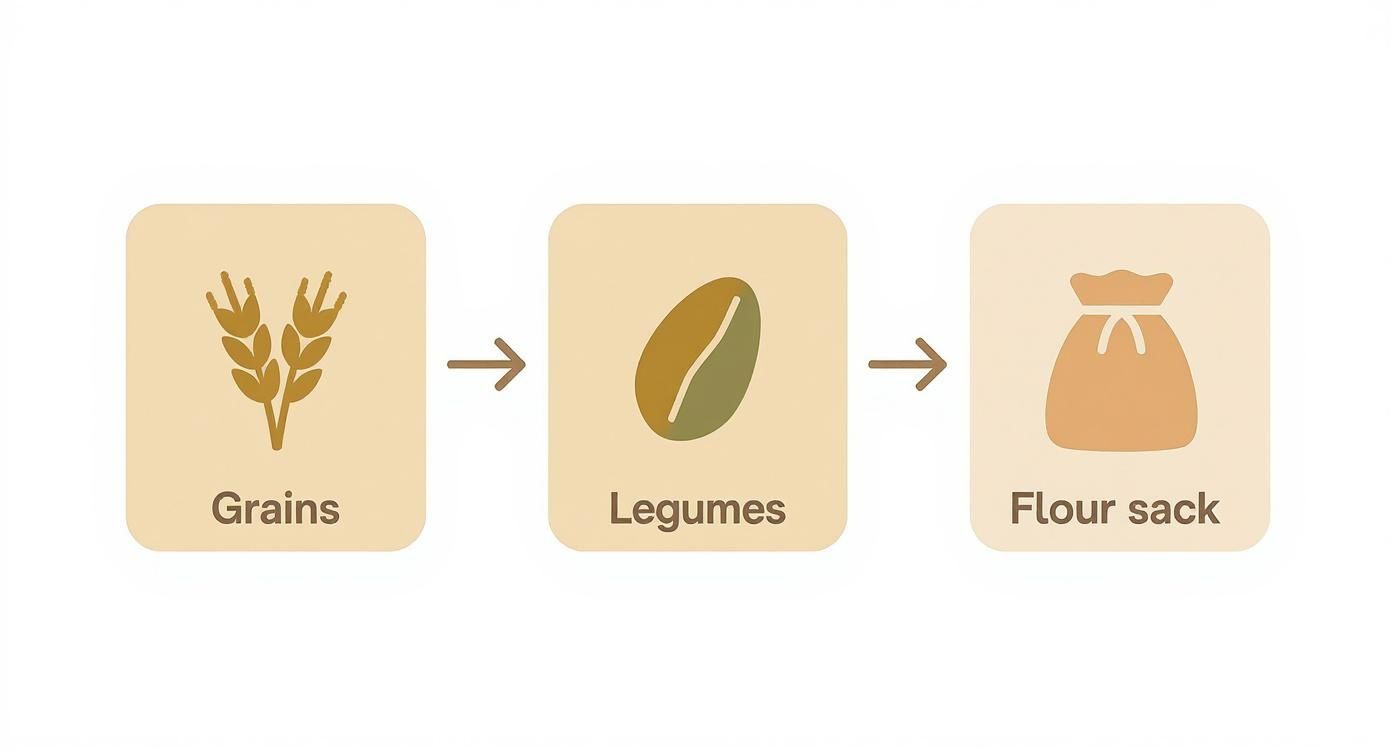
This process is exactly how raw ingredients like grains are transformed into the kind of shelf-stable goods that are tailor-made for your pantry.
Buying fresh in bulk isn’t about risk; it’s about process. A small amount of upfront effort in portioning and storing your perishables correctly pays off with significant savings and convenience all month long.
Once you get a system down, the fear of spoilage disappears. You'll start seeing major savings on some of the most expensive things on your list, turning the fresh food aisles from a source of stress into a land of opportunity.
Mastering Food Storage and Pantry Organization
So you've hauled home your bulk-buying treasures. Congratulations! You've won half the battle. But the real victory is what happens next. A killer bulk-buying strategy isn't just about scoring deals; it's a masterclass in protecting your investment. Without a smart storage plan, that 20-pound bag of rice can quickly become an expensive, bug-infested mistake.
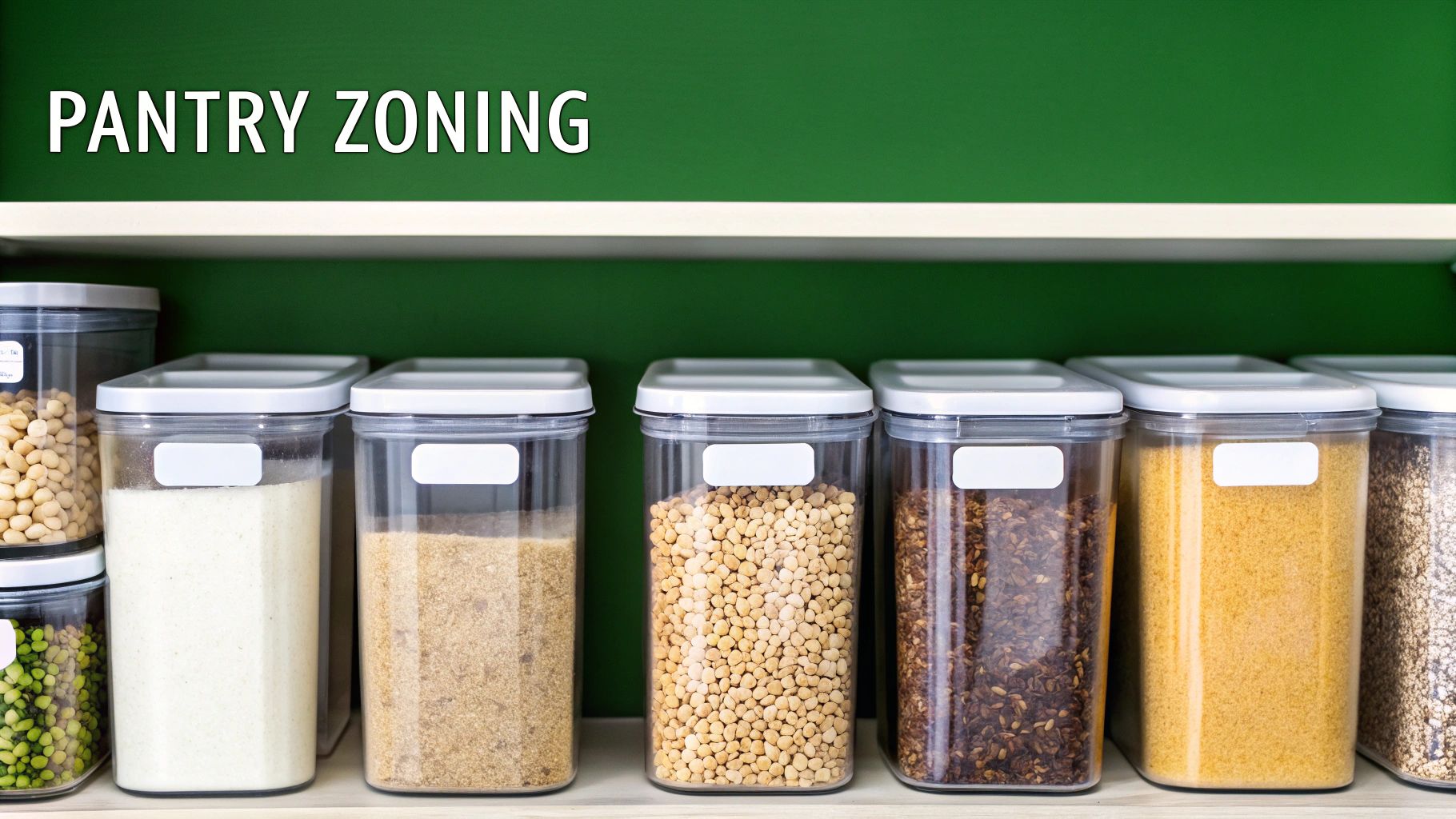
Think of your pantry and freezer as your personal grocery vaults. The goal is to keep your food safe, fresh, and ridiculously easy to find. Get this right, and you'll transform your kitchen into an efficient, money-saving powerhouse. Let's get organized.
Your First Line of Defense: Airtight Solutions
Your pantry staples have four mortal enemies: air, moisture, light, and pests. Your best defense is a simple one: airtight containers. Decanting things like flour, sugar, oats, and pasta from their flimsy original bags into proper containers isn't just a good idea—it's non-negotiable.
This one simple step does more than just protect your food. It makes your pantry look amazing and lets you see exactly what you have with just a glance. No more guessing games.
- Grains and Flours: Go for large, clear plastic or glass containers with locking lids. They're perfect for sealing out moisture and telling pantry moths to find another home.
- Spices: Small, uniform jars don't just look sharp; they protect those pricey spices from losing their kick due to air exposure.
- Meats and Produce: When you're freezing food, the enemy is freezer burn. The gold standard to prevent this is double-wrapping meats—first in plastic wrap, then snugly in a freezer-safe bag with every last bit of air squeezed out.
The FIFO Principle: Your Secret Weapon
Ever found a can of beans from a forgotten era hiding in the back of your cupboard? We've all been there. The "First-In, First-Out" (FIFO) principle is the brilliantly simple solution to stop this from ever happening again. It’s exactly what it sounds like: you use the oldest stuff first.
When you bring home new groceries, just slide your existing stock to the front and tuck the new items in the back. This ensures nothing gets lost and expires, saving you from the guilt of tossing out perfectly good food. It's a habit that takes seconds to build but pays off big time in slashing food waste.
For more inspiration on building a system that clicks for you, our guide to brilliant pantry storage solutions has plenty of ideas.
Adopting FIFO is like creating a natural current in your pantry. Everything just flows from back to front, ensuring a constant, fresh rotation without you even having to think about it.
Bulk Storage Solutions At a Glance
Choosing the right storage can feel like a puzzle, but it's pretty straightforward once you know the basics. Here’s a quick cheat sheet to keep your bulk buys in prime condition for as long as possible.
| Grocery Item | Best Container Type | Ideal Storage Location | Extended Shelf Life |
| White Rice | Airtight container, Mylar bag with oxygen absorber | Cool, dark, dry pantry | 20-30 years |
| Flour (White) | Airtight plastic or glass container | Cool, dark pantry or freezer | 1-2 years |
| Dried Beans | Airtight container, original bag in a sealed bin | Cool, dark, dry pantry | Indefinite (quality may decline after 2-3 years) |
| Rolled Oats | Airtight container | Cool, dark, dry pantry | 2-3 years |
| Pasta (Dry) | Airtight container or original box in a sealed bin | Cool, dark, dry pantry | 2-3 years |
| Frozen Meat | Vacuum-sealed bags, freezer paper & plastic bags | Deep freezer (0°F / -18°C) | 6-12 months |
Following these guidelines ensures that your investment in bulk groceries pays off by staying fresh and ready to use, not by going to waste.
Pantry Zoning: Your Key to Instant Access
A messy pantry is a frustrating time-waster. "Pantry Zoning" is your ticket out of that chaos. The idea is to group similar items together, creating designated "zones" for different categories. No more hunting for the cinnamon!
Think of your pantry like a mini-supermarket with dedicated aisles. This system helps you find what you need in seconds and lets you see what you're running low on without an archaeological dig.
Here are a few sample zones to get you started:
- The Baking Zone: Flour, sugar, baking soda, vanilla, chocolate chips. When the urge to bake cookies strikes, everything you need is ready to go.
- Grains & Pasta Aisle: Rice, quinoa, various pasta shapes, oats, couscous. This makes whipping up a quick side dish or dinner base a total breeze.
- Canned Goods Central: Tomatoes, beans, corn, soups, tuna. I like to group my cans by type (veggies here, proteins there) to make finding an ingredient for chili or soup super simple.
- The Oil & Sauce Corner: Olive oil, vinegar, soy sauce, marinades. Keeping these together prevents sticky spills from getting all over your dry goods.
This organized approach isn't just about being tidy—it's about being efficient. It turns "What's for dinner?" from a stressful question into an easy one. For a deeper dive, you can implement some simple inventory management for your home pantry.
By mastering storage, you’re not just organizing food; you're organizing your life, one perfectly stocked shelf at a time.
How to Sniff Out the Best Bulk Deals Like a Pro
Alright, ready to hunt for bargains like a seasoned pro? Stepping into the world of bulk buying can feel like you're navigating a maze of giant packages and "too good to be true" sales. The secret to winning this game isn't just grabbing the biggest box on the shelf; it's about spotting the real deals and sidestepping the clever retail traps.
Your secret weapon on this mission is a simple but mighty tool: the unit price. This tiny number, usually hiding on the shelf tag, cuts right through the noise of flashy packaging. It tells you the true cost per ounce, pound, or item. A quick calculation on your phone is all it takes to see if that massive bag of coffee is actually cheaper than the smaller one on sale.
Mastering this one little skill is what separates the casual shopper from the strategic buyer. It’s the difference between blindly trusting a sale sign and knowing, with absolute certainty, that you’re making a brilliant move for your wallet.
Where to Hunt for the Best Deals
The modern grocery world is huge and packed with options. With the average supermarket carrying a staggering 30,098 different items, the opportunities to find amazing bulk deals are everywhere—if you know where to look. This explosion of choice means a savvy shopper can play the field, comparing prices across different stores, both online and in-person, to find the absolute best value. You can find more fascinating stats about the modern grocery store on foodingredientfacts.org.
Every store has its pros and cons. Your job is to leverage them all.
- Warehouse Clubs (Costco, Sam's Club): These giants are the undisputed kings of bulk. They're fantastic for consistent, low unit prices on staples like paper towels, olive oil, and meat. The catch? You'll need a paid membership and enough storage space to handle your haul.
- Supermarket Bulk Bins: Don't sleep on the bulk aisle in your regular grocery store! These bins are treasure troves for things like spices, nuts, grains, and specialty flours. The best part is you can buy the exact amount you need, which is perfect for trying a new recipe without committing to a five-pound bag.
- Online Retailers (Amazon, etc.): You can't beat the convenience. "Subscribe & Save" programs can offer some serious discounts on items you burn through regularly, like coffee or diapers. Just make sure to keep a close eye on that unit price, as it can jump around.
The smartest shoppers don't have loyalty to one store. They have loyalty to the best deal. A little cross-shopping can add up to massive savings over time.
Timing is Everything: Sales Cycles and Shopping Apps
To really level up your deal-hunting game, you need to start thinking like a retailer. Most stores run on predictable sales cycles, typically rotating which product categories go on deep discount every six to eight weeks. If you pay attention, you can learn to anticipate when your favorite pasta sauce or cereal will hit rock-bottom prices—and that's when you stock up.
This is where a little tech becomes your best friend. Instead of trying to track all this manually, let a few apps do the heavy lifting.
Your Pro Shopping Toolkit:
- Store Apps: Nearly every major grocery chain has its own app loaded with digital coupons and weekly ads. A quick scan before you shop can instantly reveal the best deals of the week.
- Price Comparison Apps: Apps like Flipp are a game-changer. They pull all the local weekly flyers into one place, letting you quickly see who has the best price on chicken or avocados without leaving your couch.
- Cash-Back Apps: Services like Ibotta or Fetch Rewards give you cash back on your purchases. It’s like getting an extra discount on top of an already great sale price.
By combining the power of the unit price with a smart strategy for where and when you shop, you stop being a reactive consumer and become a proactive, money-saving machine. Every bulk purchase becomes a calculated win, turning your grocery runs into a genuinely rewarding and financially savvy part of your week.
Got Questions About Bulk Buying? We've Got Answers.
Let’s be real. Diving into the world of bulk buying can feel a little intimidating. You hear whispers of massive savings, but then the doubts creep in. "Is this really for me? Am I going to end up with a garage full of expired beans and a lifetime supply of paprika?"
I get it. Let's clear the air and bust some myths. Think of this as your personal FAQ for shopping big, whether you're feeding a small army or just yourself.
Is It Actually Worth It for Just One or Two People?
You bet it is, but with a twist. For smaller households, the strategy isn't about buying a pallet of everything. It's about being a sniper. You need to be incredibly selective and zero in on the non-perishable stuff you use with almost religious devotion.
What are your daily rituals? That first cup of coffee in the morning? The bottle of olive oil you seem to go through every week? Those are your targets.
- Your "Heck Yes" List: Stick to things like coffee beans, pasta, rice, your go-to spices, and household workhorses like paper towels or dish soap. These guys have a super long shelf life, so the risk of them going bad is practically zero.
- The Golden Rule: Never, ever forget to check the unit price (the cost per ounce, pound, or sheet). A bulk buy is only a win if that number is noticeably lower than the smaller version's. If you know you'll use it all before it expires, it’s a brilliant move, whether you're cooking for one or five. The goal is to buy smarter, not just bigger.
What are the Biggest Mistakes People Make When They Start?
Oh, the blunders I've seen. People get swept up in the excitement and come home with a car full of regret. The good news? These classic mistakes are totally avoidable once you know what to watch out for.
The number one rookie error is buying without a plan. That giant, on-sale bag of freekeh might look like a steal, but if you've never actually cooked with it, it's destined to become a permanent, dusty resident of your pantry. Stick to what you know and love.
Next up is completely ignoring storage. A 25-pound bag of flour is a terrible deal if you don't have an airtight container ready to protect it from moisture and pantry pests. Smart storage isn't an afterthought—it's half the battle.
Finally, people forget about expiration dates. Even "non-perishables" don't last forever. That "best by" date is a guideline for quality, and buying more than you can realistically use before then is just a slower, more expensive form of food waste.
How Can I Be Sure It's Really a Good Deal?
Retailers are magicians when it comes to making things look like a bargain. Your job is to ignore the flashy price tag and find the truth, which is always hiding in the unit price. That tiny number on the shelf tag is your secret weapon.
A smaller item on a killer sale can sometimes have a better unit price than the regular-priced bulk version. Always pull out your phone's calculator—it takes five seconds and can save you some serious cash.
Here's another pro tip: give the store brand a chance. If its unit price is way lower than the name brand you usually grab, buy a small package first. If you like it, you’ve just unlocked a new level of savings on something you already buy.
Where Can I Find Bulk Deals Besides the Big Warehouse Clubs?
Costco and Sam's Club are awesome, but they aren’t the only players in the game. In fact, some of the best deals are hiding in plain sight, no membership card required.
- Your Local Supermarket: Don't sleep on the bulk bin aisle! This is the perfect place to buy just the right amount of pricier items like nuts, specialty flours, and spices. You get the bulk price without the bulk commitment.
- Online Retailers: Sites like Amazon have programs like "Subscribe & Save," which knocks a percentage off the price for setting up recurring deliveries. With over 2 billion groceries and essentials delivered same or next day in the U.S. in 2024, the convenience is hard to beat.
- Restaurant Supply Stores: Many of these professional-grade stores are open to the public. This is where you find the good stuff—high-quality baking yeast, giant jugs of olive oil, and sheet pans that will outlive you.
- Farmer's Markets: This is an underrated gem. Hang around near closing time, and you'll find vendors who would much rather give you a great deal on a whole case of tomatoes than pack it all back up.
With these answers in your back pocket, you can walk into those bulk aisles with the confidence of a seasoned pro, ready to make choices that save you time, money, and a whole lot of stress.
---
Ready to take the guesswork out of meal planning and grocery shopping for good? Meal Flow AI generates personalized meal plans based on your family’s tastes and automatically creates a shopping list you can send directly to Instacart. Stop wondering what’s for dinner and start enjoying effortless, budget-friendly meals. Discover how Meal Flow AI can simplify your life today!