How to Meal Prep Salads That Don't Get Soggy
Learn how to meal prep salads that stay crisp and delicious all week. Our guide covers layering, storage, and recipes to banish soggy lunches for good.
Love This Article?
Get personalized meal plans with recipes like this, automatically matched to your nutrition targets.
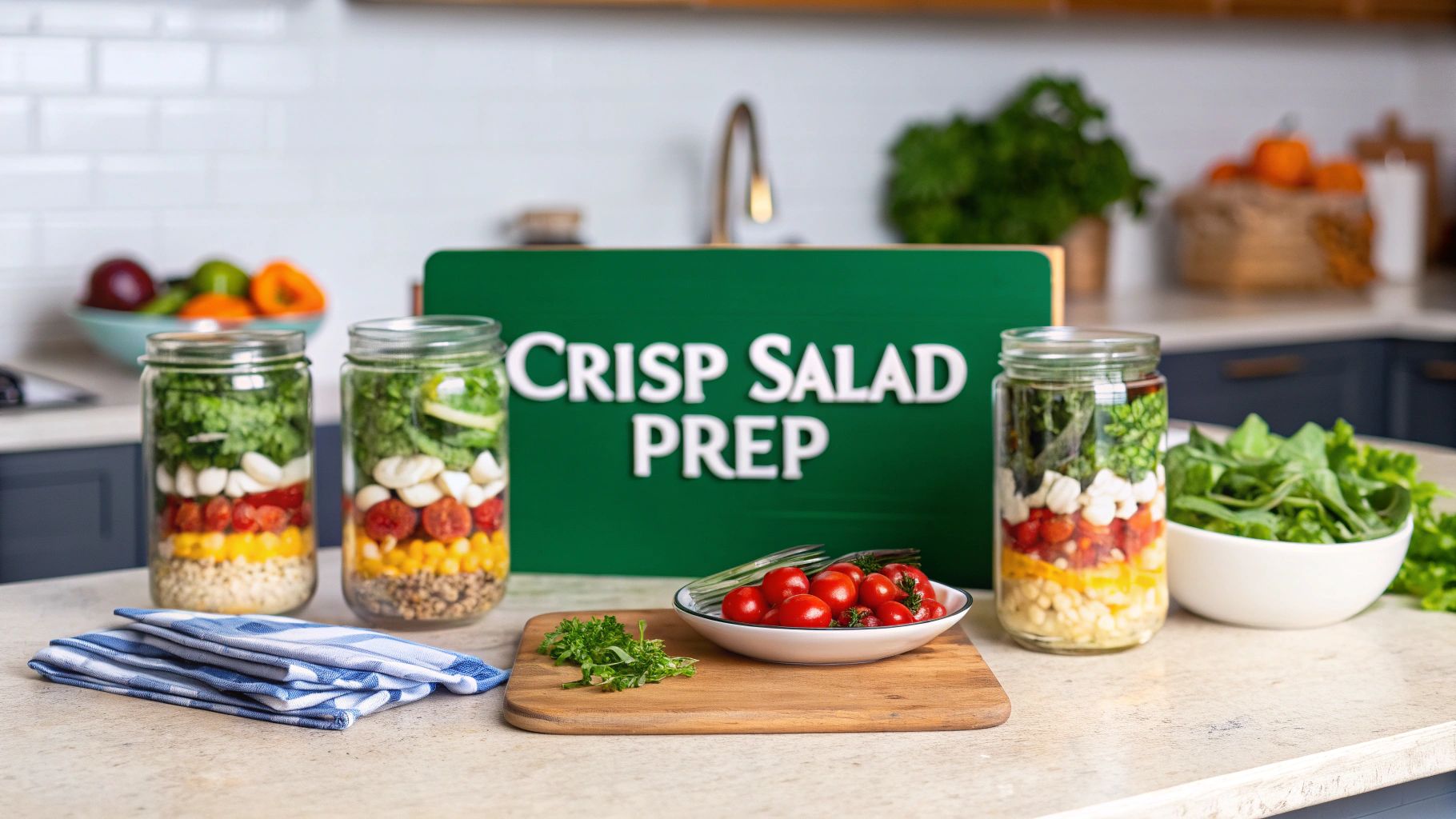
We’ve all been there. You pack a salad for lunch, full of good intentions, only to open it and find a sad, soggy, wilted mess. It’s enough to make you give up and head for the nearest takeout joint.
But what if I told you the secret to a perfectly crisp, vibrant, ready-to-eat salad—even on day four—is ridiculously simple? It's all about one golden rule: keep the wet stuff away from the dry stuff until you’re ready to dig in.
That’s it. No magic spells, no weird gadgets. Just a smart layering technique that turns your container into a fortress of freshness.
The Secret to Salads That Stay Crisp All Week
Let's get real. The idea of a pre-made salad is often more appealing than the reality. But you can open your fridge on a hectic Wednesday to a salad that looks and tastes as amazing as it did when you made it on Sunday.
This isn’t about just tossing things in a bowl and hoping for the best. It's a method, a battle plan against the dreaded sogginess. We’re about to dive into the strategies that separate a crunchy, satisfying lunch from a tragic, watery disappointment.
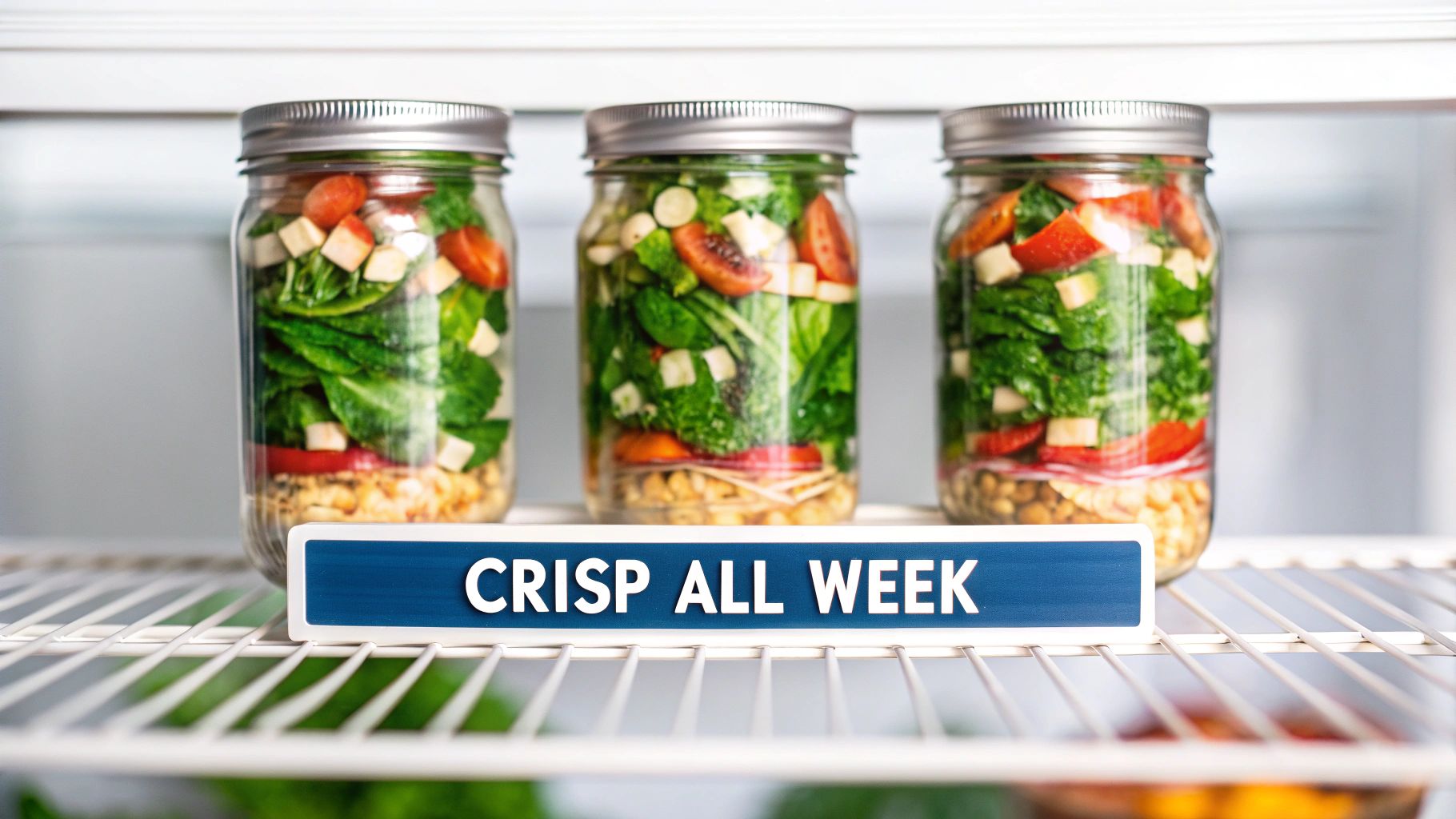
Forget everything you’ve been told about prepping salads ahead of time. This is your new playbook for lunches you’ll actually be excited to eat.
Your Crisp Salad Blueprint
Building a salad that lasts is less like cooking and more like architecture. It comes down to three things: picking the right ingredients, prepping them properly, and stacking them like a pro. Think of it as building a delicious, edible ecosystem designed to protect itself from moisture.
The entire game is about creating zones in your container. Your dressing and hard, water-resistant veggies create a barrier at the bottom, gallantly shielding your delicate greens and crunchy toppings at the top from the moisture below.
Ready to build your first masterpiece? Use this table as your guide. It’s the essential cheat sheet for constructing a perfect, long-lasting salad from the ground up.
Your Crisp Salad Blueprint
This is your quick-start guide to building a better salad. Think of it as the foundation for endless delicious, and most importantly, crunchy lunches.
| Component | Best Choices for Longevity | Crucial Prep Tip |
| Dressing | Vinaigrettes (oil & vinegar based) | This is your foundation. Always pour it in the very bottom of the jar. |
| Hard Vegetables | Carrots, bell peppers, cucumbers, red onion, celery | Chop them into uniform, bite-sized pieces. They form a sturdy, waterproof barrier. |
| Grains & Proteins | Quinoa, chickpeas, grilled chicken, baked tofu | Make sure any cooked items are completely cool before you even think about adding them. Warmth creates steam, and steam is the enemy. |
| Soft Ingredients | Corn, feta cheese, avocado, cherry tomatoes (halved) | Layer these above the proteins so they don’t get squished or waterlogged. |
| Greens & Toppings | Romaine, kale, spinach, nuts, seeds, croutons | This is your crown jewel. Pack it last, right at the top, to keep it perfectly dry and crisp. |
Nail this order, and you’ll have salads that are just as good on Thursday as they were on Sunday. It’s a simple process that delivers incredible results, week after week.
Prepping Your Ingredients for Maximum Freshness
A great meal-prepped salad isn't just about layering things in a jar. The real magic happens on your kitchen counter before anything even gets near a container. How you treat your ingredients at this stage is the difference between a crisp, vibrant lunch on Thursday and a sad, soggy science experiment.
This is where the battle for a great salad is truly won or lost. Think of it as turning your fridge into a personalized, ready-to-go salad bar. When you do it right, assembling your lunch takes 60 seconds flat, and it feels more like a victory lap than a chore.
And you're not alone in wanting this! The demand for easy, healthy meals is skyrocketing. The global packaged salad market is expected to reach a staggering 15 billion units in yearly sales by 2025. Why? Because busy people everywhere are looking for good food without all the hassle.
Mastering Your Greens and Veggies
Let's start with the heart of any salad: the greens. Their mortal enemy? Moisture. This is where a salad spinner earns its keep. It might seem like a clunky gadget taking up cabinet space, but it's your absolute best defense against wilted, slimy leaves.
After you wash your greens, spin them. And then spin them again. You want them bone-dry. No spinner? No problem. Gently pat them dry with a clean kitchen towel or a few paper towels. The goal is to eliminate every last drop of water. Even a tiny bit of dampness will turn your beautiful greens into a sad mess by Wednesday.
For the rest of your veggies, your chopping strategy is all about moisture control.
- Cherry Tomatoes: Stick to halving or quartering them. If you dice them up too small, you're just asking for a watery puddle at the bottom of your container.
- Cucumbers: For that perfect crunch, slice them into thick rounds or spears. If you find cucumbers make things too watery, try scooping out the seeds before you chop them. It makes a huge difference.
- Bell Peppers and Carrots: These guys are your all-stars. They're sturdy, reliable, and hold up beautifully all week. Slice, dice, or chop them any way you like.
Here's a pro tip: how you store your produce matters. Some fruits and veggies release gases that make their neighbors ripen and spoil faster. To really level up your food storage game, dive into our guide on how to keep produce fresh longer.
Batch Cooking Proteins for Easy Assembly
A salad without a solid protein is really just a side dish. Cooking your proteins in big batches is the ultimate time-saver that transforms a light bite into a meal that actually keeps you full.
But there’s one golden rule you can’t break: always let cooked ingredients cool completely before they go anywhere near your salad greens. Warm chicken creates steam, and steam is a one-way ticket to a wilted, soggy disaster.
Here are a few of my go-to protein preps:
- Grilled or Baked Chicken: Season up a few chicken breasts or thighs and cook them all at once. Once they're cool, you can dice or shred them for super-easy portioning.
- Hard-Boiled Eggs: A classic for a reason. Boil a dozen on Sunday. I like to peel them all at once so they're ready to grab, but leaving them in the shell works too.
- Roasted Chickpeas: This is a game-changer. Drain a can of chickpeas, toss them with olive oil and your favorite spices, and roast them at 400°F (200°C) until they're crispy. They add fantastic texture and a nice plant-based protein punch.
The Secret Weapon: Homemade Dressings
Sure, store-bought dressings are easy, but they're often packed with sugars, preservatives, and other weird ingredients. Whipping up your own dressing literally takes five minutes and will make your salads taste a million times better. A simple vinaigrette with good olive oil, your vinegar of choice, and a few seasonings is all it takes.
If you really want your salads to be something you look forward to, a great homemade dressing is non-negotiable. You can find some fantastic inspiration by checking out a delicious olive oil salad dressing recipe. Making it yourself means you control the flavor and know exactly what's in it. Honestly, it just tastes better.
The Secret to a Sog-Free Salad: Strategic Layering
If there's one skill that separates the meal-prep pros from the rookies, this is it. Layering your salad isn't just a quirky trend; it's the golden rule for building salads that actually stay crisp for days. The whole magic trick boils down to one simple force of nature: gravity.
Think of your container as a fortress. You're the architect, and your mission is to build a defense system that protects your delicate greens from the enemy—dressing. By putting the wettest, heaviest stuff at the bottom, you create a waterproof barrier. Master this, and the salad you eat on Friday will be just as vibrant as the one you packed on Monday.
This simple workflow—Wash, Chop, Cook—is your starting point, ensuring every piece is ready for its place in the lineup.
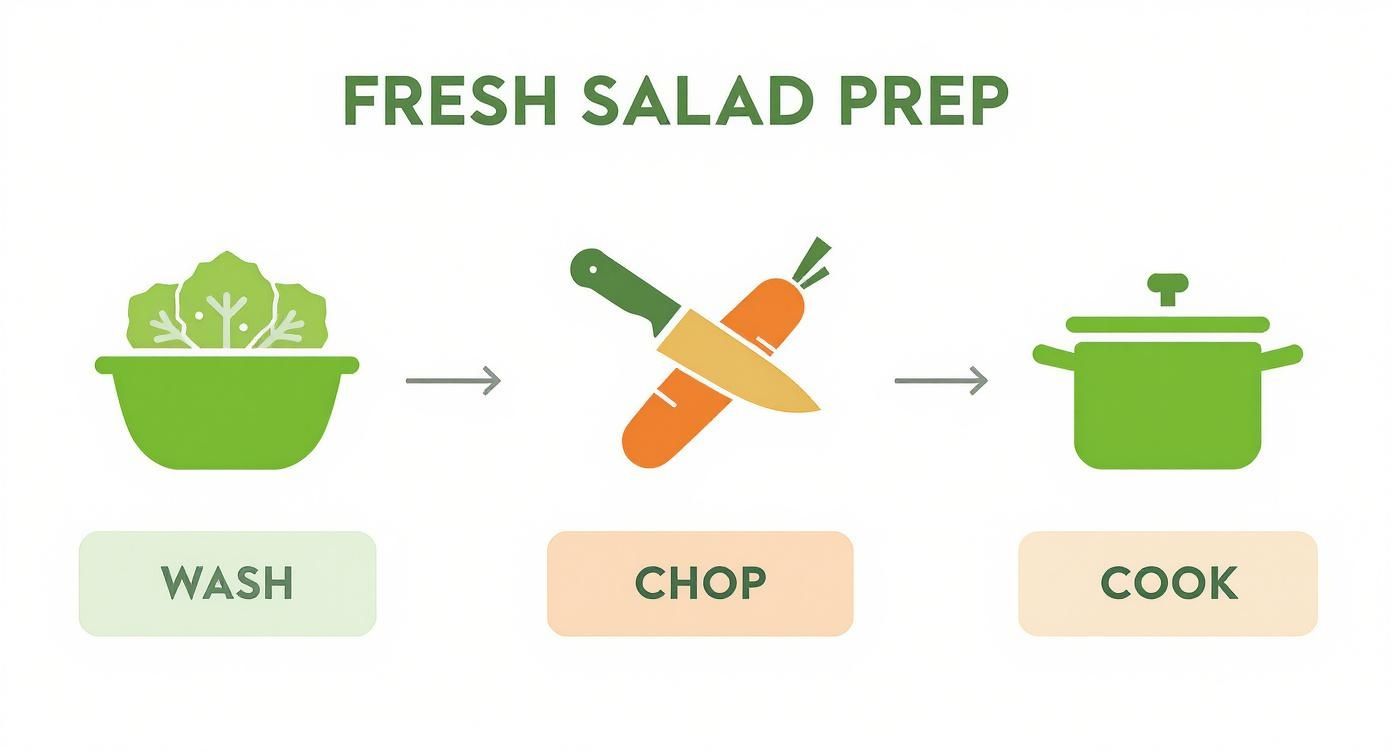
With your ingredients prepped and ready, it's time to build.
Layer 1: The Foundation of Flavor (Dressing & Hard Veggies)
Your salad-building adventure begins at the very bottom. The first thing you'll pour into your jar or container is always the dressing. Let it settle in; this delicious moat will be sealed off from the rest of your creation.
Next up, you’ll add the "barrier" ingredients. These are your tough, non-absorbent veggies that can stand up to the dressing without getting remotely soggy. Think of them as the brave first line of defense.
- Carrots: Shredded or diced, they hold up like champs.
- Cucumbers: Quartered or thickly sliced, they bring the crunch.
- Bell Peppers: Their waxy skin makes them perfect for this layer.
- Red Onions: Thinly sliced, they add bite and keep their texture.
- Celery: A crunch superstar that doesn’t back down.
These vegetables can happily marinate for days, and honestly, they often taste even better by the time you're ready to eat. If you want to get really nerdy about prepping your veggies for the week, our guide on how to meal prep vegetables has you covered.
Layer 2: The Heart of the Salad (Grains & Proteins)
With your veggie barrier in place, it's time to add the heartier stuff. This middle ground is for your grains, legumes, and proteins—the ingredients that turn a simple side into a satisfying meal. They're a bit more absorbent than your hard veggies but still sturdy enough to be near the bottom.
One crucial tip here: make sure any cooked ingredients, like quinoa or chicken, are completely cooled before they go in. Any lingering warmth creates steam, and steam is the sworn enemy of a crisp salad.
Great choices for this layer include:
- Grains: Quinoa, farro, brown rice, or even pasta.
- Legumes: Chickpeas, black beans, and lentils are all fantastic.
- Proteins: Diced grilled chicken, baked tofu, hard-boiled eggs, or shrimp.
Building a salad is like telling a story. The dressing is the introduction, the hard veggies are the rising action, and the proteins are the core plot. Each layer builds upon the last, creating a cohesive and satisfying narrative in a jar.
By keeping these elements here, you ensure they stay perfectly separated from both the dressing below and the delicate ingredients you'll add on top.
Layer 3: The Grand Finale (Soft Stuff, Greens, and Crunch)
You've made it to the safe zone! The very top of your container is reserved for all your delicate, moisture-sensitive ingredients. These are the components that would wilt or turn to mush in a heartbeat if they touched the dressing too soon.
Start with softer veggies and fruits like corn, halved cherry tomatoes, or peas. This is also the perfect spot for cheeses like feta crumbles or shredded cheddar, which can get a bit soft if they sit too low.
Finally, it's time for the crown jewels: your greens and crunchy toppings. Gently pack your spinach, lettuce, or kale right on top. It should be the very last thing you add, sitting high and dry, as far away from the dressing as possible.
Then, for the final flourish, add your crunch.
- Nuts and Seeds: Almonds, walnuts, sunflower seeds, or pumpkin seeds.
- Croutons: Can't have a salad without them!
- Crispy Toppings: Wonton strips or crispy onions add amazing texture.
For a guaranteed crunch, I like to pack these toppings in a separate small baggie or container. When lunchtime hits, just give the whole jar a vigorous shake, pour it into a bowl, and marvel at the perfectly crisp, delicious salad you so brilliantly engineered.
Picking the Perfect Container for Your Salads
Let’s be honest: the container you choose is more than just a box for your lunch. It's the secret weapon that keeps your salad crisp, vibrant, and delicious until the moment you're ready to eat. A shoddy container is a one-way ticket to a sad, soggy mess. But the right one? That’s your personal guarantee for a perfect lunch, every single time.
Think of a great container as an investment in your sanity. It prevents dressing from leaking all over your work bag and stops your crunchy croutons from turning into mush. It's the final, critical step that makes all that chopping and prepping completely worth it.
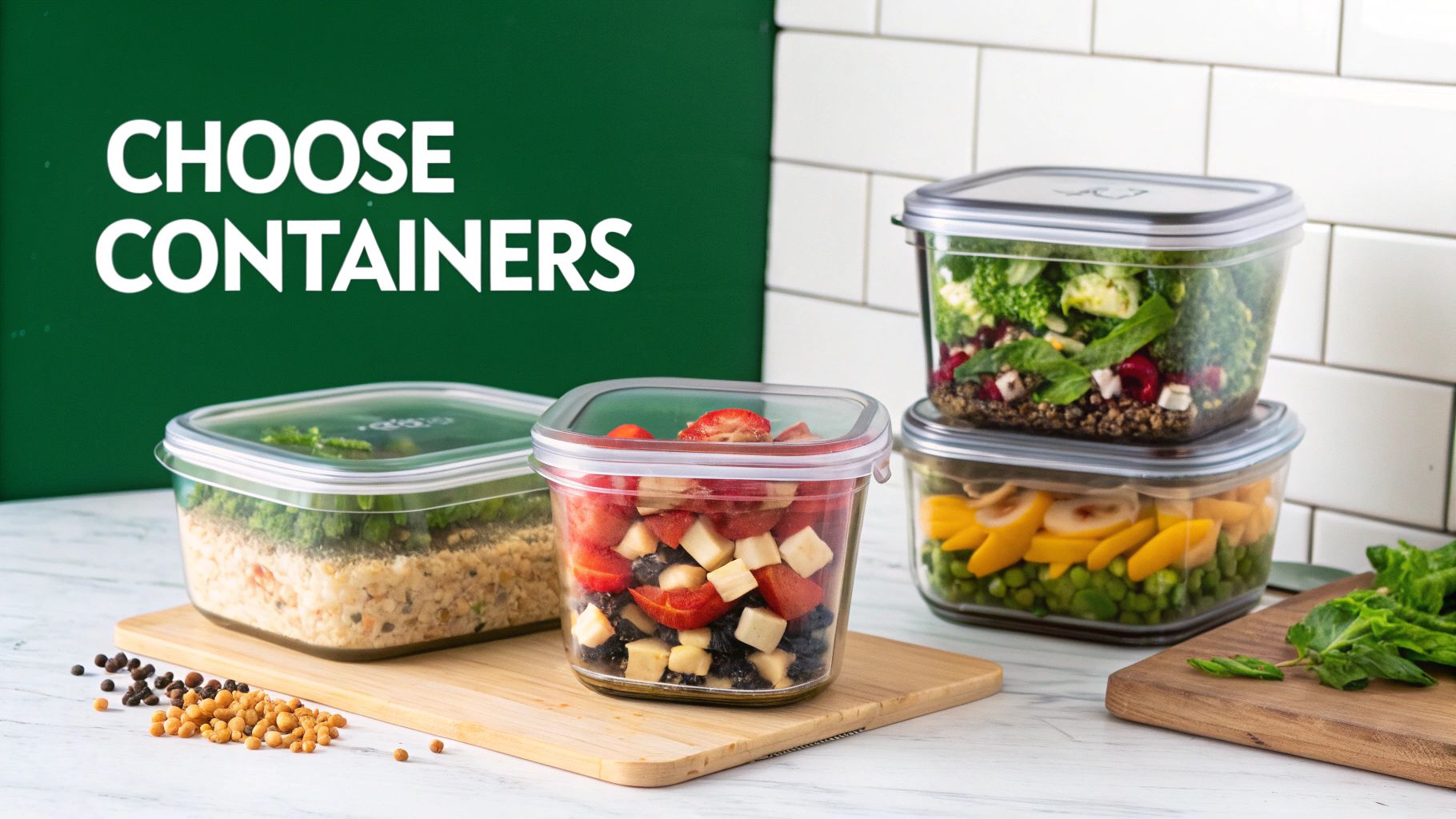
The Unbeatable Mason Jar Method
There's a good reason you see mason jars all over Pinterest—they’re practically designed for salad prep. Their tall, skinny shape is perfect for layering. Gravity becomes your best friend, keeping the dressing pooled at the very bottom, far away from your delicate greens at the top.
- The Good: They’re cheap, easy to find, and made of glass, so they won't absorb weird smells or get stained by that balsamic vinaigrette. Plus, seeing all those colorful layers is just plain satisfying.
- The Not-So-Good: They're a bit heavy and clunky. And let's face it, eating out of that narrow opening can be a challenge. You’ll probably end up dumping it all into a bowl anyway.
Even with the downsides, a few wide-mouth, 32-ounce mason jars are a fantastic place to start. They literally force you to get good at layering, which is the most important skill in the salad-prep game.
Airtight Glass Containers: The Workhorse
If you prefer a more classic lunchbox feel, you can't go wrong with airtight glass containers. These are the tanks of the meal prep world—durable, reliable, and amazing at keeping food fresh.
Their wide, flat shape is ideal for salads you don't need to layer so intensely. The real genius is in the locking lids; they create a powerful, leak-proof seal that locks freshness in and keeps air out. And because they're glass, you can pop them in the microwave (lid off, of course!), making them super versatile for all kinds of meals.
Here's a pro tip: Pay close attention to the silicone seal in the lid. A cheap, flimsy seal is the number one reason for leaks and will totally defeat the purpose of your careful prep.
Bento-Style Plastic Boxes: The Portability King
When you need something light and easy to carry, bento-style plastic containers are the clear winner. They’re feather-light and—this is the best part—they come with built-in dividers.
Those little compartments are a game-changer. Instead of relying on layering, you can physically keep your wet and dry ingredients separate. Put your grilled chicken in one spot, your cherry tomatoes in another, and your dressing in its own little cup. Nothing gets soggy until you're ready to mix it all together.
- What to Look For:
- Leak-Proof Seals: An absolute must for dressings.
- Separate Dressing Cups: Don't even consider a box without one.
- Multiple Compartments: To keep different textures and ingredients happily apart.
The explosion in clever container designs isn't a coincidence. It's driven by our collective desire for healthy, convenient meals. In fact, the salad container industry was valued at a whopping USD 2.2 billion globally in 2025, a number that reflects just how serious we are about our prepped lunches. You can dive deeper into these trends and market forecasts on Future Market Insights.
And if you want a shortcut to finding the perfect one for you, check out our guide to the best meal prep containers, where we break down the top options on the market.
Five Salads to Kickstart Your Weekly Rotation
Alright, let's get to the good stuff. You’ve nailed the prep, mastered the art of layering, and found the perfect containers. Now it's time to put that hard work to use with five killer recipes that will make you forget everything you thought you knew about boring desk lunches.
Think of these as your go-to playbook. Once you get these down, you’ll start seeing the patterns and be well on your way to riffing and creating your own signature salads. The possibilities are truly endless.
Southwest Chicken and Black Bean Salad
This one is a straight-up flavor bomb in a jar. It’s got a little bit of everything—smoky, zesty, and super refreshing. The creamy avocado-lime dressing is the secret weapon here; it just gets better as it hangs out with the heartier ingredients at the bottom.
- Dressing: Blend 1 avocado, juice of 2 limes, ¼ cup cilantro, 2 tbsp olive oil, and a splash of water until it's silky smooth.
- Layer 1 (The Sturdy Stuff): Diced red bell pepper, corn kernels, and black beans.
- Layer 2 (Protein): 1 cup of diced, cooked chicken breast. Pro tip: season it with cumin and chili powder for an extra kick.
- Layer 3 (The Delicate Crew): Crumbled cotija cheese, halved cherry tomatoes, and crisp romaine lettuce.
- Topping: Toss a small handful of crushed tortilla strips in a separate baggie. Nobody likes a soggy chip.
Mediterranean Quinoa Power Bowl
Talk about a workhorse. This salad is brimming with plant-based protein and vibrant Mediterranean flavors that will actually keep you full and focused through that 3 p.m. slump. It’s all tied together with a ridiculously simple lemon-herb vinaigrette.
This recipe is the perfect example of a salad that genuinely improves over a day or two. The quinoa and chickpeas soak up that amazing dressing, making Wednesday's lunch even more delicious than Monday's.
- Dressing: Whisk ¼ cup olive oil, juice of 1 lemon, 1 tsp dried oregano, and salt and pepper. Done.
- Layer 1 (The Sturdy Stuff): Diced cucumber and chickpeas.
- Layer 2 (Grains & Protein): 1 cup of cooked and completely cooled quinoa.
- Layer 3 (The Delicate Crew): Halved Kalamata olives, crumbled feta cheese, and chopped parsley.
- Topping: Finish it off with a sprinkle of toasted pumpkin seeds for a nice crunch.
Crunchy Asian Sesame Ginger Salad
Craving something with a bit of an edge? This is it. The textures in this salad are incredible, from the crispy tofu to the juicy mandarin oranges, all brought together by a nutty, savory sesame ginger dressing that is downright addictive.
- Dressing: Whisk together ¼ cup almond butter, 2 tbsp sesame oil, 2 tbsp liquid aminos, 1 tsp ground ginger, and a splash of agave.
- Layer 1 (The Sturdy Stuff): Shredded purple cabbage and julienned carrots.
- Layer 2 (Protein): 1 cup of crispy baked or air-fried tofu, cooled completely. Don't skip the cooling!
- Layer 3 (The Delicate Crew): Mandarin orange segments, sliced scallions, and shredded iceberg lettuce.
- Topping: Go wild with a generous sprinkle of roasted peanuts and sesame seeds.
Greek Bean Salad
Meet the undisputed champion of no-cook meal prep. This salad is fresh, requires exactly zero time over a hot stove, and the flavors just meld together beautifully in the fridge. It's the perfect ace up your sleeve when you need to prep lunch in less than 20 minutes.
- Dressing: Just combine ¼ cup olive oil, 2 tbsp lemon juice, 1 tbsp red wine vinegar, and ½ tsp dried oregano.
- The "All-In-One" Method: In a big bowl, toss together 1 can of chickpeas (rinsed!), 1 can of navy beans (rinsed!), diced bell peppers, diced cucumber, halved Kalamata olives, and crumbled feta. Pour the dressing over the top, give it a good mix, and portion it out. This one does best in a wider container instead of a tall jar.
Autumn Harvest Salad with Apple Vinaigrette
When the weather starts to cool down, this is the salad you'll want. It's a fantastic mix of sweet, savory, and earthy notes that feels both satisfying and incredibly nourishing. The crisp apples and roasted sweet potatoes are a match made in heaven.
- Dressing: Blend ¼ cup apple cider vinegar, 3 tbsp olive oil, 1 tbsp maple syrup, and 1 tsp Dijon mustard.
- Layer 1 (The Sturdy Stuff): Diced roasted sweet potato (cooled) and chopped celery.
- Layer 2 (Protein & Grains): Cooked farro and grilled chicken or chickpeas.
- Layer 3 (The Delicate Crew): Chopped apple, dried cranberries, and sturdy chopped kale.
- Topping: A handful of toasted pecans takes this over the top.
To keep things interesting, here's a sample schedule you can steal for your first week.
Sample Weekly Salad Rotation
This is just a simple example of how to use our delicious recipes to guarantee variety and balanced nutrition throughout your workweek. No more eating the same sad lunch every day!
| Day of the Week | Featured Salad Recipe | Key Flavor Profile | Primary Protein |
| Monday | Southwest Chicken and Black Bean | Zesty, Smoky, Creamy | Chicken |
| Tuesday | Crunchy Asian Sesame Ginger | Nutty, Sweet, Savory | Tofu |
| Wednesday | Mediterranean Quinoa Power Bowl | Fresh, Herby, Tangy | Quinoa/Feta |
| Thursday | Greek Bean Salad | Briny, Zesty, Bright | Beans/Feta |
| Friday | Autumn Harvest Salad | Sweet, Earthy, Savory | Chicken |
Feel free to mix and match proteins or swap in different veggies based on what you have on hand. This is your launchpad for a week of incredible lunches.
It’s no wonder these kinds of complex, satisfying salads are taking over. In the U.S., the packaged salad market hit an impressive USD 6.15 billion in 2024. People are clearly hungry for convenient, healthy meals that don't skimp on flavor. You can dive deeper into the consumer trends for packaged salads on grandviewresearch.com to see just how popular these veggie, fruit, and protein combinations have become.
Your Common Salad Meal Prep Questions Answered
So, you're ready to jump into salad meal prepping? Awesome. It’s a total game-changer for staying healthy during a busy week. But even seasoned preppers have questions that pop up along the way.
Let’s get those nagging little queries out of the way so you can build your beautiful jar salads with absolute confidence. Think of this as the expert intel that separates a soggy, sad desk lunch from a crisp, crave-able one.
How Long Do Meal Prep Salads Actually Last?
This is the million-dollar question, right? If you follow the layering method we've talked about and prep your ingredients properly, you can expect your salads to stay perfectly crisp and fresh for up to 5 days. That's a whole work week of lunches, done.
Your choice of greens makes a difference. Hardy greens like romaine, kale, and even good old iceberg lettuce are tough enough to stand up to a week in the fridge. The more delicate stuff, like spinach or a spring mix, is better for salads you plan to eat within 3-4 days.
Here's the real secret: it's all about keeping things separate. By locking your dressing and wet ingredients away at the bottom of the jar, you're creating a barrier that protects the greens up top from getting soggy. It’s a simple trick with a massive payoff.
What Is the Best Way to Pack Avocado?
Ah, the avocado. The delicious, creamy, and notoriously quick-to-brown superstar. Honestly, the very best way to handle it is to not prep it ahead. Just bring a small avocado with you, slice it up right before you eat, and enjoy that perfect green goodness.
But, if you're dead set on prepping it, here’s the next best thing:
- Cut your avocado and immediately coat all the exposed surfaces with a generous squeeze of lemon or lime juice.
- Then, press a small piece of plastic wrap directly onto the flesh, forcing out any air.
This will buy you a day, maybe two, but nothing beats adding it fresh. Trust me on this one.
Can I Use Cooked Meat or Fish in My Salads?
You bet! Adding things like grilled chicken, steak, shrimp, or a piece of salmon turns a simple salad into a powerhouse meal. The golden rule here is to make sure your protein is 100% cooled down before it ever touches the rest of your ingredients.
I see this mistake all the time. Putting warm protein into a sealed container creates steam, and steam is the mortal enemy of crisp lettuce. For a deeper dive on this, it's worth knowing is it safe to put hot food in the fridge to understand the food safety side of things. Once it’s cool, layer it in the middle of your jar—right on top of the hard veggies and under the greens.
My Olive Oil Dressing Hardens in the Fridge—How Do I Fix It?
First off, don't panic! This is actually a good sign. It means you're using a quality extra virgin olive oil whose healthy fats naturally solidify at cold temperatures.
The fix couldn't be easier. Just pull your salad from the fridge about 20-30 minutes before you plan to eat it. When you're ready, give the container a few good, vigorous shakes. The dressing will return to its perfectly smooth, liquid state and be ready to coat every leaf.
---
Tired of the guesswork and want to make healthy eating feel effortless? Meal Flow AI automates your entire weekly routine. You get personalized meal plans and shopping lists sent straight to Instacart. It’s the easiest way to get your time back. Start your journey with Meal Flow AI today and see for yourself.