How to Organize Refrigerator: Stop Wasting Food with Simple Steps
Learn how to organize refrigerator and prevent waste with smart zones, bins, and tips that save money and simplify meal prep.
Love This Article?
Get personalized meal plans with recipes like this, automatically matched to your nutrition targets.
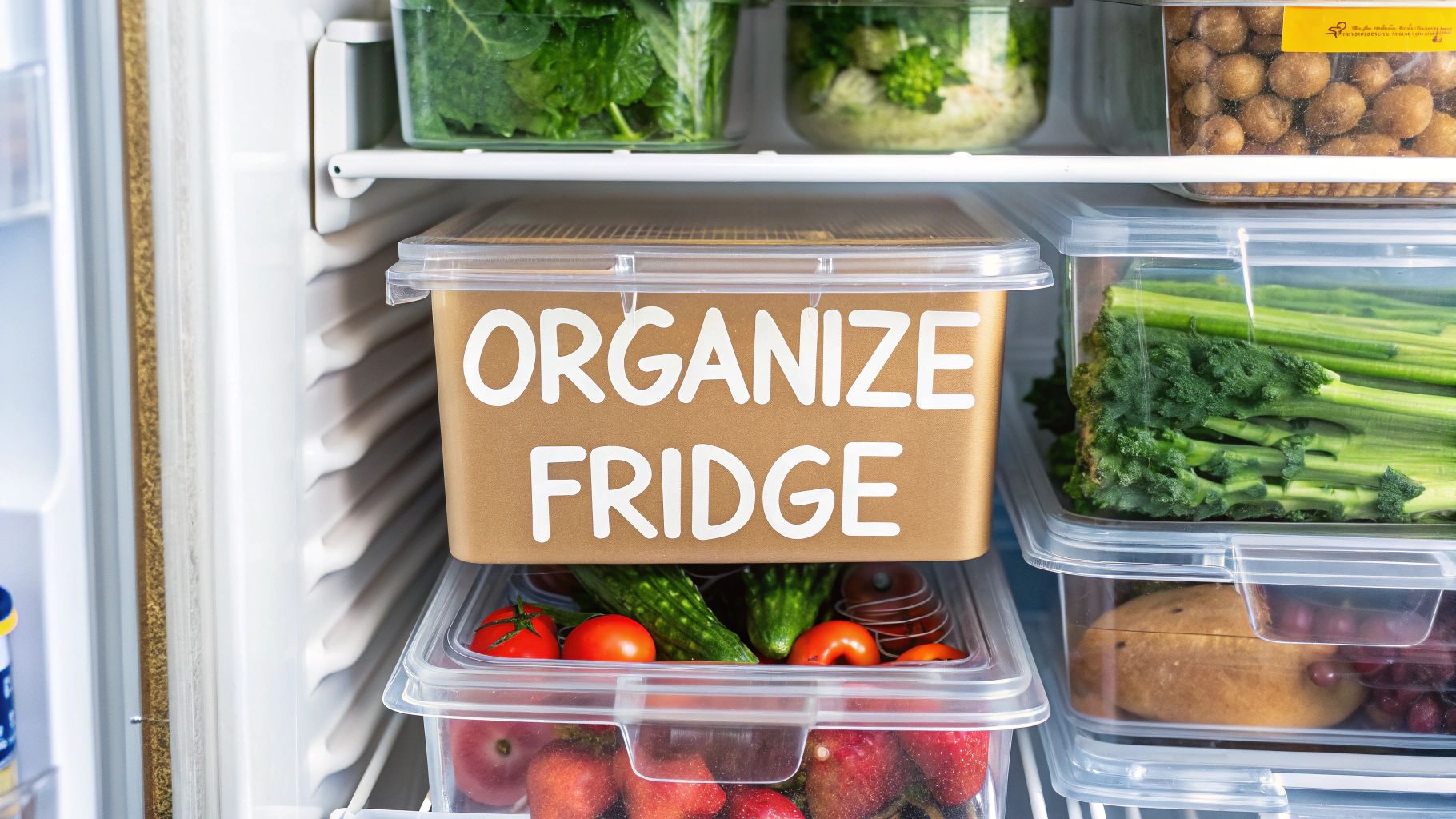
Alright, let's get real. To truly organize a refrigerator, you can't just shuffle things around. You have to commit. That means emptying everything out, giving it a deep clean, and being ruthless about tossing what's expired. This isn't just cleaning; it's a strategic reset. You're creating a clean slate to build a system that turns your fridge from a chaotic mess into an efficient, food-saving machine.
Your Refrigerator Reset: From Chaos to Calm
We’ve all been there. Staring into a cluttered, overstuffed fridge is a special kind of daily stress. It feels like an archaeological dig every time you just want the ketchup. This isn't about being tidy for the sake of it; it's a full-on intervention. We're starting with a complete reset—pulling every last thing out to confront the science experiments lurking in the back.
This process is so much more than just tossing old salad dressing. It's about creating a blank canvas, giving you the power to build a system that actually works for you. You get to decide what truly deserves its valuable real estate back.
The Purge and Polish Phase
Once everything is out on your counters, it's time to sort. I like to create three piles: keep, toss, and "what even is this?" Be merciless with expired items, half-empty jars you haven't touched in a year, and anything that just looks suspicious. For condiments, adopt the ‘one-touch’ rule—if you have multiples of the same thing, combine them into one container and ditch the rest.
With the fridge gloriously empty, give it a satisfying deep clean. You don’t need harsh chemicals for this. A simple solution of warm water and a splash of white vinegar or mild dish soap works wonders. Pull out all the shelves and drawers, wash them thoroughly, and wipe down every single interior surface until it sparkles. This is a non-negotiable step for getting rid of lingering odors and bacteria.
Rebuilding for a Smarter System
A clean fridge is the foundation, but a smart system is what prevents future chaos. This initial overhaul is also the perfect time to optimize your settings. It's shocking, but poor fridge setups contribute to massive waste; U.S. households toss out 30-40% of their food, which can add up to $1,500 per family annually.
To fight back, start with temperature. Set your fridge to 37°F (3°C) and your freezer to 0°F (-18°C). These are the magic numbers for optimal food safety and preservation.
This reset isn't a one-time fix; it's about fundamentally changing your relationship with your kitchen's most important appliance. If you're looking to dive even deeper and get more perspectives on this, we highly recommend this comprehensive guide on how to organise your fridge.
A clean slate in your fridge is like a clean slate for your meal planning. It removes the mental clutter and makes it easier to see what you have, reducing waste and inspiring creativity.
This foundational step of decluttering your fridge makes every other part of the process a breeze. It's a key principle that applies to the entire kitchen, and you can learn more by checking out our guide on https://mealflow.ai/blog/how-to-organize-kitchen. By starting fresh, you're setting the stage for a system that keeps food fresh longer and saves you real money.
Know Your Zones: A Food-Lover's Map to the Fridge
Let’s be honest, most of us treat our fridge like a cold, chaotic closet. We shove things in wherever they fit and hope for the best. But what if I told you that your refrigerator isn't just one big cold box? It's more like a high-end condo building with different microclimates on every floor.
Seriously. The temperature inside varies a ton from the door to the back, and from the top shelf to the bottom. Understanding this internal weather system is the real secret to making your food last way longer and keeping it safer to eat. Once you master this, you'll never look at your fridge the same way again.
First things first, you can't build a beautiful new system on a messy foundation. It's time for a full-blown fridge reset. Pull everything out, give it a good scrub, and be ruthless about what gets to go back in.
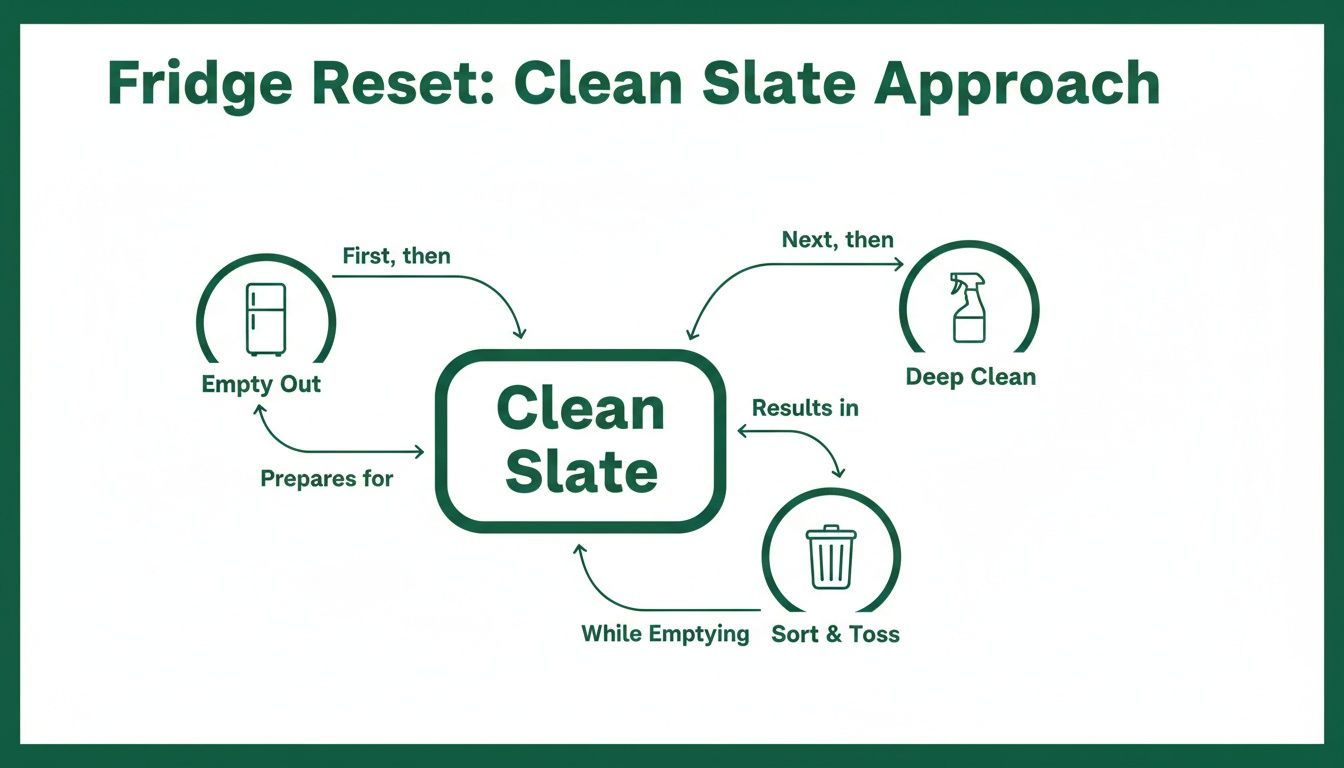
Starting with a sparkling clean, empty fridge feels amazing and ensures you're not just reorganizing expired salad dressing.
The Lay of the Land: A Tour of Your Fridge's Neighborhoods
Let's break down the real estate inside your fridge. Cold air sinks, which means the bottom is the coldest spot and the top is a bit warmer. The door? That's beachfront property with a volatile climate—it gets a blast of warm air every time you open it.
Here’s how to map it all out:
- The Door (The Warm Zone): This is prime real estate for things that can handle a little temperature fluctuation. Think condiments, pickles, jams, and sodas. These items are loaded with vinegar, salt, and other preservatives, so they'll be just fine. Never, ever put milk or eggs here.
- The Top Shelf (Ready-to-Eat Central): The temperatures up here are the most consistent, making it perfect for grab-and-go stuff. Leftovers, drinks, yogurt, and deli meats belong here. You can see everything, so you're more likely to eat it before it gets forgotten.
- The Middle Shelves (Dairy & Eggs HQ): This is where your eggs, milk, cheese, and butter should live. The temperature is stable and cold, especially towards the back, which is exactly what these staples need to stay fresh.
- The Bottom Shelf (The Coldest & Safest Spot): Welcome to the arctic zone. This is the only place you should ever store raw meat, poultry, and fish. It’s the coldest part of the fridge, which keeps dangerous bacteria at bay.
My Non-Negotiable Rule: Raw meat always goes on the bottom shelf, and always on a plate or in a container. This one simple habit prevents any accidental drips from contaminating everything below it. Trust me, it’s a food safety game-changer.
Getting your zones right isn't just about freshness; it’s about safety. Proper organization can slash the risk of foodborne illnesses by as much as 50%. And for those of us with those popular double-door fridges—which make up about 65% of what's out there—using your adjustable shelves wisely can help you cram in up to 20% more food without it turning into a jumbled mess.
To make this super easy, here's a quick cheat sheet you can reference.
Your Refrigerator Zoning Cheat Sheet
This table is your quick-glance guide to putting everything in its perfect place.
| Fridge Zone | Best For | Why It Works |
| Door | Condiments, jams, pickles, soda | These items have natural preservatives and can handle temperature swings. |
| Top Shelf | Leftovers, drinks, yogurt, ready-to-eat snacks | Consistent temps and high visibility mean you'll eat them before they go bad. |
| Middle Shelves | Milk, eggs, cheese, butter | The core of the fridge provides a stable, cool environment for dairy. |
| Bottom Shelf | Raw meat, poultry, fish | This is the coldest spot, inhibiting bacterial growth and preventing cross-contamination. |
| High-Humidity Crisper | Leafy greens, herbs, broccoli, carrots | Traps moisture to keep things that wilt (like spinach and kale) crisp and fresh. |
| Low-Humidity Crisper | Apples, pears, avocados, peppers | Allows ethylene gas to escape, preventing things that rot from spoiling too quickly. |
Keep this mental map in mind every time you unpack your groceries, and it'll become second nature.
The Crisper Drawer Conundrum: Solved!
Those two drawers at the bottom aren't just extra bins. They are sophisticated humidity-control chambers, and using them correctly is a produce-saving superpower. Most have a little slider that opens or closes a vent.
- The High-Humidity Drawer: Close the vent. This traps moisture inside, creating a perfect little rainforest for produce that tends to wilt. Think leafy greens, fresh herbs, broccoli, and carrots. They’ll stay crisp for days longer.
- The Low-Humidity Drawer: Open the vent. This lets ethylene gas—the stuff that causes ripening and rotting—escape. This drawer is for fruits and veggies that give off a lot of that gas, like apples, pears, peaches, and avocados.
Separating your produce this way stops your ethylene-producing apples from prematurely aging your delicate spinach. Want to dive deeper into this? Check out our complete guide on how to keep produce fresh longer.
Choosing Bins and Organizers That Actually Work
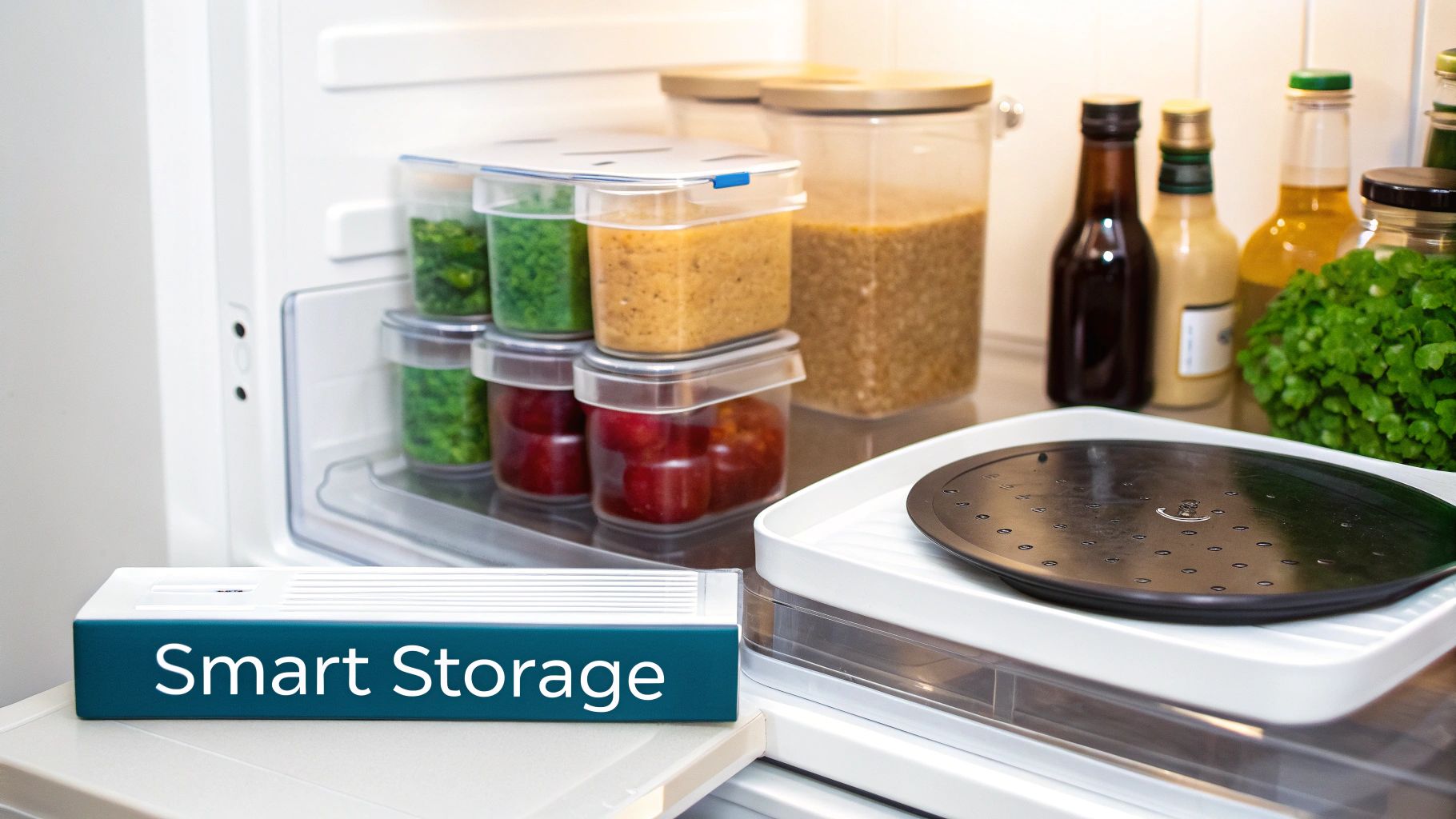
Alright, now for the fun part—the gear! You've purged, you've cleaned, you've mapped out your zones. This is where we bring in the tools that turn a clean-but-empty box into a system that makes daily life just a little bit smoother. Forget wandering the container aisle and grabbing a bunch of random plastic tubs that don't quite fit.
The real secret to learning how to organize a refrigerator is choosing your organizers with a purpose. The right bins don't just contain the chaos; they create predictable, easy-to-manage homes for your food, saving you time and preventing that sad science experiment from getting lost in the back-of-the-fridge abyss.
The Non-Negotiable Essentials
Before you even think about clicking "add to cart," grab a tape measure. Measure your fridge shelves—depth, width, and the height between each one. Trust me, nothing is more infuriating than unboxing a set of beautiful new bins only to find they're an inch too deep for the door to close.
With those precious numbers in hand, focus on these game-changers.
- Clear, Stackable Bins: This is my golden rule. If you can't see it, you won't eat it. Clear containers completely solve the "mystery box" problem. Stackable designs are absolute magic for using all that vertical space, turning one crowded shelf into two or three tidy layers.
- A Turntable (Lazy Susan): If you only take one piece of advice from me today, let it be this. A turntable completely ends the nightmare of lost jars and bottles. Stick one in a back corner or on a deep shelf for your condiments, sauces, and jams. A simple spin brings everything hiding in the back right to the front. No more digging!
- Designated Zone Bins: This is a lifesaver for busy families and meal preppers. Create specific, labeled bins for daily categories. Think "Snacks," "Yogurts," or "Meal Prep for Tuesday." It’s a simple grab-and-go system that stops the frantic rummaging before it even starts.
My favorite trick is the "Eat Me First" bin. Anything getting close to its expiration date or leftovers that need to be eaten ASAP goes right in here. It's a powerful visual cue that has dramatically cut down on our food waste each week.
Smart Organizers for Specific Problems
Once you've got the basics covered, you can add a few specialized tools to tackle those common fridge annoyances. These aren't necessary for everyone, but for the right kitchen, they can create a truly custom setup that just works.
An egg drawer, for example, is fantastic. It frees up shelf space by getting rid of the bulky cardboard carton and often holds more eggs in a protected, slide-out container. For households that go through a lot of seltzer or soda, a can dispenser that gravity-feeds the next cold one to the front is a simple but brilliant upgrade.
Don’t feel like you need to spend a fortune, either. You can often repurpose things you already own. Small, sturdy gift boxes can work as drawer dividers, and simple glass jars are perfect for storing pre-cut veggies or homemade sauces. The goal is just to create a defined home for everything, making your new system a breeze to maintain.
Embracing the "First In, First Out" Habit
Alright, you’ve done the hard part. The fridge is purged, everything has a home, and you’ve got the perfect bins. So, what’s the secret to keeping it this way? It’s not about the big overhaul; it's all about the small, daily habits you build from here on out.
The single most powerful trick in the book, borrowed straight from the pros in restaurant kitchens, is the First In, First Out (FIFO) principle.
It sounds like some complicated kitchen jargon, but it’s laughably simple. When you get home with new groceries, you just put them behind the older stuff. That half-eaten tub of cottage cheese? It gets to keep its prime spot at the front. The brand-new one slides in neatly behind it.
This tiny shift in your routine is a total game-changer. It forces you to use up what you already have before cracking open something new, which means you’ll drastically cut down on those forgotten items that slowly morph into fuzzy science experiments in the back of your fridge.
Making FIFO Feel Like Second Nature
The goal here is to make this process so automatic you don't even think about it. After a grocery haul, just take an extra minute—seriously, maybe 60 seconds—to pull the older items forward before you stock the new ones. It might feel a bit fussy the first few times, but I promise, after a couple of shopping trips, it’ll become pure muscle memory.
Want to supercharge this system? Simple labeling is your best friend. You don’t need anything fancy. A dry-erase marker works wonders on glass or plastic containers. Just scribble the date you opened something or its "use by" date. For anything you can't see through, a little piece of masking tape and a Sharpie gets the job done.
Half the battle is just eliminating the "what is this and how old is it?" mystery. When you can see a date at a glance, you're so much more likely to grab that item instead of letting it languish.
The Real-World Payoff of Smart Habits
Getting into a groove with a system like FIFO does a lot more than just keep your shelves looking good. A truly organized fridge is a powerful weapon against food waste. It’s pretty shocking, but a proper setup can help prevent 25% of the 1.3 billion tons of food that gets wasted across the globe each year. This method has really taken off in European countries like the UK and Germany, which are at the forefront of cutting down on food waste.
This one habit is the glue that holds your entire system together. When your fridge contents are always visible and properly rotated, you can easily sync what you have with a digital tool. Ready to take it to the next level? See how this simple practice is the foundation of an effective food inventory management system that can automate your meal plans and build your shopping lists for you. It’s the final piece of the puzzle that turns your beautifully organized fridge into a money-saving, waste-fighting machine.
Your 10-Minute Weekly Fridge Maintenance Routine
So, you did it. You survived the Great Fridge Overhaul. High five! But let's be real, the real win isn't just getting it organized—it's keeping it that way. An organized fridge isn’t a one-and-done deal; it’s a living, breathing system that needs a little attention to stop it from slipping back into chaos.
Forget about scheduling another massive, soul-crushing clean-out. The secret is a ridiculously fast, 10-minute weekly ritual that becomes second nature. My go-to move? I tackle this right before the new groceries arrive. The fridge is at its emptiest, making it the perfect time for a quick reset. You'll be restocking a pristine, organized space instead of just shoving new food into last week's mess.

The Pre-Grocery Power Tidy
Think of this as your five-minute defense against future fridge-related meltdowns. It's a simple, three-part sprint that keeps everything humming along week after week. It’s not a deep clean, just a quick walkthrough to make sure your beautiful system is still working.
Here’s my exact game plan:
- Wipe and Go: Grab a damp cloth and do a lightning-fast wipe of any sticky spots, drips, or stray crumbs on the shelves and in the drawers. This literally takes 90 seconds and stops small spills from becoming fossilized, scrub-worthy disasters.
- The "Eat Me First" Scan: Quickly eyeball every shelf for things that are on their last legs. Pull that half-empty jar of salsa or those slightly sad-looking carrots right to the front. These are now the stars of your next meal, saving them from the compost bin and saving you money.
- Zone Reset: Spend a minute putting things back where they belong. Nudge all the yogurts back into their bin, corral the condiments on their turntable, and make sure your raw meat shelf is clear and ready for action. It’s like a mini-reset button for your whole system.
This isn't a chore; it's proactive clutter prevention. It’s what separates a system that looks good for a day from one that becomes an effortless part of your life.
This weekly refresh is your insurance policy. By investing just ten minutes, you guarantee that the time you put into the big overhaul actually pays off, keeping food fresh and your kitchen running like a well-oiled machine.
Keeping Your Appliance Humming for the Long Haul
Tidying is one thing, but keeping the actual appliance in top shape is just as important. Your weekly wipe-down is a fantastic start, but a little extra care will boost its efficiency and lifespan. For some solid general refrigerator maintenance advice that covers more than just organization, that’s a great resource.
This tiny, consistent effort is the final piece of the puzzle. It transforms fridge organization from a dreaded, monumental task into a simple, deeply satisfying habit.
Got Fridge Questions? We've Got Answers.
Even after you've got your shelves zoned and your bins labeled, a few nagging questions always seem to linger. Trust me, you're not the only one second-guessing where the milk really goes. Let's clear up some of the most common fridge-organizing mysteries once and for all.
So, How Often Do I Actually Need to Deep Clean This Thing?
Let's be real: a full, empty-everything-out deep clean is a twice-a-year project. The real game-changer is the weekly tidy-up. Before you head out for groceries, take 10 minutes to wipe up any spills and straighten out your bins.
This quick reset prevents sticky messes and forgotten leftovers from staging a coup, making those big clean-outs a breeze instead of a biohazard situation.
Is Putting Milk in the Fridge Door Really a Cardinal Sin?
Yes, it absolutely is! I know it’s the most convenient spot, but the door is the warmest, most temperature-volatile part of your entire fridge. Every time you open it for a snack, you're blasting your dairy with a wave of room-temperature air. Milk and eggs need the stable, chilly environment of a main shelf to stay fresh.
Pro Tip: Keep the milk and eggs on a middle or lower shelf where the cold is consistent. The door is prime real estate for things that can handle the temperature swings, like condiments, jams, pickles, and sodas.
Why Is My Produce Drawer a Graveyard for Sad, Withered Vegetables?
Ah, the crisper drawers. The most misunderstood feature of any refrigerator. These drawers have humidity controls for a reason, and using them correctly is the secret to crunchy, long-lasting produce.
Here's the breakdown:
- High-Humidity Drawer: This is for veggies that wilt, like leafy greens, broccoli, and carrots.
- Low-Humidity Drawer: This is for fruits and veggies that rot, like apples, pears, and avocados. High humidity makes them spoil faster.
Also, be a good fridge parent and separate the gassy fruits (like apples and bananas) from your other produce. They release ethylene gas, which speeds up ripening and spoilage in their neighbors. Nail this, and you’ll easily add a week of life to your groceries.
What's the Undisputed Best Way to Store Leftovers?
Two words: clear and airtight. The containers must be clear. If you can’t see what’s inside, it’s destined to become a forgotten science experiment in the back of your fridge. Airtight is just as crucial for keeping food fresh and preventing your entire fridge from smelling like last night's fish tacos.
Always slap a label on there with the contents and the date—a strip of masking tape and a Sharpie works wonders. Then, give those leftovers a place of honor on an upper, eye-level shelf. Out of sight is truly out of mind (and into the trash).
---
Ready to connect your beautifully organized fridge to a brainy meal-planning sidekick? **Meal Flow AI** whips up personalized meal plans and zaps the shopping list right over to Instacart. It's the ultimate way to end the "what's for dinner?" debate for good.