Your Guide to Meal Plan Delivery Services That Actually Work
Tired of 'what's for dinner?' We unpack meal plan delivery services, helping you choose the right fit for your budget, diet, and busy lifestyle. Dinner solved.
Love This Article?
Get personalized meal plans with recipes like this, automatically matched to your nutrition targets.
Tired of that 5 PM panic when you realize you have no idea what's for dinner? We've all been there. Meal plan delivery services are designed to kill that daily dread by dropping either pre-measured ingredients or fully cooked meals right on your doorstep.
They essentially take the two worst parts of cooking—the endless planning and the grocery store runs—right off your plate. The result? Evenings that feel less like a chaotic sprint and more like a chance to actually enjoy a good meal.
So, What Exactly Are Meal Plan Delivery Services?
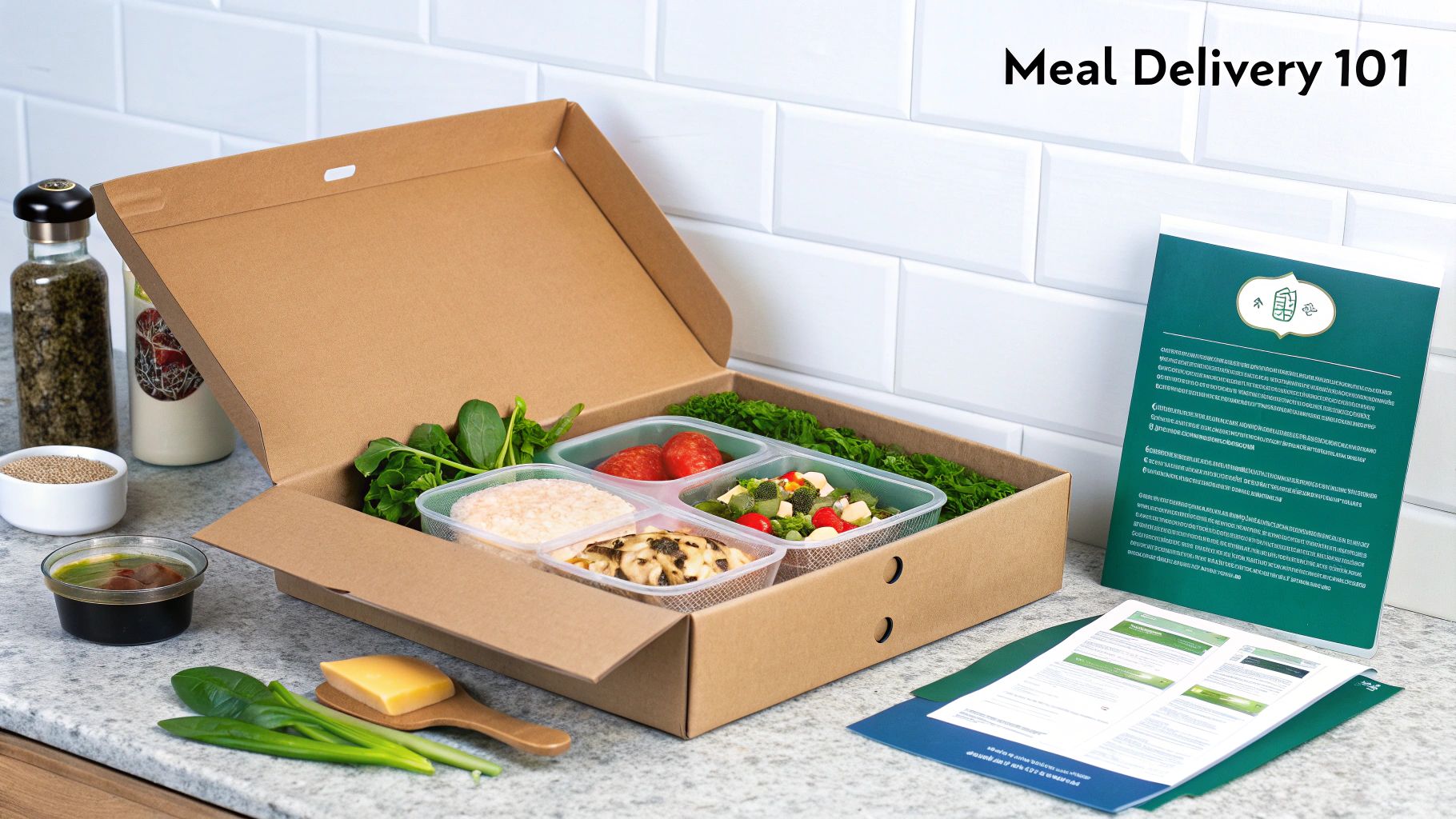
Picture this: no more aimless wandering through grocery store aisles on a Tuesday night. That’s the dream these services sell. They’re like having a personal food assistant who figures out the recipes, hunts down the ingredients, and does all the measuring. All you have to do is hop online, pick your meals, and wait for a box of deliciousness to arrive.
This isn't some niche trend, either. The global market for these services pulled in around USD 26.3 billion in 2023 and is on track to explode to over USD 64 billion by 2030. Why the boom? Simple. People are busy, but they still want to eat well without the stress.
The Two Main Flavors of Meal Delivery
When you get down to it, the meal delivery world is split into two camps. Figuring out which one fits your life is the key to getting it right.
- Meal Kits: Think of these as the "IKEA of dinner." You get a box with all the fresh, pre-portioned ingredients and a glossy recipe card that walks you through it, step-by-step. You still get to do the fun parts—the chopping, the sizzling, the plating—but without any of the headache. It’s cooking, but with all the boring bits removed.
- Prepared Meals: This is your "personal chef in a box." These meals show up fully cooked and ready to go. Just a few minutes in the microwave or oven, and dinner is served. This is the ultimate shortcut for those days when even a 20-minute recipe feels like a marathon.
The real genius behind these services is how they turn a daily chore into something you might actually look forward to. Whether it's the fun of trying a new recipe or the pure relief of a healthy meal ready in minutes, the end goal is always the same: giving you back your time.
Getting that box of fresh food to your door is a masterpiece of logistics. It's a complex dance of sourcing, packing, and shipping that has to be perfect every time. For anyone curious about what goes on behind the scenes, the world of subscription box fulfillment is a fascinating deep-dive into the operational magic that makes it all seem so effortless.
Meal Kits vs. Prepared Meals: Finding Your Perfect Fit
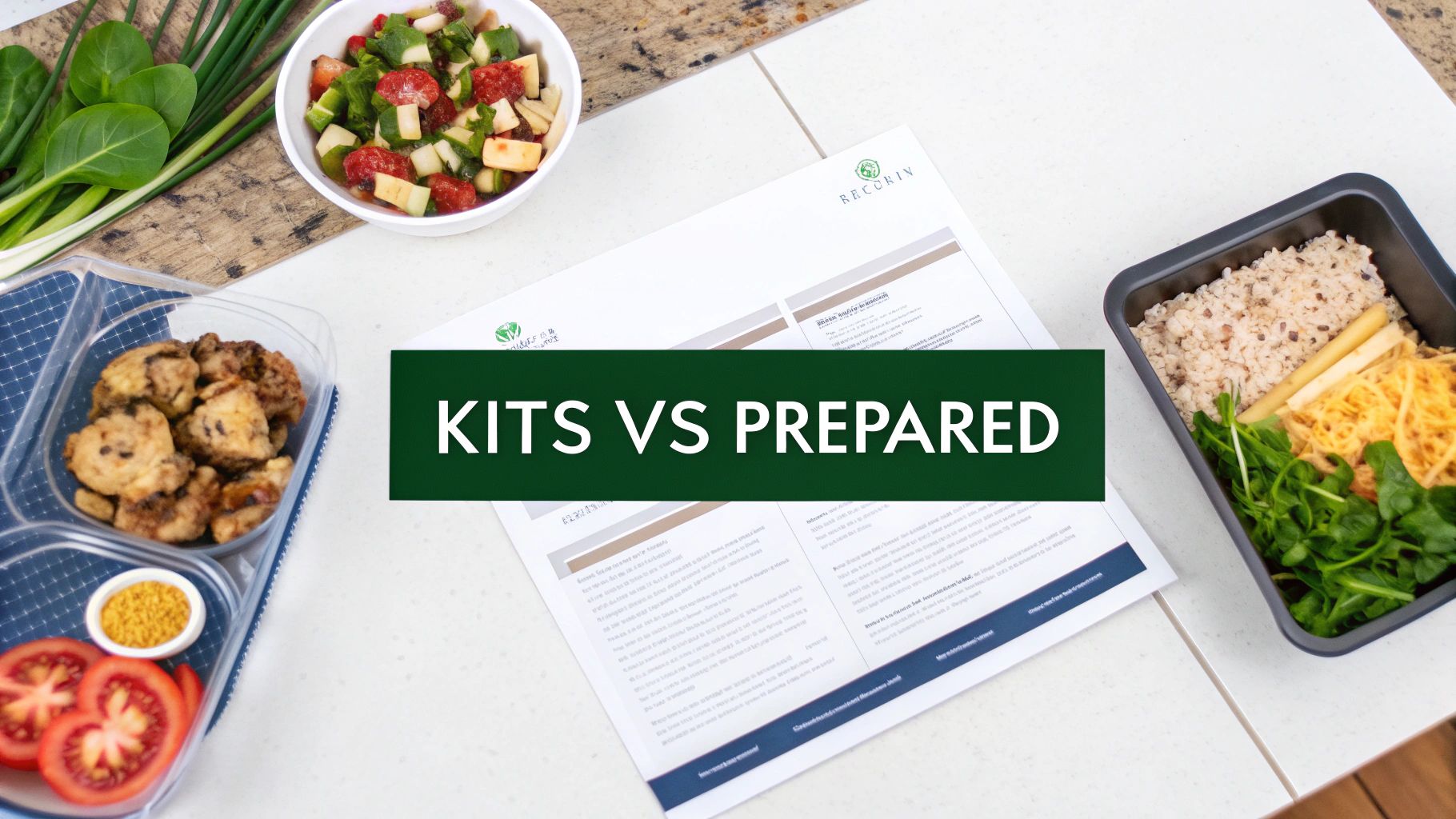
Alright, let's talk about your dinner-time destiny. When you dive into the world of meal plan delivery services, you’re really looking at two main paths. Each one gets a delicious, sanity-saving meal on your table, but how you get there is totally different.
It all boils down to one simple question: how much "chef" do you feel like being tonight?
Think of meal kits as the IKEA of food. Everything arrives in a box—pre-measured spices, chopped veggies, the exact amount of protein—along with a glossy, step-by-step instruction card. You're still the one putting it all together, so you get that satisfying "I made this!" feeling. It’s the perfect compromise for anyone who actually likes to cook but just can’t stand the meal planning and grocery shopping that comes with it.
Then you have prepared meals. These are your personal chef in a box. The meals show up fully cooked, portioned out, and just begging for a few minutes in the microwave or oven. No chopping, no pans to scrub, no mess. This is the holy grail of convenience, designed for those days when you're running on fumes and the thought of boiling water feels like climbing Everest.
The Home Cook vs. The Time-Saver
The real difference here is the experience. Meal kits are for the hands-on person who wants to try a new recipe without committing to a giant jar of cardamom they'll only use once. They turn dinner into a fun, 20 to 30-minute project instead of an hour-long chore. It's cooking, but with all the boring parts done for you.
Prepared meal services, on the other hand, are for the person who needs to buy back time. If you're a busy mom juggling homework and bath time, or you're just walking in the door after a soul-crushing commute, these are an absolute game-changer. The goal isn't the process of cooking; it's getting a healthy, genuinely tasty meal on the table in less than five minutes. It’s about reclaiming your evening.
The decision isn't about which one is "better." It's about which one is better for you and your life right now. Honestly, your perfect fit might even change week to week.
A Side-by-Side Showdown
So you can really see how these two stack up, here’s a quick-and-dirty comparison. This isn't just about cooking versus heating; it's about the cost, the cleanup, and what you really value at the end of a long day.
Meal Kits vs. Prepared Meals At a Glance
This table breaks down the two main types of meal delivery services, helping you see at a glance which one might be the right call for your kitchen, your schedule, and your wallet.
| Feature | Meal Kits | Prepared Meals |
| Effort Required | Low to Medium (20-40 mins of cooking) | Minimal (2-5 mins of heating) |
| Best For | Learning new recipes, date nights, or families who want to cook together. | Super busy people, singles, or anyone who values convenience above all. |
| Typical Cost | $9 - $13 per serving | $10 - $15 per serving |
| Pros | Engaging and fun, teaches you new skills, tastes and feels like a fresh, home-cooked meal. | The ultimate time-saver, zero food waste, and perfect for portion control. |
| Cons | You still have to cook and clean up, and there can be a lot of packaging. | Can taste less "fresh," might be pricier, and customization is often limited. |
At the end of the day, picking between them is like choosing between building a cool LEGO model or getting one that’s already glued together. Both give you an awesome result, but the journey is totally different. One gives you the hands-on satisfaction of creating something, while the other gives you pure, unadulterated, instant gratification. Your perfect match just depends on what kind of night you're hoping to have.
Let’s Be Honest: The Real Pros and Cons of Meal Delivery
Alright, let's cut through the marketing fluff. You’ve seen the glossy ads on social media—perfectly plated meals, happy families, and kitchens that are somehow always spotless. But what’s the real story behind those meal delivery boxes that show up at your door?
Are they the game-changing kitchen hack everyone claims they are? Sometimes, yes. But they’re not magic. Think of it less as a silver bullet and more as a strategic tool in your weekly battle for sanity. Let's peel back the plastic wrap and get into the good, the bad, and the occasionally soggy reality of letting a box run your dinner schedule.
The Big Wins: Why People Get Hooked
The number one reason people fall in love with these services is the glorious, beautiful gift of time. Seriously, just imagine erasing "plan meals for the week" and "slog through the grocery store" from your mental to-do list. Poof. Gone. For a busy professional or a parent juggling a million things, getting those hours back is worth its weight in gold.
Then there’s the sweet relief from the daily 5 PM panic. You know the one: staring into the fridge, desperately trying to figure out what to make for dinner. These services kill that decision fatigue dead. The choice is already made, the ingredients are right there, and the mental load is suddenly a whole lot lighter.
But the perks don't stop at convenience.
- Kiss Food Waste Goodbye: You know that sad, wilted bunch of cilantro or that half-an-onion you find liquefying in the crisper drawer? With perfectly portioned ingredients, that’s a thing of the past. It’s a huge plus when you consider how much food the average household ends up tossing.
- Become a Culinary Explorer (Safely): Ever wanted to try making Pad Thai but were too intimidated to buy a whole jar of tamarind paste? Meal kits are your low-commitment ticket to adventure. You can dabble in new flavors and cooking techniques without a massive pantry investment.
The real magic isn't just the food. It's the friction it removes from your day. Meal delivery services act as a buffer against the chaos, automating one of the most relentless and time-draining parts of adulting.
The Not-So-Great Side: Real-World Drawbacks
Of course, it's not all perfectly pan-seared salmon and zen-like evenings. The first and most obvious hurdle is the cost. Let's be real—it's almost always going to be pricier per meal than just buying the groceries yourself. You're paying a premium for someone else to do the thinking, shopping, and measuring for you.
And then there's the packaging. Oh, the packaging. Even with companies trying to be more eco-friendly, the sheer mountain of cardboard boxes, plastic baggies, and giant ice packs can feel overwhelming. If you're trying to reduce your environmental footprint, this can be a tough pill to swallow.
Finally, the "convenience" can sometimes feel a bit restrictive.
- Navigating Dietary Needs: Got a serious allergy or multiple food sensitivities? While many services offer "gluten-free" or "vegetarian" options, finding one that can handle complex or severe restrictions can be a real challenge.
- The Picky Eater Problem: The variety is great for adventurous eaters, but it can be a nightmare if you're feeding picky kids (or a picky partner). You might find yourself scrolling through the weekly menu only to realize there are just one or two "safe" meals your family will actually eat.
So, Is It Actually Worth It for You?
The demand for these services isn't just hype; it's a massive, growing market. In the United States alone, the meal kit industry is expected to hit around $8.9 billion in 2024. That kind of sustained growth tells you one thing: for a whole lot of people, the pros absolutely outweigh the cons. If you want to dig deeper, you can find more insights on the meal kit market's steady expansion on IBISWorld.
Ultimately, this all comes down to a personal trade-off. Are you willing to spend more on food to gain back precious time and mental energy? Does the eco-guilt from the packaging cancel out the benefit of wasting less food? There’s no right or wrong answer here—just the one that fits your life, your budget, and your priorities right now.
How to Choose the Right Meal Service for You
Feeling overwhelmed by the sheer number of meal delivery options out there? I get it. Scrolling through the endless choices can feel like a bigger chore than actually making dinner.
But here’s the secret: it’s not about finding the single “best” service. It’s about finding the one that clicks with your life. Think of this as your personal decision-making map. We'll cut through the noise so you can land on a service that feels like it was made just for you.
Nail Down Your Dietary Dealbreakers
First things first, let’s get brutally honest about your dietary needs. This isn’t just about whether you hate cilantro—we’re talking about the non-negotiables. Are there serious allergies in your house? Do you follow a strict keto, vegan, or gluten-free lifestyle?
Sure, lots of services have filters for common diets, and that’s a decent start. But if someone has a severe allergy, you need to play detective and investigate their cross-contamination policies. Don't just trust the pretty marketing photos; dig into reviews from people with the same restrictions as you.
This is your absolute first checkpoint. If a service can’t handle your dietary needs, it’s a hard pass.
Match the Plan to Your People and Your Wallet
Okay, let's talk logistics. How many mouths are you feeding, and what’s the budget? Most services charge per serving, typically falling somewhere between $9 and $15. The goal is to find a plan that fits your family without giving you a heart attack when the bill comes.
A few things to chew on:
- Who's at the table? Are you a single person who despises leftovers, or a mom trying to feed a family of four, including one very picky toddler? Look for plans with flexible serving sizes that match your reality.
- What can you realistically spend? Don't just compare the per-meal cost to your grocery bill. Factor in what you’d normally spend on takeout or those chaotic, last-minute trips to the store for a forgotten ingredient.
- Can you bail easily? Life is unpredictable. The best services let you skip a week, pause your subscription, or cancel without making you jump through a dozen fiery hoops. If a service tries to lock you into a rigid commitment, run.
This chart really nails the trade-offs you're making between time and money.
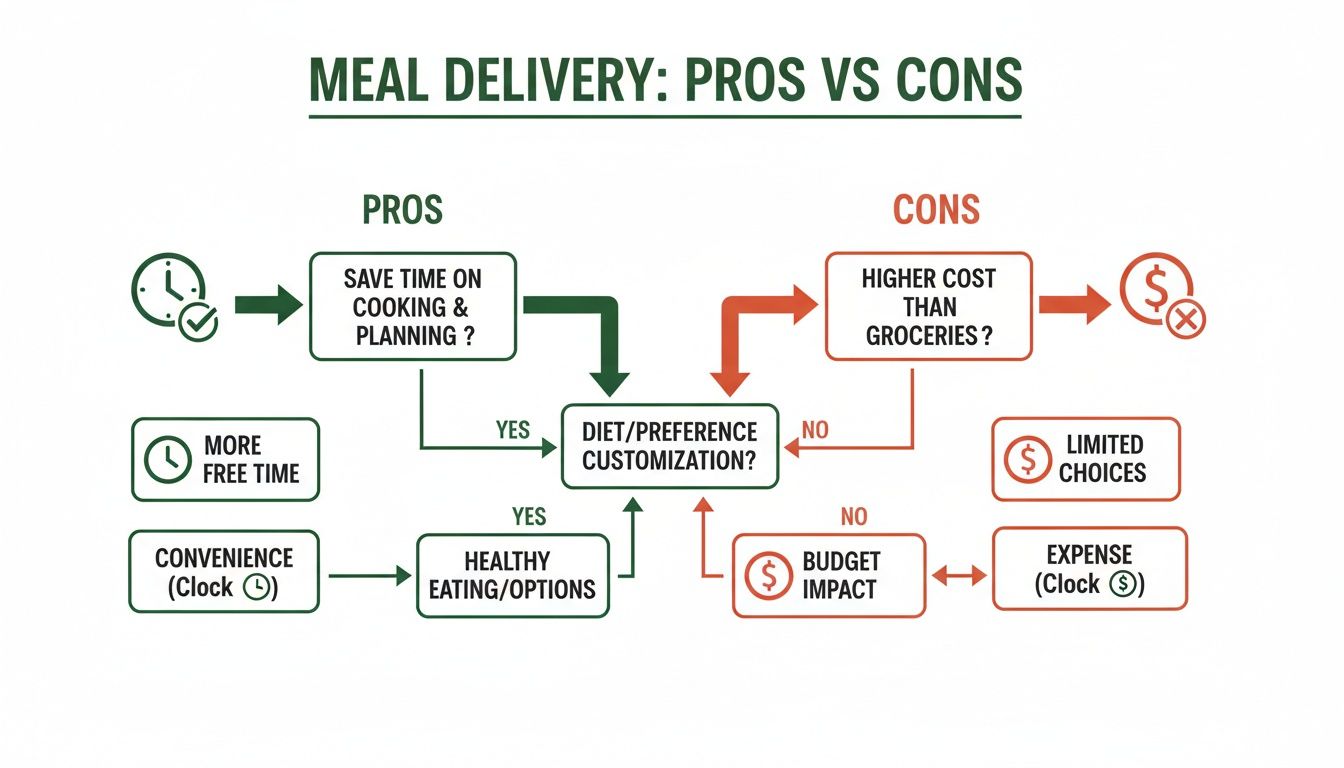
At the end of the day, you're trading dollars for hours—a swap that can be a game-changer for a busy household.
Dig Deeper Than the Five-Star Reviews
Alright, now for the fun part: a little sleuthing. Once you’ve got a shortlist, it’s time to check if these companies can actually walk the walk.
Start with the basics: do they even deliver to you? It sounds obvious, but there’s nothing more frustrating than falling in love with a menu, only to find out your zip code is a dead zone. For anyone in an area with spotty coverage, looking into a guide to local delivery groceries can be a fantastic workaround.
Next, scope out the menu variety and ingredient quality. A service might look great for a week or two, but if you’re staring at the same five chicken dishes on rotation, boredom will set in fast. And when it comes to ingredients, every company claims they use the best. To really know what you're getting, it helps to spend some time understanding premium ingredient quality, especially if you're particular about your proteins.
Reading user reviews is crucial, but you have to learn to read between the lines. Look for patterns. Are dozens of people all complaining about late deliveries, missing ingredients, or useless customer service? Those are the red flags a slick ad campaign can't hide.
By taking a methodical approach, you go from being an overwhelmed browser to a confident buyer. You’re not just ordering food; you’re investing in a calmer, less stressful week. Choose wisely
Making Meal Delivery Services Fit Your Budget
Let's tackle the elephant in the room: the price tag. It’s so easy to glance at the cost of a meal delivery service and immediately write it off as a luxury. But hold on—when you really dig into the numbers, the math might just surprise you.
Think about what a "cheap" home-cooked meal actually costs you. It’s not just the ingredients. It’s the gas for the grocery run, the bunch of sad, wilted cilantro you bought for one recipe, and the last-minute pizza you order on nights when you’re just done. Suddenly, that $9 to $13 per serving for a meal kit doesn't sound quite so crazy.
The trick is to reframe it. You aren't just buying food; you're buying back your time and your sanity. You're paying for convenience, less food waste, and the glorious relief of not having to answer the dreaded "What's for dinner?" question every single night.
Your Game Plan for Affordable Meal Delivery
Making these services work for your wallet isn't about finding the absolute cheapest option—it's about becoming a savvy subscriber. A few smart moves can seriously cut your costs and make this modern convenience a totally sustainable part of your life.
Here’s how you can play the system and win:
- Become a Deal Hunter: Almost every single service dangles a seriously tempting intro offer, often slashing prices by 50% or more for your first few boxes. There is zero shame in hopping from one service to another, riding that wave of discounts for a few months.
- Master the Art of Skipping: That "skip a week" button is your new best friend. Seriously. If the budget is tight one week or you know you'll be eating out, just hit pause. This amazing flexibility means you only pay for what you'll actually use, so you never have to deal with a fridge full of forgotten meal kits.
Finding Long-Term Value
Okay, so what happens after the sweet intro deals run out? This is where the real strategy comes in. Now, you need to look beyond the per-meal price and figure out which service offers the best long-term value for you and your family. It's about more than the sticker price; it's about the hidden savings.
The most budget-friendly meal plan delivery service is the one you actually use consistently. A slightly more expensive plan that your family loves is a much better deal than a cheaper one where picky eaters turn their noses up at half the meals.
To make the right call, you have to see the whole financial picture. If you're wondering what it really costs to do it all yourself, checking out a detailed breakdown of meal prep costs can give you an eye-opening baseline for comparison. It helps you spot the unexpected savings, like cutting out all those impulse buys at the grocery store.
And finally, don't sleep on the power of referrals. Most companies have "give a box, get a credit" programs. Share your link with curious friends, and you can rack up credits that take a nice chunk out of your future bills. By combining these simple tactics, you can make the convenience of meal delivery a smart, affordable part of your routine.
Your First Box: A Survival Guide for Week One
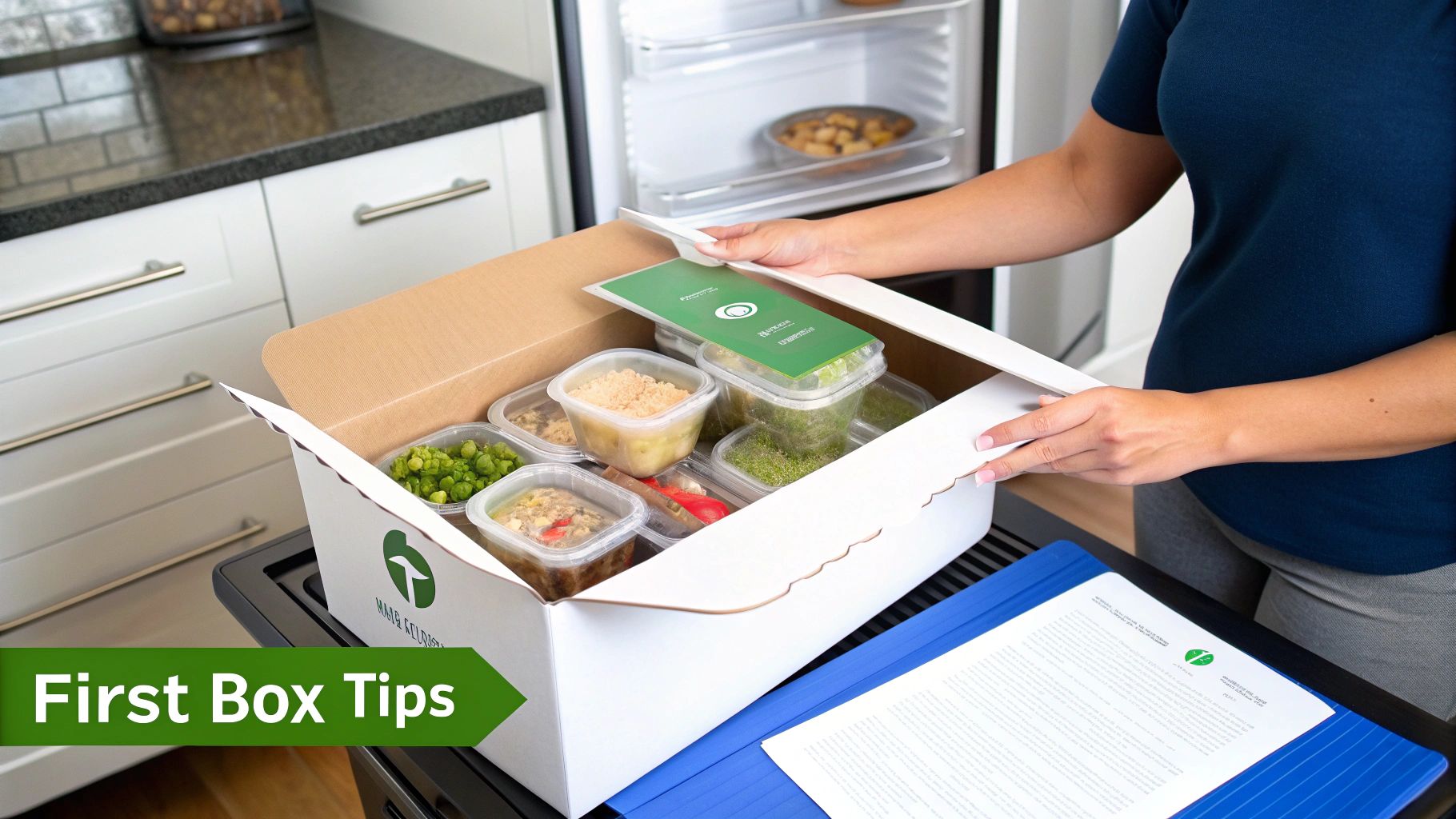
The box has landed. It’s sitting on your doorstep like a delicious, refrigerated monolith, and the moment of truth is here. Don't panic! Your first week with a meal delivery service is a fun little adventure, and with a few pointers, you'll feel like a seasoned pro by your third meal.
Think of this as your mission briefing. Before you even slice open the tape, take a second to clear some dedicated space in your fridge. You're about to introduce a whole squad of perfectly portioned ingredients, and they need a home base. Getting organized from the jump is the secret to a stress-free week of cooking.
The Great Unboxing Ritual
Once you crack open that box, you’ll probably find an arctic tundra of ice packs, insulation, and neatly bagged goodies. Your first task is to play a quick game of "match the meal." Most services label everything clearly, so start pairing up the proteins, veggies, and sauce packets with their recipe cards.
This simple step prevents a frantic scavenger hunt when you’re hungry and ready to cook. Get everything into its designated spot in the fridge. For some pro-level tips on keeping everything fresh, check out our guide on **how to store prepped meals**.
Pro Tip: Don't just toss the recipe cards aside. Read through them before you plan to cook. This quick scan helps you spot any basic pantry items you might need—like olive oil or salt—and gives you a mental map of the steps ahead.
Decoding the Recipe Card
Those recipe cards are your new best friend. They're designed to be foolproof, but here are a few tricks to make your first cook a guaranteed win:
- Do a "Mise en Place": This is just a fancy French term for "get your stuff together." Before you turn on the stove, pull out all the ingredients for tonight’s meal, plus any pots, pans, and utensils you'll need.
- Trust the Timing (Mostly): The cards usually give you a total cook time. It's a great guideline, but always use your own judgment. If the chicken needs another minute, give it another minute. You're the chef here.
- Don't Fear a Missing Ingredient: It’s rare, but it happens. If you’re missing a minor ingredient like a lemon or a scallion, don't sweat it. You can almost always improvise or just leave it out without wrecking the dish.
Your first week is all about building confidence. You're learning a new rhythm in the kitchen—one with way less stress and a lot more fun. Embrace the process, follow the beautiful, glossy instructions, and get ready to enjoy the delicious victory of your first perfectly cooked meal.
Got Questions? We've Got Answers About Meal Delivery Services
Jumping into the world of meal plan delivery services can feel a little like a blind date. You're hopeful, but you've got questions. It's totally normal to want a little more info before you commit.
We've gathered the biggest head-scratchers people have before signing up. Think of this as your personal FAQ to help you sign up with total confidence.
"Am I Trapped Forever? How Do I Cancel?"
This is the big one, right? The fear of the never-ending subscription. Good news: with any reputable company, the answer is a big, fat no. They get it—life happens. Your budget changes, you go on vacation, or you just feel like cooking for a week.
Most services make it ridiculously easy to pause, skip a week, or cancel your account with just a few clicks. No phone calls, no guilt trips.
A pro tip: if a service makes you hunt for the "cancel" button or locks you into a long-term deal, run for the hills. Flexibility is the name of the game.
The best services don’t need to trap you; they earn your loyalty with great food and convenience. Always check the cancellation policy before you pull out your credit card. If it's clear and simple, that's a great sign.
"What If My Box Arrives Late or Looks... Sad?"
So, your box finally shows up, but it looks like it went ten rounds with a bear. Or worse, it just doesn't show up at all. Don't sweat it. Every major meal delivery company has a game plan for exactly this scenario.
Here’s what you do:
- Document It: Snap a quick picture of the damage or the late delivery notification. A picture is worth a thousand words (and a refund).
- Contact Support: Shoot them a message through their app, email, or live chat. The sooner, the better.
- Watch Them Fix It: They'll almost always offer an immediate credit, a partial refund, or ship a whole new box.
These companies live and die by their customer experience. They want you to be happy, and they’re highly motivated to make things right—fast.
"Where Does This Food Actually Come From?"
It’s a great question! You’re not just buying convenience; you're buying food you're going to put in your body. While it varies from one company to the next, the trend is definitely toward high-quality, transparent sourcing.
Many services are proud to show off where their ingredients come from, highlighting partnerships with trusted farms and suppliers. You can usually poke around their website and find details on whether the produce is organic, if the chicken is free-range, or if the seafood is sustainably sourced. This is often what separates the budget-friendly options from the more premium ones.
---
Feeling ready to ditch the dinner stress for good? While meal delivery is a fantastic option, Meal Flow AI offers another path to kitchen sanity by creating personalized meal plans and instantly turning them into a grocery list on Instacart. Get started with Meal Flow AI today!