Your Ultimate Guide to Meal Prep Containers With Lids
Discover the best meal prep containers with lids for your family. This guide covers materials, sizes, and tips to make your weekly meal prep a success.
Love This Article?
Get personalized meal plans with recipes like this, automatically matched to your nutrition targets.
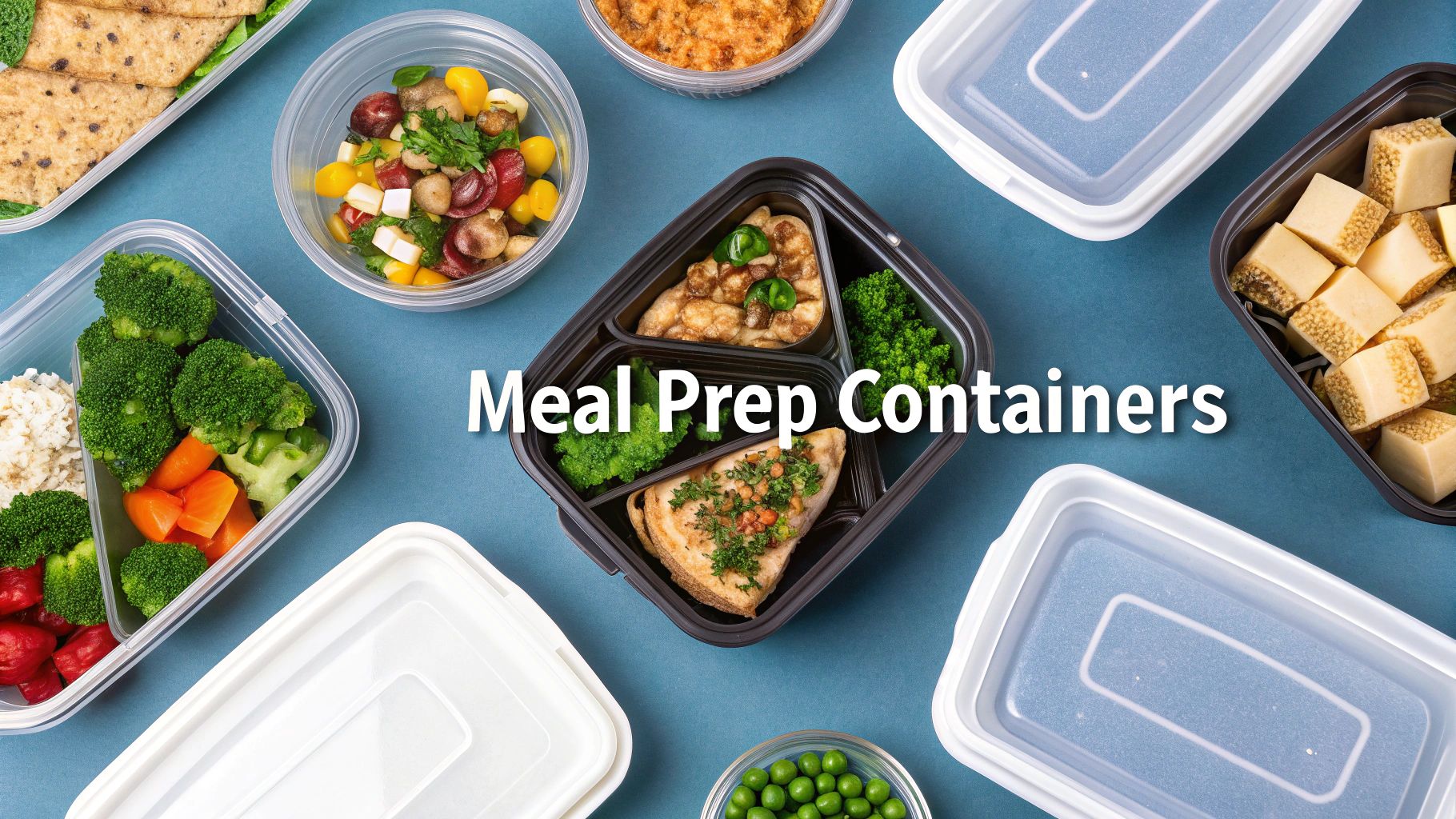
Alright, let's face it. Your meal prep containers are the unsung heroes of a sane week. They're the difference between a frantic, last-minute scramble for dinner and a calm, grab-and-go solution. Think of them less as simple boxes and more as your secret weapon for making life way easier.
Your Secret Weapon for Conquering Kitchen Chaos
You know the feeling. It’s 5 PM, the kids are a whirlwind of energy, and that dreaded question hangs in the air: "What's for dinner?" Suddenly, your peaceful evening turns into a chaotic dig through the fridge, usually ending with another expensive takeout order you didn't really want. For busy moms, that daily grind is more than just annoying—it’s a massive energy suck.
This is where a good set of meal prep containers with lids completely changes the game. Forget those flimsy, mismatched plastic things hiding in the back of your cabinet. A real set of meal prep containers is your personal toolkit for shutting down kitchen chaos before it even starts. Every neatly stacked container is a future meal already sorted, a tiny win against the weekday rush.
Reclaiming Your Week, One Container at a Time
This guide is your personal roadmap to building a meal prep system that actually works for you and your family. We're going way beyond just stacking leftovers; we're talking about a foolproof strategy. We'll get into everything you need to know to pick the right gear and use it like a pro.
Here's what's on the menu:
- Choosing Your Materials: We’ll break down the real-world pros and cons of glass, plastic, stainless steel, and silicone.
- Decoding the Lids: Ever had a salad dressing explosion in your bag? We’ll figure out which lids are genuinely leakproof for soups, sauces, and everything in between.
- Mastering Portions and Sizes: Learn how to use different container sizes and compartments to create balanced, satisfying meals for everyone.
- Using Smart Tech: We’ll even show you how tools like Meal Flow AI can take over your planning and automatically add the right containers to your Instacart list.
This isn't just some niche trend; it's a full-blown movement. The global market for these containers was valued at a whopping USD 3.7 billion in 2025 and is expected to more than double by 2033. That's because it works. In fact, 65% of U.S. moms say meal prep is a fundamental part of keeping their family's nutrition on track. You can dive into more market stats here.
The real goal here isn't just to store food. It's to store time. Every container you fill is a future moment you get back for yourself and your family.
By the time we're done, you won't just have a new set of containers. You'll have a rock-solid strategy to simplify your week, cut down on food waste, and finally kick that daily dinner dread to the curb. Let's get started.
Choosing Your Container Dream Team: A Materials Showdown
Stepping into the container aisle can feel… overwhelming. So many choices, so much at stake (mostly your sanity and the integrity of your lunch bag). This isn't just about picking a box; it's about building your perfect meal prep squad. Think of it like a "choose your fighter" game, where every material comes with its own set of superpowers and, yes, a little kryptonite.
Let's break down the main contenders to find the perfect meal prep containers with lids for your family's routine.
The Glass Gladiator
First up is our classic hero: glass. The Glass Gladiator is all about purity and power. Made from tough, non-porous borosilicate glass, these containers are the gold standard for anyone who despises lingering smells or stubborn tomato sauce stains. They’re the champions of versatility, going straight from the freezer to the microwave or even the oven (just leave the lid out!).
Imagine pulling a perfectly baked lasagna from the oven in the exact same dish you'll store it in later. That’s the kind of convenience glass brings to the table. Of course, every gladiator has a vulnerability. Glass is heavy, which can be a real drag for kids' lunchboxes or your already-stuffed work tote. And, as every parent knows all too well, it can break.
- Best For: Storing and reheating meals at home, tackling acidic foods like tomato-based sauces, and for anyone who wants a completely non-toxic, non-staining option.
- Weakness: It's heavy and can shatter if dropped, making it less than ideal for meals on the move.
This diagram really shows how having the right containers is the foundation for reaping all the benefits of meal prep.
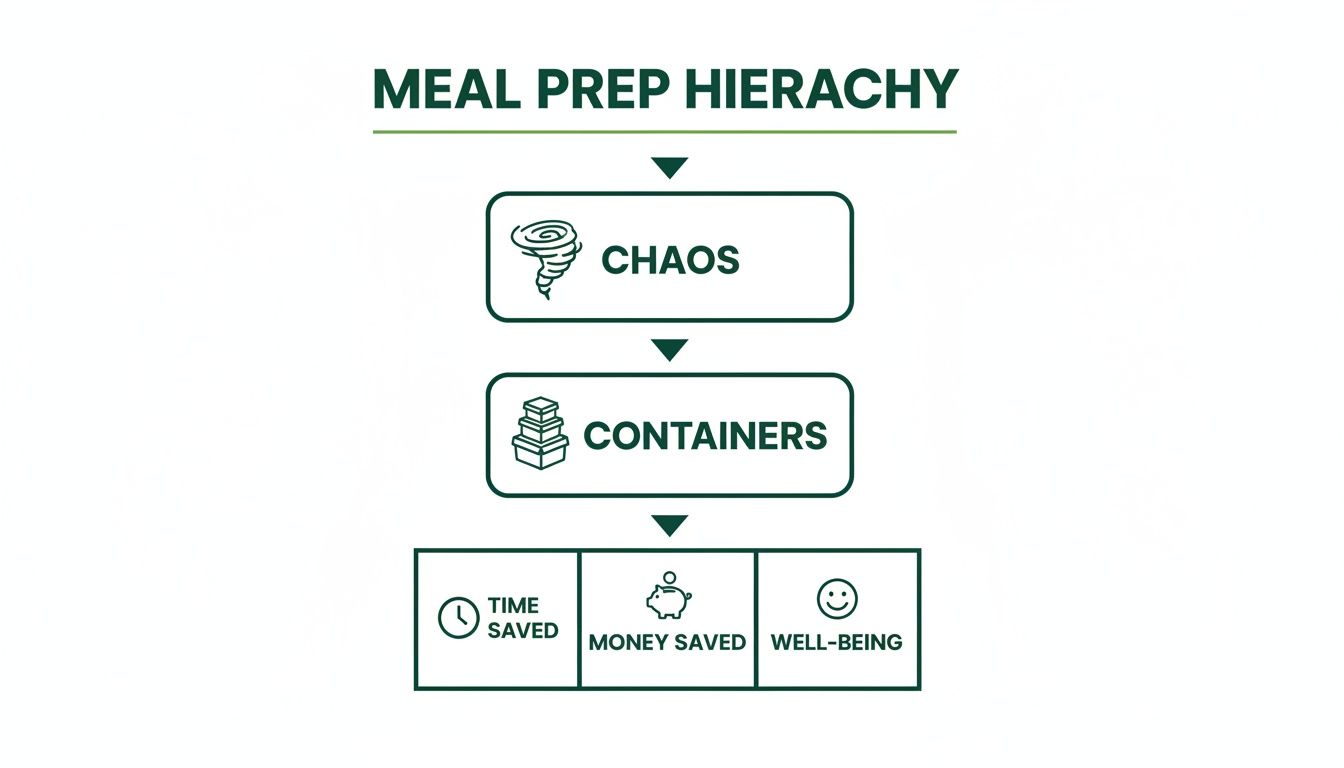
As you can see, getting organized with good containers is the essential first step that unlocks all the time, money, and wellness rewards you're after.
The Plastic Pro
Next, we have the Plastic Pro, the undisputed champ of convenience and portability. These containers are incredibly lightweight, easy to stack, and budget-friendly, making them perfect for building a large arsenal without draining your wallet. They are the absolute go-to for packing lunches for school or work because they won't add extra weight to a backpack.
Most modern, high-quality plastic containers are BPA-free and built to last. But their convenience comes with a few trade-offs. Plastic can absorb odors and is notorious for staining, especially with colorful foods. Over time, it can also warp from too many trips through the dishwasher or microwave, causing that satisfying seal to fail.
For a deeper dive, our guide on the best containers for meal prep breaks down top-rated options.
Pro Tip: To fight off stains in your plastic containers, give them a quick rinse right after you use them. For really tough spots, try making a paste of baking soda and water, let it sit overnight, and it should work wonders!
The Stainless Steel Sentinel
When it comes to pure durability, nothing beats the Stainless Steel Sentinel. These things are practically indestructible, making them the ultimate choice for kids who treat their lunchboxes like a contact sport. They’re lightweight, won't hold onto stains or odors, and are fantastic at keeping food fresh and cool.
Stainless steel is a brilliant non-toxic alternative to plastic, but it has one major weakness: you absolutely cannot put it in the microwave. This makes it ideal for cold meals like salads, sandwiches, fruits, and snacks, but a no-go for anything that needs reheating at the office or school.
The Silicone Specialist
Finally, let's meet the Silicone Specialist—the flexible, space-saving innovator of the group. Silicone containers are soft, pliable, and often collapsible, which is a total game-changer for small kitchens with cramped cabinet space. They are also lightweight, unbreakable, and perfectly safe for the microwave, freezer, and dishwasher.
Their flexibility makes them great for snacks, sauces, or smaller portions. The downside? They can be a bit floppy when filled with liquids like soup, and some lower-quality silicone can sometimes hold onto a faint odor or soapy taste. It's best to think of them as a key supporting player in your meal prep lineup, perfect for those specific tasks where their unique, bendy nature really shines.
Meal Prep Container Material Comparison
Feeling a little lost in the options? This quick-glance table breaks it all down, so you can pick the material that fits your family's life like a glove.
| Material | Best For | Pros | Cons |
| Glass | At-home storage, reheating, acidic foods | Non-toxic, stain-proof, oven-safe | Heavy, breakable, more expensive |
| Plastic | On-the-go lunches, large quantities, budget | Lightweight, affordable, stackable | Can stain, absorb odors, may warp |
| Stainless Steel | Kids' lunches, cold meals, durability | Indestructible, lightweight, non-toxic | Not microwave-safe, can be noisy |
| Silicone | Snacks, sauces, saving space | Collapsible, unbreakable, lightweight | Can be floppy, may retain odors |
Ultimately, there's no single "best" material—it's all about what works for you. Most of us find that a mix-and-match approach is the real winner, giving you the perfect container for every meal and every situation.
The Lid Lowdown: Unlocking Freshness and Preventing Spills
A great container is only half the battle. The real MVP, the unsung hero guarding your perfectly portioned masterpieces, is the lid. If the container is the vault, the lid is the high-tech lock keeping everything inside safe, sound, and seriously fresh. The right lid is the only thing standing between you and a backpack horror story starring a rogue chicken noodle soup.
We've all been there. You pack a gorgeous lunch, only to discover it has staged a hostile takeover of your bag, leaving a saucy trail of destruction. This is where understanding the different types of meal prep containers with lids becomes your meal-prepping superpower. Let's break down the main players.
The Snap-Lock Sentinel
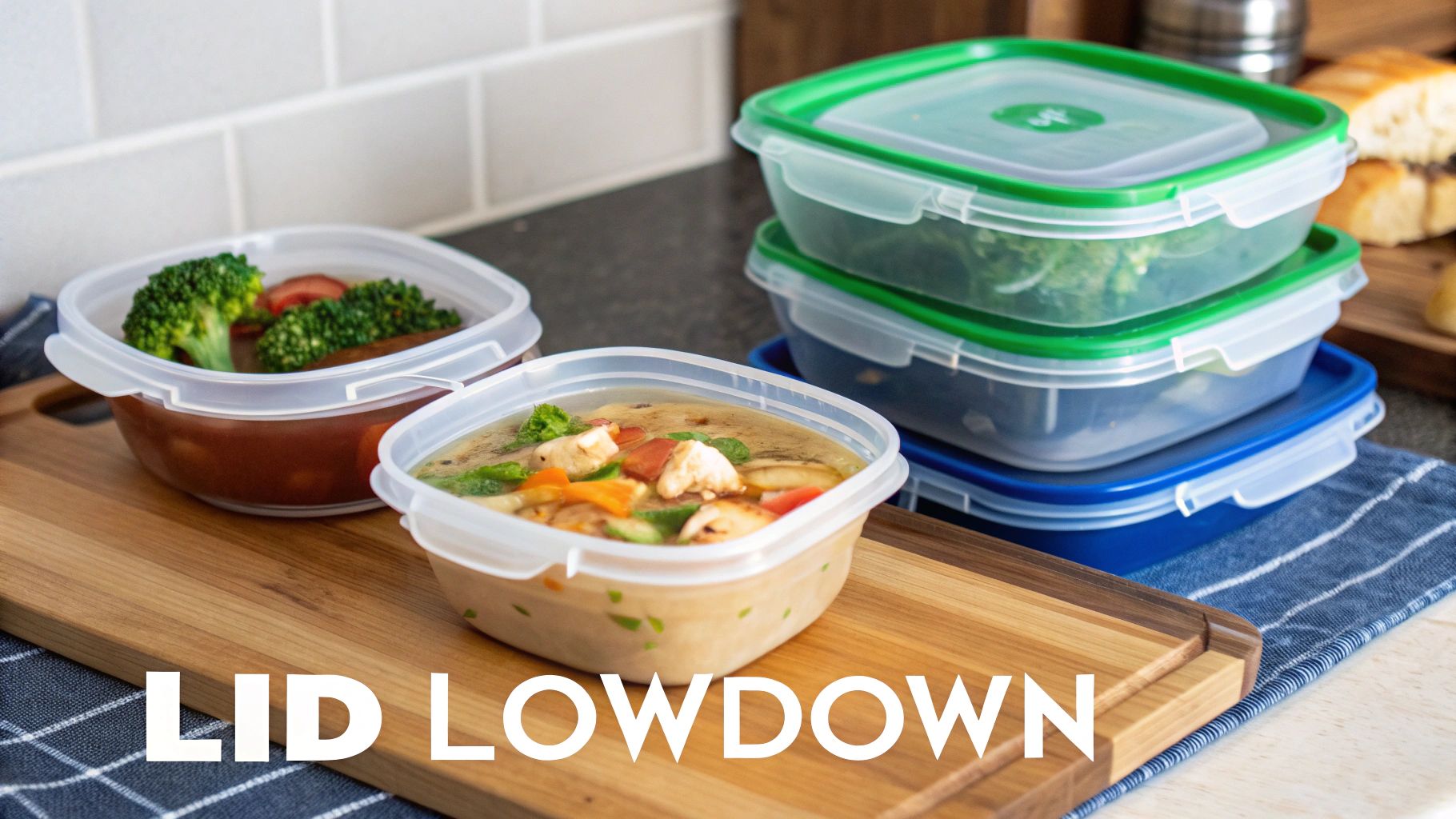
This is the Fort Knox of food storage. You know the one—it has four chunky tabs, one on each side, that clamp down with an immensely satisfying snap. This design creates an incredibly tight, often airtight and leakproof seal, making it the undisputed champion for anything soupy, saucy, or sloshy.
It's the lid you reach for when you're packing hearty stews, creamy curries, or salads drenched in vinaigrette. If failure is not an option, this is your guy. It's the go-to for kids' lunchboxes and any meal you’re transporting where a leak would be catastrophic.
- Best For: Soups, stews, sauces, and any meal you absolutely, positively cannot have spilling.
- Key Feature: Four-sided locking tabs give you maximum security against leaks.
The peace of mind that comes with a truly leakproof seal is priceless. No more wrapping your containers in plastic bags "just in case."
The Silicone Seal Guardian
Next up is the lid with a secret weapon: a removable silicone gasket tucked into a groove on its underside. This lid might not have the dramatic snap of its cousin, but that little gasket creates a powerful, airtight barrier that’s amazing at locking in freshness.
These are fantastic for keeping salads crisp for days and preventing last night's salmon from making your entire fridge smell like a fish market. The only catch? That gasket is a magnet for moisture and tiny food particles. You’ll need to pop it out and clean it separately to stop mold or funky smells from setting up shop.
Pro Tip: To clean a silicone gasket, use a thin, dull tool like a butter knife to gently pry it out. After washing, make sure both the gasket and the lid's groove are completely dry before you pop it back in. This ensures a perfect, long-lasting seal.
The Simple Press-On Protector
Finally, we have the old-school classic: the simple press-on lid. No bells, no whistles, just a lid that presses onto the container. While it won't give you the same leakproof confidence as the others, it's absolutely perfect for solid foods and at-home storage where a spill isn’t a major disaster.
Think of these for storing roasted veggies, grilled chicken breasts, or a batch of oatmeal cookies. They're easy, fast, and get the job done for the right kind of food. Knowing how to store prepped meals correctly is key, and sometimes a simple lid is all you need.
Lid Care and Microwave Smarts
Your lids need a little TLC to keep them in fighting shape. First, always check if they're microwave-safe. Many plastic lids are, but some can warp under intense heat, wrecking their seal forever.
The best practice is to either use a vented lid or just rest the lid loosely on top of the container when you're zapping your food. This lets the steam escape, preventing a messy food explosion and helping your meal heat up evenly. A little lid-love goes a long way
Mastering Portions With Sizes and Compartments
Let's be honest, the phrase "portion control" can sound a little... clinical. Like something you'd read in a boring diet pamphlet. But when it comes to meal prep, think of it less as a rule and more as a superpower. It’s your secret weapon for building perfectly balanced, satisfying meals for your family without a second thought.
Your containers are the blueprint. You’re not just cramming leftovers into a box; you're creating a visual roadmap for a great meal, one that can even get picky eaters on board.
Finding the Perfect Fit for Every Meal
One-size-fits-all is a myth, especially in the kitchen. Having a whole arsenal of different-sized containers is like having a complete toolkit—you'll always have the right tool for the job. This approach completely takes the guesswork out of packing lunches and makes it feel more like a fun puzzle than a morning chore.
Here’s a quick rundown of the sizes you'll actually use:
- Large Containers (32oz+): These are your heavy lifters. Think big-batch chili, the rest of Sunday’s roast chicken, or a mountain of pasta salad. They're perfect for storing the main event that you'll portion out later in the week.
- Medium Containers (24-28oz): This is the goldilocks size for most adult lunches. It has just enough space for a hearty main and a side, like grilled chicken over a big salad or a generous serving of lasagna.
- Small Cups & Containers (8-12oz): Never, ever underestimate these little guys! They’re lifesavers for snacks like yogurt with berries, hummus with carrot sticks, or for keeping salad dressing from turning crisp lettuce into a soggy mess.
Having this mix on hand means you’re ready for anything. Big family dinners, individual work lunches, tiny toddler snacks—you’ve got it covered, ensuring every meal is just the right amount.
The Magic of Compartments
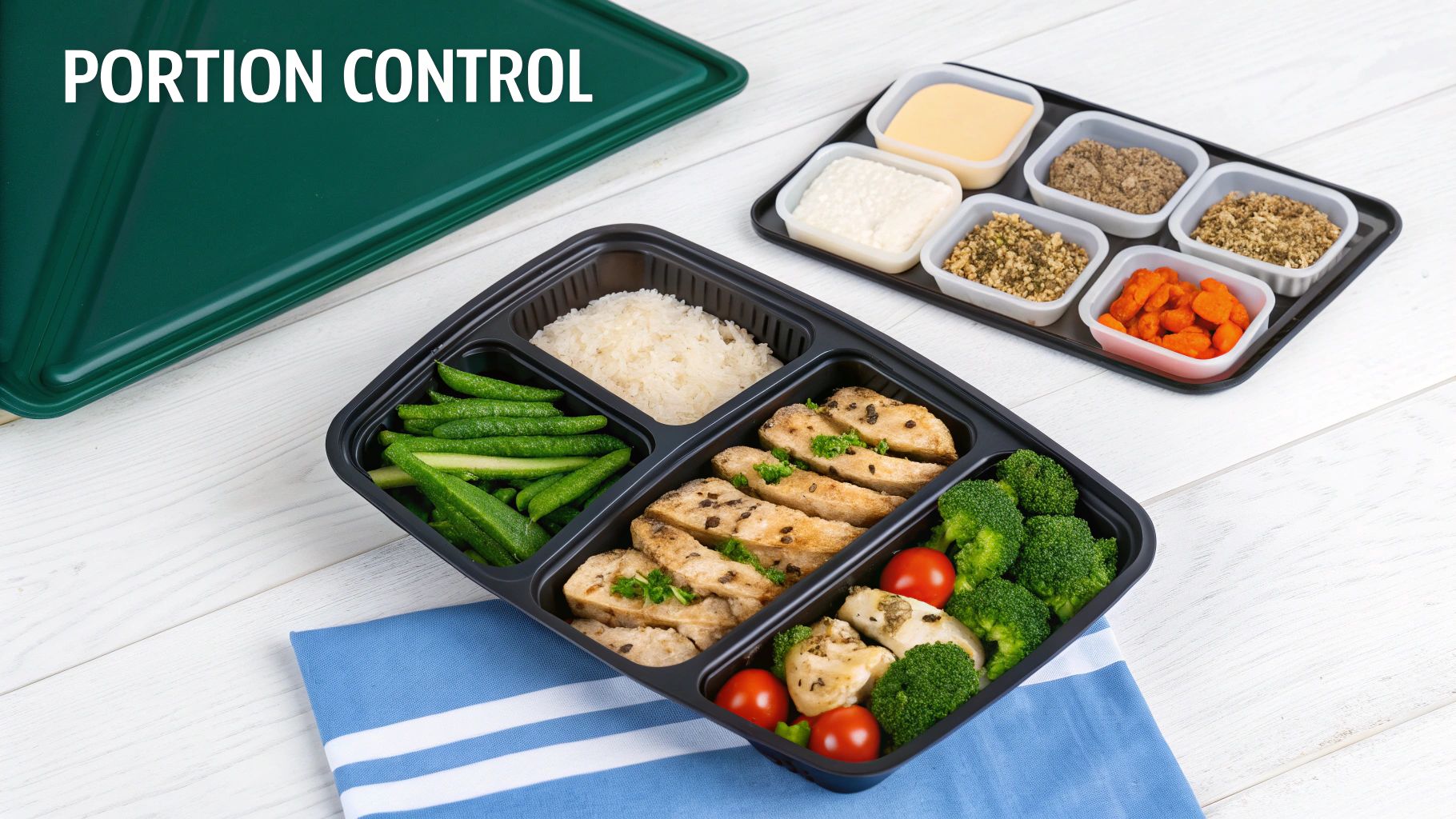
If you have kids, compartment containers are a straight-up game-changer. They're the modern bento box, specifically designed to prevent different foods from touching—which, as we all know, is a culinary crime of the highest order in a kid's world.
But they do more than just keep the peace. They visually nudge you toward building a more balanced meal. That classic three-compartment container practically begs you to fill it with a protein, a carb, and a veggie.
A container with dividers isn’t just a box; it's a visual reminder to create a well-rounded meal. The largest section gets the main event (like chicken), the medium one gets the veggies (broccoli), and the smallest is perfect for a side (quinoa). It’s portion control without the counting.
This simple setup makes lunchtime exciting. A boring lunch suddenly becomes a colorful, organized little feast. For anyone following specific eating plans, applying tailored Keto Meal Prep strategies with these containers makes sticking to your goals almost effortless.
A Growing Trend in Smart Kitchens
Using containers for portion control isn't just a clever mom hack; it's part of a huge shift in how families are handling food. The meal prep container market is set to hit USD 2.8 billion in 2025 and is on track to reach a whopping USD 5.2 billion by 2030. A big reason? Efficiency.
For most families, having 4-6 containers per person on hand makes weekly planning a breeze, and it’s no surprise that 45% of urban residents prefer stackable boxes to save that precious cabinet space. It’s exactly this kind of real-world need that platforms like Meal Flow AI are designed for, helping turn your meal plans into a prepped-and-ready reality.
Getting your portions right is one of the biggest wins of a solid meal prep system. If you want to dive deeper, we have a complete guide on how to use portion control meal prep containers to build healthier habits for your whole family. This simple strategy turns your containers from just storage into powerful tools for building better meals.
Building Your Smart Meal Prep Workflow
Picture this: it's Sunday, and instead of the usual "what-are-we-eating-this-week?" panic, you're completely relaxed. Why? Because your meal planning is already done. It just... happened.
This isn't a fantasy. We're going to build a system that takes the brain-draining parts of meal prep off your plate. Forget just picking the right boxes; we're talking about an entire automated workflow that makes meal prep feel less like a chore and more like a superpower.
From Meal Plan to Your Doorstep—Automatically
Every great system starts with a plan. A tool like Meal Flow AI can whip up a custom meal plan for your family in minutes. But here’s where the fun really begins: it doesn't just give you a list of recipes. It instantly creates a shopping list and shoots it straight over to Instacart.
No more scribbling lists on napkins or doing that awkward aisle-wandering dance trying to remember if you have paprika. The ingredients for your entire week just show up at your door. Bam. Done.
The Missing Piece: Intelligent Container Suggestions
So you've got the food. But what are you going to put it in? A brilliant plan for a week's worth of lunches is pretty useless if you don't have the right meal prep containers with lids to pack them in.
This is the sneaky little detail that trips everyone up. You know the feeling—you've just cooked a giant batch of chili only to realize you're two containers short. Ugh.
A truly smart system anticipates this. Meal Flow AI actually looks at your meal plan and figures out what you'll need to store it all.
- Big batch of soup on the menu? It might suggest adding a set of large, leakproof glass containers to your Instacart order.
- Planning bento-style lunches for the kids? It'll probably recommend a pack of those nifty multi-compartment containers.
- Need to portion out snacks? Don't be surprised if it adds a few reusable silicone bags to your cart.
Think of it as the ultimate wingman for your meal prep. This one feature closes the loop, making sure you have not just the food, but the gear to handle it. No more last-minute trips to the store that completely derail your Sunday.
This is more than just a cool trick. The market for household food storage is exploding, projected to jump from US$22.7 billion in 2026 to US$35.0 billion by 2033. It's clear we're all looking for better ways to manage our kitchens. When your AI-planned meals fit perfectly into the containers that just arrived, you're building a system that cuts down on food waste—a habit that can save the average family around $1,200 a year.
With a container system that practically runs itself, you can finally dive into all those effective family meal prep ideas you've been wanting to try. A smart workflow isn't just about being efficient; it’s about winning back your time and making healthy eating the easiest option on the table.
Got Questions About Your Meal Prep Containers? We've Got Answers.
Alright, so you've got the vision. You're ready to stock up on containers and finally feel that sense of calm that comes with a prepped fridge. But maybe a few nagging questions are still bouncing around in your head. That’s totally normal!
Let's clear up those last few details. Think of this as our little heart-to-heart about the nitty-gritty of containers, so you can dive in without any second-guessing.
Are Glass or Plastic Meal Prep Containers Better?
Ah, the classic showdown: glass vs. plastic. The truth is, it's not about one being "better" overall, but which one is better for a specific job. It's kind of like asking if you need a minivan or a sports car—they both get you from A to B, but you're not taking the two-seater on the family camping trip.
Glass is the undisputed champ for purity and durability at home. That tomato sauce that stains everything? Not a problem for glass. The lingering smell of last Tuesday's fish? Glass doesn't know her. You can pop it from the fridge straight into the microwave or even the oven, which is a massive win for busy nights. The trade-off, of course, is that it's heavy and, well, breakable.
Then you have plastic, the lightweight hero of portability. It's affordable, stacks beautifully, and you don't have a mini heart attack if it gets knocked around in your work bag or a kid's backpack. The key is to always, always choose high-quality, BPA-free plastic.
So, what's the secret? Most of us who live and breathe meal prep end up with a hybrid system. We use a core set of glass containers for meals we'll be reheating at home, and a fleet of sturdy plastic containers for anything that needs to travel.
This way, you get the best of both worlds: the clean, non-staining power of glass for your home base, and the grab-and-go ease of plastic for life on the move.
How Can I Stop Containers From Staining or Smelling?
We've all been there. You open a perfectly good container only to be greeted by that faint orange glow of chili past. It's a meal prep rite of passage, but you don't have to live with it. The absolute best defense is a quick offense—rinse your containers, especially plastic ones, right after you've finished eating.
But if a stain has already moved in, don't toss the container just yet. Try these kitchen hacks:
- Banish Stains: Mix up a paste of baking soda and water. Smear it onto the stained area, let it sit for a few hours (or even overnight for a real stubborn one), and then scrub it away.
- De-Funk Smells: That garlic smell clinging to a silicone lid seal? A wash with a solution of white vinegar and water is your best friend. A 30-minute soak usually knocks out any lingering odors.
- Prevent Future Issues: Let them breathe! When you store your containers, leave the lids off. This allows any trapped moisture or scents to escape, keeping them fresh for their next job.
This is one area where glass and stainless steel really shine, by the way. Stains and smells are almost never an issue, which is a huge part of their appeal.
What Is the Best Way to Store Meal Prep Containers and Lids?
Oh, the dreaded lid avalanche. You open one cabinet and a waterfall of plastic chaos erupts. It's a universal kitchen problem, but I promise, there’s a simple system to restore order.
The trick is to divide and conquer. First, nest your container bases. Stack all the same shapes and sizes together, from largest to smallest. This single move will free up a shocking amount of shelf space.
Next, tame the lids. Stop just tossing them into a drawer. Grab a small basket or a drawer divider and file the lids vertically, like you're organizing folders. This makes it a breeze to see every lid at once and grab the one you need without a frantic search. It's a total game-changer.
How Many Meal Prep Containers Do I Actually Need?
This is the million-dollar question! The honest answer is: it completely depends on your family and your routine. Are you prepping five days of lunches just for yourself, or are you covering lunches and dinners for a family of four?
As a starting point, here’s a good rule of thumb:
- For one person: Plan on having 5-7 containers for weekday lunches.
- For a family of four: If you're tackling lunches and a few dinners, you’ll probably want around 20-25 containers in a few different sizes.
My best advice? Don't go out and buy 50 containers at once. Start with a solid, versatile set of 10-12 high-quality meal prep containers with lids. Use them for a week or two and see what you reach for most. You can always add more once you know what your real-life workflow looks like. Planning your meals first with a tool like Meal Flow AI can also give you a much clearer picture of what you'll need for the week ahead before you even start cooking.
---
Ready to stop guessing and start prepping with a system that thinks for you? Meal Flow AI generates your personalized meal plan and shopping list, and can even suggest the exact containers you need. Build your first smart meal plan today at MealFlow.ai and transform your kitchen workflow.