How to Stop Wasting Food and Save Big on Groceries
Discover how to stop wasting food with practical tips on meal planning, smart storage, and using leftovers. Start saving money and the planet today.
Love This Article?
Get personalized meal plans with recipes like this, automatically matched to your nutrition targets.
The easiest way to stop wasting food boils down to fixing three simple habits: planning what you’ll eat, shopping with a list, and storing your groceries the right way. If you can get a handle on those three, you’ll be amazed at how much less you throw out.
Why Your Kitchen Bin Is Costing You a Fortune
We’ve all been there. You open the fridge and find that bag of spinach has turned into a soggy, green mess. It’s easy to shrug it off as just another minor kitchen fail, but it’s actually a sign of a much bigger—and surprisingly expensive—problem. We tend to dismiss tossed food as a small loss, but all those little incidents really pile up over a year.
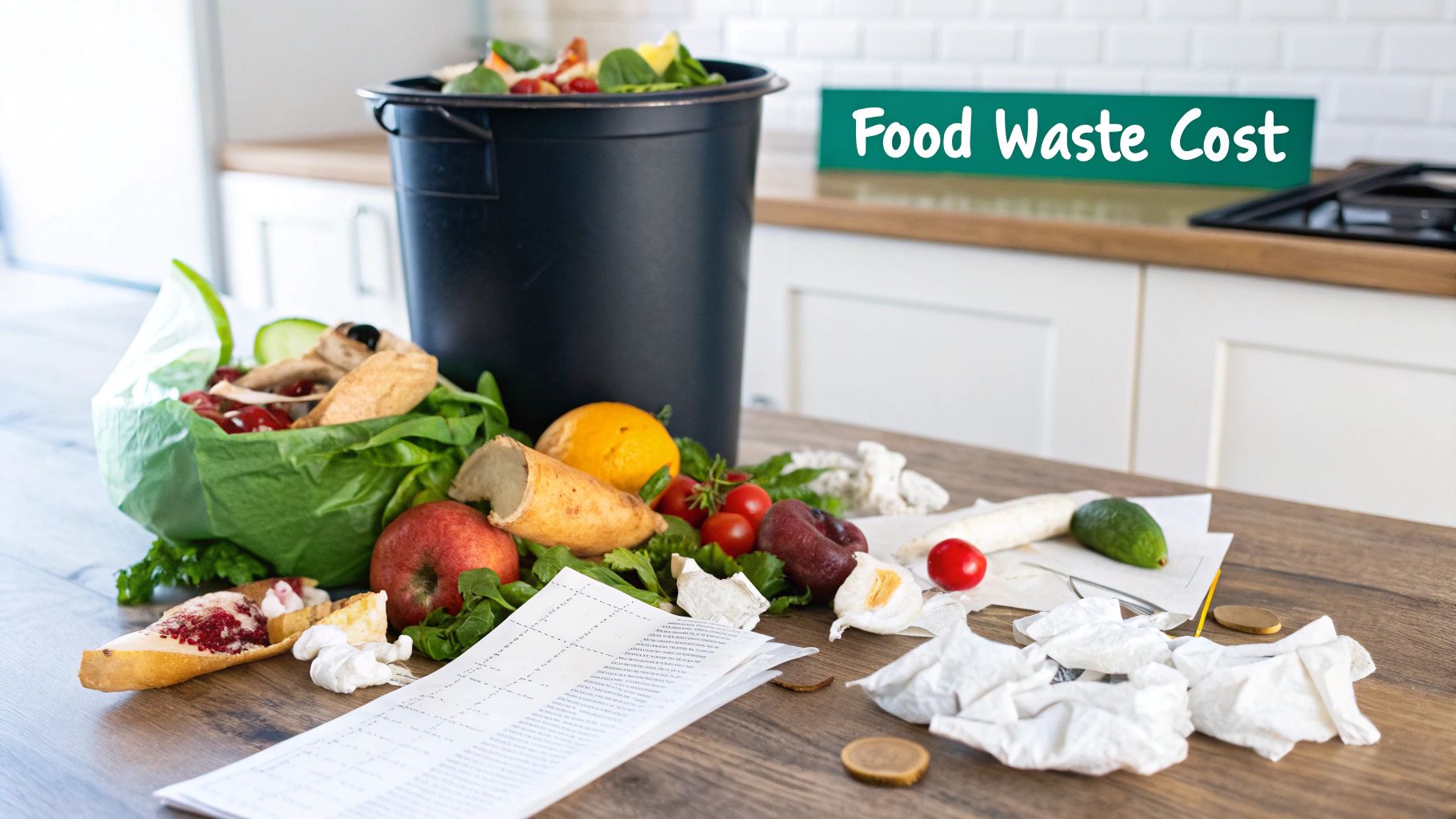
I'm not talking about a few bucks here and there. For the average family, the cost of perfectly good food ending up in the trash can easily exceed $1,500 annually. Just think about that for a second. That's a vacation, a big chunk of a credit card bill, or a nice boost to your savings. Instead, it’s literally going into a landfill.
The Real Culprits Behind Food Waste
So, where does it all go so wrong? The journey from the grocery store shelf to your garbage can is often paved with good intentions. Figuring out the common mistakes is the first step to breaking the cycle.
The problem starts way before anything actually goes bad. Globally, about a third of all food produced is lost or wasted every single year, and households are a huge part of that. In fact, some studies show that our homes are responsible for an eye-watering 60% of food wasted at the consumer level.
From what I’ve seen, the main reasons this happens are pretty universal:
- Aspirational Shopping: We buy all those beautiful, fresh ingredients for fancy, healthy meals we honestly never have the time or energy to cook.
- Impulse Buys: You can’t resist a "buy one, get one free" deal on avocados, but you can’t possibly eat them all before they turn brown. Sound familiar?
- Date Label Confusion: Tossing perfectly good yogurt because the "best before" date passed. That date is about peak quality, not safety!
- Poor Storage: Shoving everything in the fridge without knowing that some fruits and veggies need to be stored differently to stay fresh.
Here’s a little mindset shift that works wonders: Stop asking, "What do I want to eat?" and start asking, "What do I need to use up?" It’s a tiny change in perspective that can make a huge dent in both your waste and your spending.
Taking the First Step
Once you realize how much money and food you're throwing away, it's hard to ignore. The good news is that turning these habits around is totally doable with a little planning and know-how.
For a deep dive into practical strategies, check out this fantastic guide to smarter meal planning, storage, and reusing. By getting to the root of why we waste food, you can start building a smarter, more cost-effective kitchen today.
Become a Meal Planning and Shopping Pro
Let's be honest, the battle against food waste is usually won or lost before you even grab a shopping cart. It all boils down to having a plan. I’m not talking about some rigid, soul-crushing spreadsheet, but a flexible strategy that actually works with your real life. Forget mapping out every single meal for the next thirty days. Let's start with something that actually works.
My secret weapon? I call it the 'pantry-first' strategy. Before a grocery list even crosses my mind, I do a quick sweep of my fridge, freezer, and pantry. What's on the clock? That half-bag of quinoa, the lonely sweet potato rolling around in the drawer, those chicken breasts I froze last month—boom. They’re now the stars of my next few meals. This little habit sparks creativity and stops food from being shoved into the abyss, only to be discovered weeks later.
Craft Your Ultimate Grocery List
Once you’ve shopped your own kitchen, then you can build a list for what you truly need. This list is your superpower. It's your shield against the siren song of the snack aisle and those "buy one, get one" deals that are secretly designed to make you overbuy. Treat your list like a mission plan, not a suggestion. Stick to it!
Impulse buys are the arch-nemesis of a zero-waste kitchen. In the United States, consumers are the single biggest source of the 60 million tonnes of food wasted every year. A huge part of that comes from simply buying too much stuff, with estimates suggesting we each toss around 300 pounds of food annually. A well-crafted list is your best defense. If you want to dive deeper into the stats, check out this in-depth food waste guide.
Pro Tip: I always organize my list by the store's layout—produce, dairy, meat, then pantry staples. It stops me from zigzagging through the aisles, which is exactly when those random, not-on-the-list items magically jump into the cart.
Master the Art of Portion Planning
We've all been there. The classic "eyes bigger than your stomach" syndrome. You cook a mountain of food, pack the leftovers with the best of intentions, and then find them a week later looking like a fuzzy science experiment. It’s time to get real about portion sizes.
Here are a few tricks that have worked wonders for me:
- Serve from the stove. Instead of putting big serving platters on the table, plate everyone's food directly from the kitchen. It makes it way easier to control portions and pack up the clean, untouched leftovers for another meal right away.
- Use smaller plates. It sounds silly, but this psychological trick is legit. A smaller plate piled with food feels more satisfying than a giant, half-empty one.
- Give your leftovers a purpose. Don't just save them "for later." Plan for them. Think: "The leftover chicken from Monday's roast is going to be the filling for Wednesday's tacos." When leftovers have a job, they get eaten.
By combining a pantry-first audit with a laser-focused shopping list, you stop being a reactive buyer and become a proactive kitchen strategist. And if you want to put this whole process on autopilot, a good meal planning and shopping list app can be a game-changer, saving you a ton of time, stress, and money.
Unlock the Secrets of Smart Food Storage
Your refrigerator can be a high-tech food preservation chamber or a sad, forgotten vegetable graveyard—the choice is yours. Getting a handle on smart food storage is one of the biggest game-changers for cutting down on waste. It’s not just about being tidy; it’s about making your groceries last, which saves you real money.
Let’s get specific. Think about those delicate herbs you buy. Instead of letting them wilt in their plastic clamshell, treat them like a bouquet of flowers. Seriously. Trim the stems, pop them in a jar with a little water, and cover them loosely with a plastic bag. This one trick can keep cilantro and parsley vibrant for weeks, not days.
Store Your Produce Like a Pro
You have to know which foods are friends and which are enemies inside your fridge. Some fruits and veggies release ethylene gas, a natural ripening agent that makes other nearby produce spoil way faster. Think of it as a bad influence in your crisper drawer.
Here’s a quick guide to who shouldn’t be neighbors:
- The Ethylene Producers: Apples, bananas, avocados, tomatoes, and stone fruits.
- The Ethylene-Sensitive Crew: Leafy greens, carrots, broccoli, cucumbers, and peppers.
Keep these two groups separate, and you’ll stop your pristine lettuce from turning into brown sludge overnight. For a full-on masterclass in keeping everything from berries to broccoli at its peak, check out our deep dive on **how to keep produce fresh longer**.
The "First In, First Out" (FIFO) rule isn't just for fancy restaurant kitchens. When you unpack new groceries, shuffle the older stuff to the front of the fridge or pantry. This simple habit makes sure you see it and use it first, preventing that heartbreaking discovery of a yogurt that's been hiding in the back since last month.
Get the Most from Your Fridge and Freezer
Think of your freezer as your food-saving sidekick, but only if you use it right. To avoid the dreaded freezer burn—which is just food dehydration—wrap everything tightly in airtight packaging. Squeeze out every last bit of air you can. You’d be amazed at what freezes beautifully: leftover coffee in ice cube trays for instant iced lattes, single portions of soup for easy lunches, and even milk!
Knowing where things belong inside the fridge itself makes a huge difference. Here's a quick cheat sheet to turn your fridge into a perfectly organized food sanctuary.
Your Refrigerator Storage Cheat Sheet
| Food Item | Best Storage Location | Pro Tip |
| Milk & Dairy | Middle or top shelf (not the door!) | The door's temperature fluctuates too much. Keep dairy in the main, colder part of the fridge. |
| Eggs | Main shelf | Leave them in their original carton on a shelf. The door is too warm. |
| Raw Meat/Poultry/Fish | Bottom shelf | This prevents cross-contamination. If juices leak, they won't drip on everything below. |
| Veggies | Crisper drawer (low humidity) | Use the crisper set to "low humidity" (vent open) for veggies that rot, like mushrooms or peppers. |
| Fruits | Crisper drawer (high humidity) | Use the "high humidity" setting (vent closed) for things that wilt, like leafy greens and some fruits. |
| Condiments & Jams | Door shelves | These items are typically high in vinegar and salt, so they can handle the temperature swings. |
This little map helps everything last longer just by putting it in the right neighborhood.
And remember, smart storage really begins before you even get home.
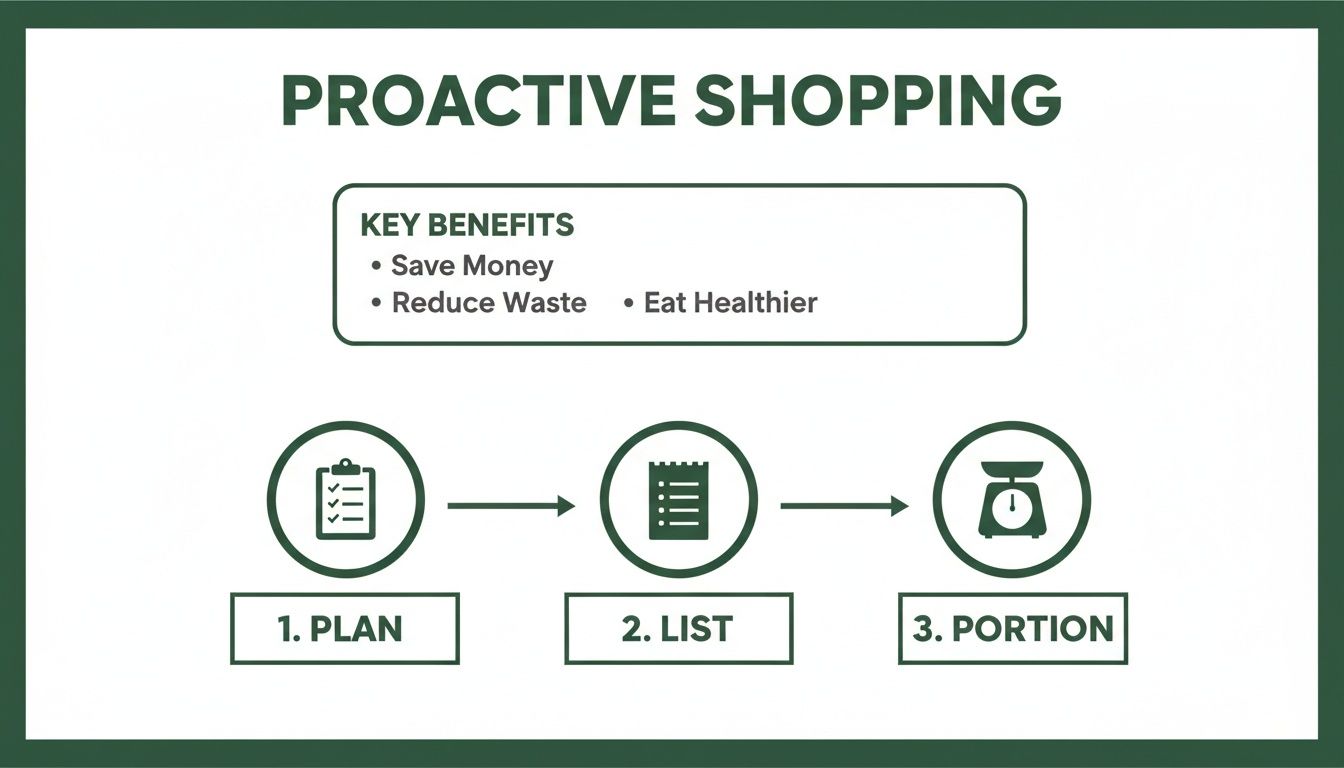
This just goes to show that a proactive approach—planning your meals, making a laser-focused list, and thinking about portions—is the foundation. When you strategize before you shop, you only buy what you need, which makes smart storage a whole lot easier from the get-go.
Give Your Leftovers a Delicious Second Life
Let's get one thing straight: leftovers are not a sad consolation prize. They're the secret ingredient to your next amazing, time-saving meal.
It’s time to stop thinking of them as yesterday’s dinner and start seeing them as a head start on today’s culinary triumph. This is all about the "remix."
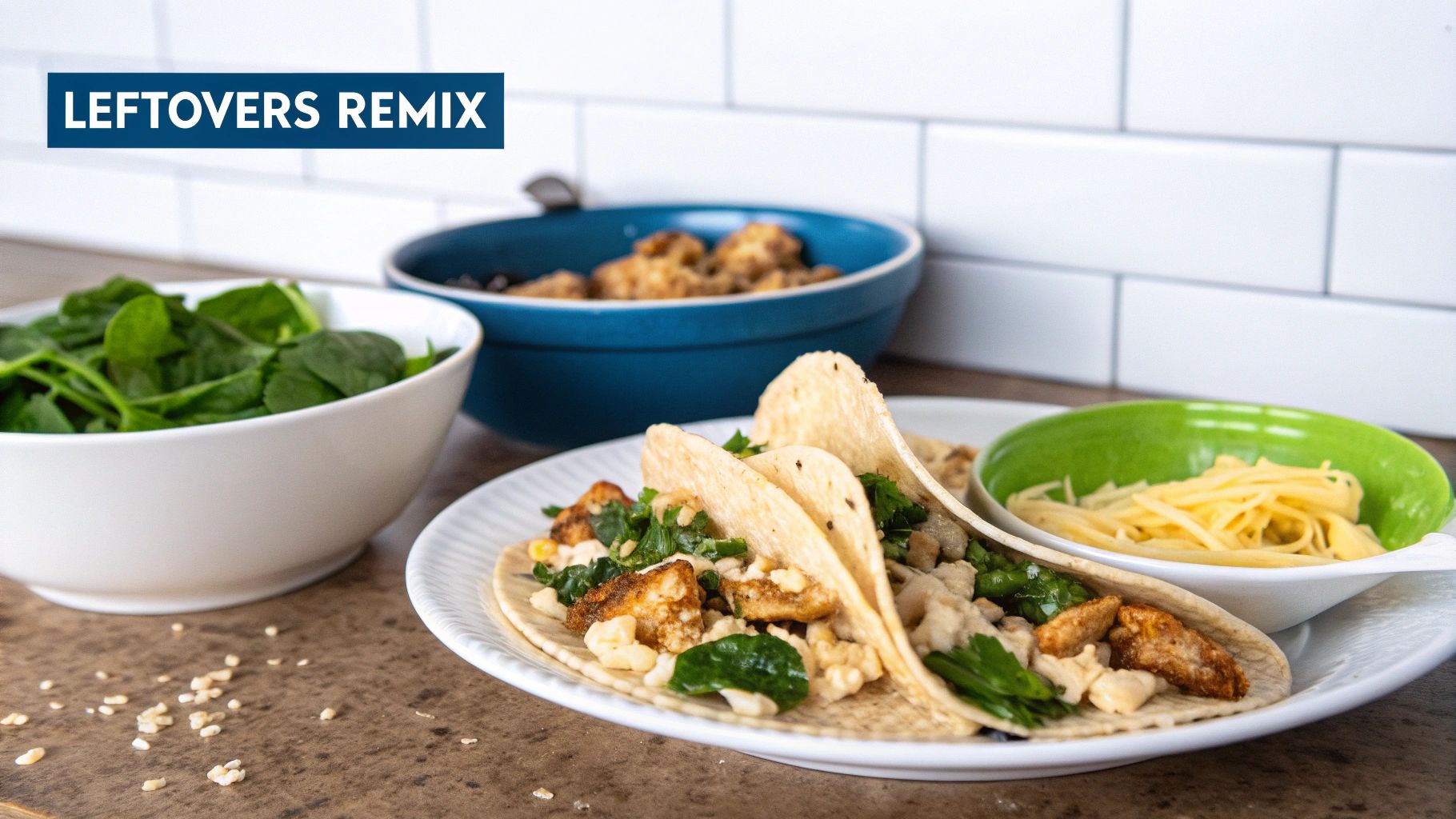
Forget just nuking last night's meal until it’s rubbery. We're talking about transforming that last bit of roasted chicken into incredible street tacos, turning wilting spinach into a vibrant pasta sauce, or giving stale bread a five-star upgrade as crunchy, golden croutons. Shifting your perspective from "reheating" to "reimagining" is the key.
Create a "Use-It-Up" Zone
Here’s a little trick that has been a total game-changer in my kitchen: the 'Use-It-Up' box. It's nothing fancy, just a clear container in my fridge dedicated to anything that needs to be eaten, like, now. Half an onion, the last scoop of cottage cheese, a handful of leftover pasta—it all goes in.
This little box does two powerful things:
- It keeps at-risk food visible. No more discovering a shriveled lime in the back of the produce drawer two weeks too late.
- It creates a weekly cooking challenge. Before I even think about starting a new recipe, I glance at the box and ask, "How can I work this in?" Honestly, it’s a fun way to get creative.
This simple habit directly tackles a huge source of waste. In fact, studies show that between 15–20% of the food we waste at home comes from leftovers and plate scrapings, not to mention all the stuff we toss because of confusing date labels. You can discover more insights about food waste statistics to see the full, eye-opening picture.
The most creative meals often come from necessity. When you challenge yourself to cook with what you have, you discover amazing flavor combinations you would have never planned for.
Master the Leftover Remix
Start thinking of your leftovers as pre-prepped ingredients. This simple mindset shift saves a ton of time and effort during the week.
That leftover rice from takeout? It's the perfect base for quick fried rice tomorrow. Those roasted veggies from Sunday dinner? They can be blended into a creamy soup, tucked into an omelet, or tossed into a grain bowl for a killer lunch.
The possibilities are endless once you start seeing the potential:
- Mashed Potatoes: Hello, crispy potato pancakes or a hearty topping for shepherd's pie.
- Steak or Roast Beef: Slice it thin for steak salads, killer sandwiches, or sizzling fajitas.
- Cooked Pasta: Transform it into a cheesy baked ziti or a cold pasta salad.
When you're stumped for ideas, having a go-to resource is a lifesaver. You can easily find recipes by ingredients you already have using tools designed for this exact problem. By embracing the leftover remix, you’ll not only slash your food waste but also serve up some of the most inventive and delicious meals your family has ever had.
Time to Play Detective: Audit Your Kitchen Waste
Ready to get real about what you're actually tossing in the bin? To truly stop wasting food, you have to become a detective in your own kitchen. It's time for a one-week food waste audit. I know, it sounds a little intense, but it’s the single most eye-opening thing you can do to see your habits in black and white.
For just seven days, keep a simple log. Grab a notebook, stick a whiteboard on the fridge, or just use a note on your phone. Every single time you throw food away, jot down what it was, roughly how much, and why it ended up there.
Was it the last few slices of moldy bread? Those herbs that turned into a slimy green mess? That container of leftovers that started looking a bit... fuzzy? Don't judge yourself, just collect the data.
This isn't about making you feel guilty! It’s all about spotting patterns.
By the end of the week, you'll have a crystal-clear roadmap. Maybe you’ll discover you're a chronic over-buyer of bread, a notorious salad-killer, or that you consistently cook enough pasta to feed a small army. This intel is pure gold because it tells you exactly where you need to focus.
Let Tech Be Your Secret Weapon
Once you’ve identified your personal food waste kryptonite, it's time to call in reinforcements. Modern kitchen tech is your best ally in this fight, transforming tedious chores into an almost effortless system.
Instead of juggling notebooks and calendars, let a smart tool do the heavy lifting. This is where you can make a huge dent in your waste before you even step foot in a grocery store.
For example, an AI-powered platform like Meal Flow AI can completely automate your meal planning. You simply tell it what kinds of food you like and what ingredients you already have, and it whips up a realistic weekly plan.
But the real magic happens next: it generates a precise, optimized shopping list and sends it straight to Instacart.
This automated approach stops overbuying dead in its tracks by ensuring every single item on your list has a purpose.
Think of it this way: a manual shopping list is a hopeful guess. An AI-generated list is a strategic plan. It’s smart enough to account for portion sizes and ingredient overlap, so you aren't forced to buy a giant bunch of cilantro when your recipe only calls for a tablespoon.
Using technology like this streamlines the whole process. It takes the guesswork out of planning and nips those impulse buys in the bud—you know, the ones that always happen when you’re wandering the aisles without a mission.
This one-two punch of smart planning and automated shopping makes reducing food waste feel less like a chore and more like a superpower. It's the modern, efficient way to take back control of your kitchen and your budget.
Got Questions About Food Waste? We've Got Answers.
Alright, so you're all geared up to slash your food waste. That's fantastic. But as with any new habit, a few questions are bound to pop up. It happens to everyone. Think of this as your go-to guide for those nagging little problems that can derail your good intentions.
Let's tackle some of the most common questions people have when they start cleaning up their kitchen habits.
What's the Real Deal with "Best Before" and "Use By" Dates?
This one is a biggie. Seriously, so much perfectly good food ends up in the bin because of confusion over these little printed dates. Let's clear it up once and for all.
- "Use By" is a safety warning. Think of this as a hard deadline. It's usually found on things like fresh meat, fish, and some dairy. Eating it after this date could be a health risk, so it's best to stick to the rule here.
- "Best Before" is all about quality. This is the manufacturer's suggestion for when the food will taste its absolute best. It is not an expiration date.
For anything with a "Best Before" date, your own senses are the best judge. Does that yogurt look and smell fine? It’s almost certainly good to go. Don't let a corporate suggestion box you into throwing away perfectly edible food.
The bottom line is this: trust your nose and your eyes. A quick sniff test can tell you way more about a food's actual condition than a printed date ever will. Making this one simple mindset shift will save a shocking amount of food from an early grave.
How Can I Actually Use Up All Those Veggie Scraps?
Those carrot tops, onion skins, and celery ends? They're not garbage—they're gold! Instead of chucking them, get a big freezer-safe bag or container and label it "Scrap Stash."
Every time you're chopping veggies, just toss the offcuts into your stash. Once it's full, dump the whole frozen collection into a big pot, cover it with water, and let it simmer away for an hour or so. Strain it, and voilà—you've got a batch of rich, flavorful, and basically free homemade broth for your next soup or risotto. Heck, you can even regrow things like green onions and celery by sticking the root ends in a small glass of water on your windowsill!
Why Is My Produce Drawer a Graveyard for Good Intentions?
If you feel like you're in a race against time the second you put produce in the fridge, you're not alone. The culprit is almost always how it's being stored. A few simple tweaks can work wonders.
For starters, don't wash your berries until right before you eat them; that extra moisture is an invitation for mold. Store your leafy greens in a container with a paper towel to soak up condensation.
The real pro-tip, though, is to separate the gassy fruits from the sensitive ones. Fruits like apples and bananas release ethylene gas, which speeds up ripening. Keep them away from ethylene-sensitive produce like carrots and lettuce to prevent them from spoiling prematurely. It's these small system changes that have a massive impact. Just look at Denmark, where national campaigns and better infrastructure helped cut household food waste in half in just a decade. You can read the full report on global food waste reduction efforts to see how these strategies play out on a bigger stage.
---
Ready to put an end to food waste for good, without all the guesswork? Meal Flow AI automates the whole process, building personalized meal plans and creating pinpoint-accurate Instacart shopping lists with only what you need. Stop overbuying and start saving with Meal Flow AI today!